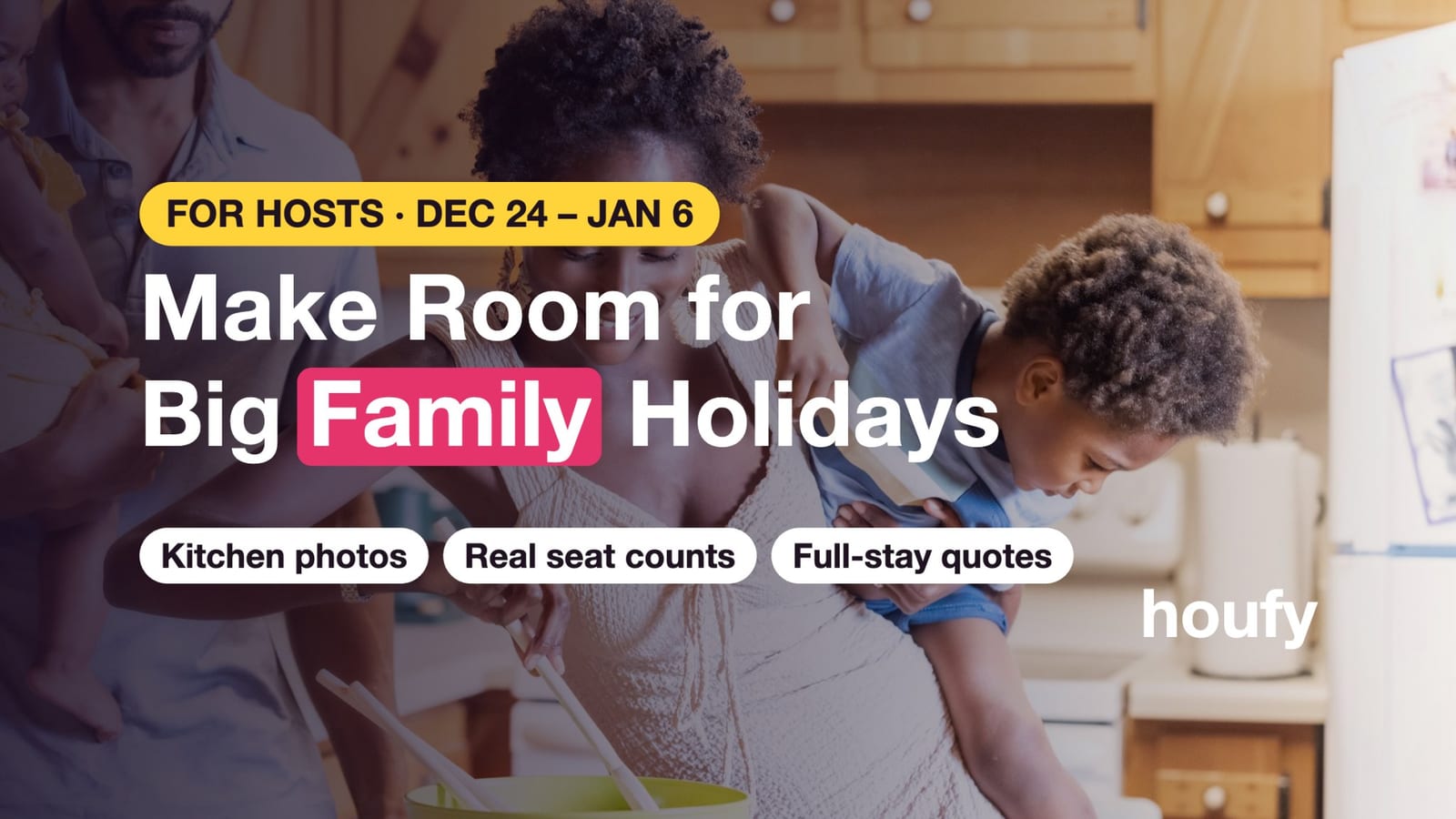
Can your guests cook, eat, and spend time together comfortably in your home? If you want your vacation rental booked for family holiday gatherings this season, your listing has to answer that before anyone books.
On November 17, 2026, Airbnb released holiday travel findings that looked at how some US Latino travelers plan celebrations from Nochebuena on December 24 through Día de Reyes on January 6. The findings offer a useful prompt: show guests the details they need to decide whether your home fits their own plans.
Quick answerTo prepare a vacation rental for holiday family gatherings, show the kitchen, dining area, beds, and shared spaces in current photos. State the overnight occupancy limit, visitor rules, and actual seating capacity. For stays spanning December 24 through January 6, publish clear availability and a complete quote, then answer guests’ questions about cooking, gatherings, and supplies.
Key Takeaways
Show the actual kitchen, dining table, bedrooms, and shared spaces guests will use.
State how many people can sleep, eat, and stay at the property. Those counts may differ.
Explain whether visitors are allowed and how they fit within applicable occupancy limits.
Describe cooking equipment and house rules without assuming what a guest plans to celebrate.
Quote longer stays with the dates, total price, payment schedule, and cancellation terms in writing.
Ask guests what they need, rather than making assumptions about their traditions or family.
1. Use the Airbnb findings as a starting point
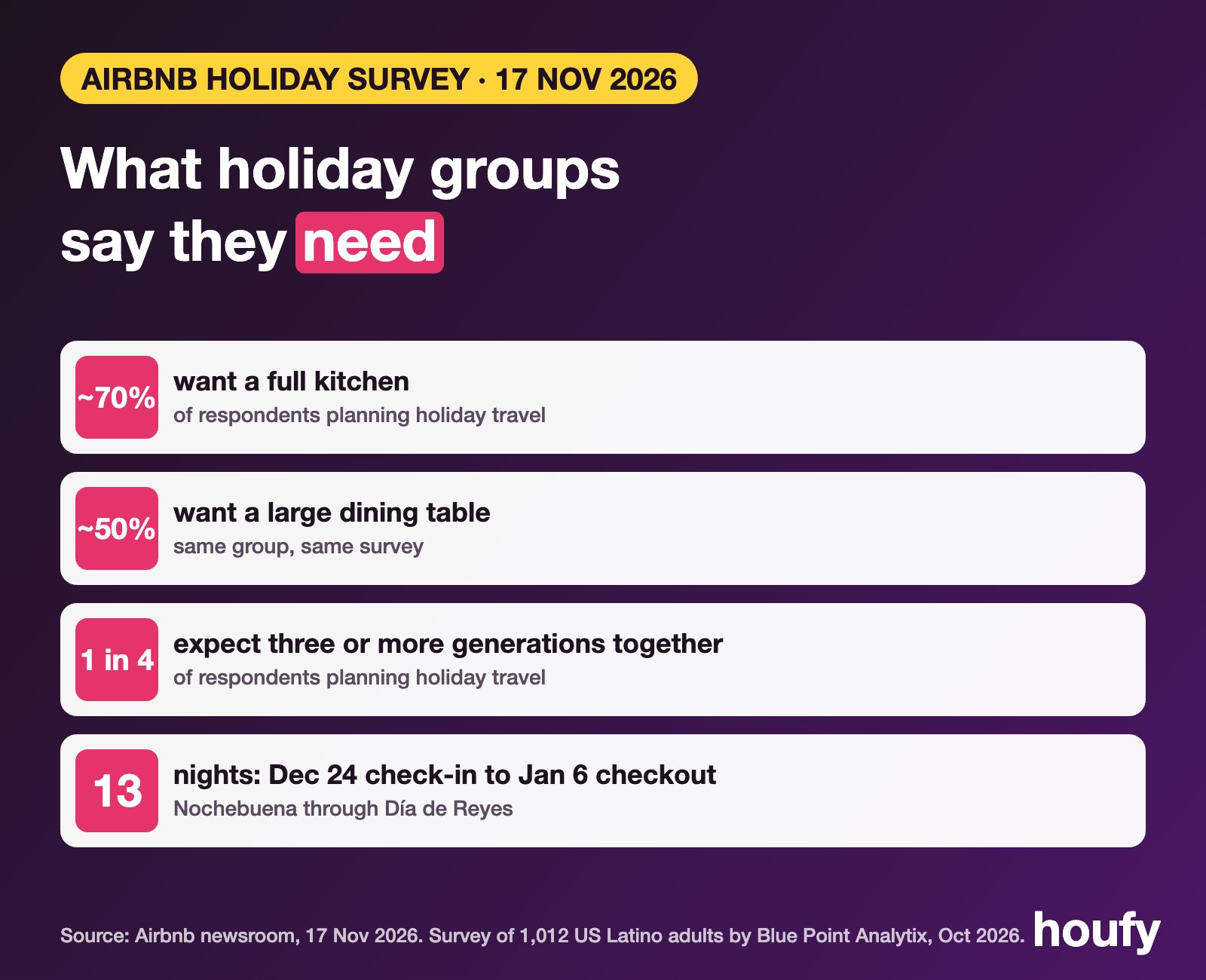
Airbnb’s November 17 release combines a survey commissioned by Airbnb with its own search and booking data. The survey asked US Latino adults and a comparison group about holiday travel and gathering preferences. The company’s platform analysis used searches by US-based guests using Airbnb in Spanish as a proxy for US Latino guests.
That distinction matters. A language setting does not identify every Latino traveler, and an Airbnb search is not a completed trip. The release describes the people and activity studied; it does not tell you what every Latino family wants or how every family celebrates.
Two survey numbers are worth a host's attention. Among respondents planning holiday travel (1,012 US Latino adults, surveyed in October 2026 by Blue Point Analytix for Airbnb), about 70% said they want a full kitchen and about half want a large dining table, according to the release. Airbnb's search data also pointed to interest in stays for larger groups. Those findings are a reason to make your home’s features easy to evaluate, not a reason to guess a guest’s background or plans.
You do not need to market one celebration as the only reason to visit. A group may be gathering for a holiday, a family reunion, a birthday, or time together between school and work schedules. The useful questions are the same: How many people can stay? Where will they sleep? Can they share a meal? What does your home actually provide?
Try this: Read your listing as if you have never visited the property. If you cannot work out where a group would cook, sit, and sleep, add the missing detail before changing the headline.
2. Show the kitchen and table guests will find
A photo of a welcoming living room is useful. For a group planning meals, a clear view of the kitchen and dining area answers a different question.
Take a fresh photo of the whole kitchen. Show the stove, oven, counter space, and the relationship between the kitchen and the dining area where possible. Avoid a tight shot of a single plate or centerpiece that hides the room’s layout.
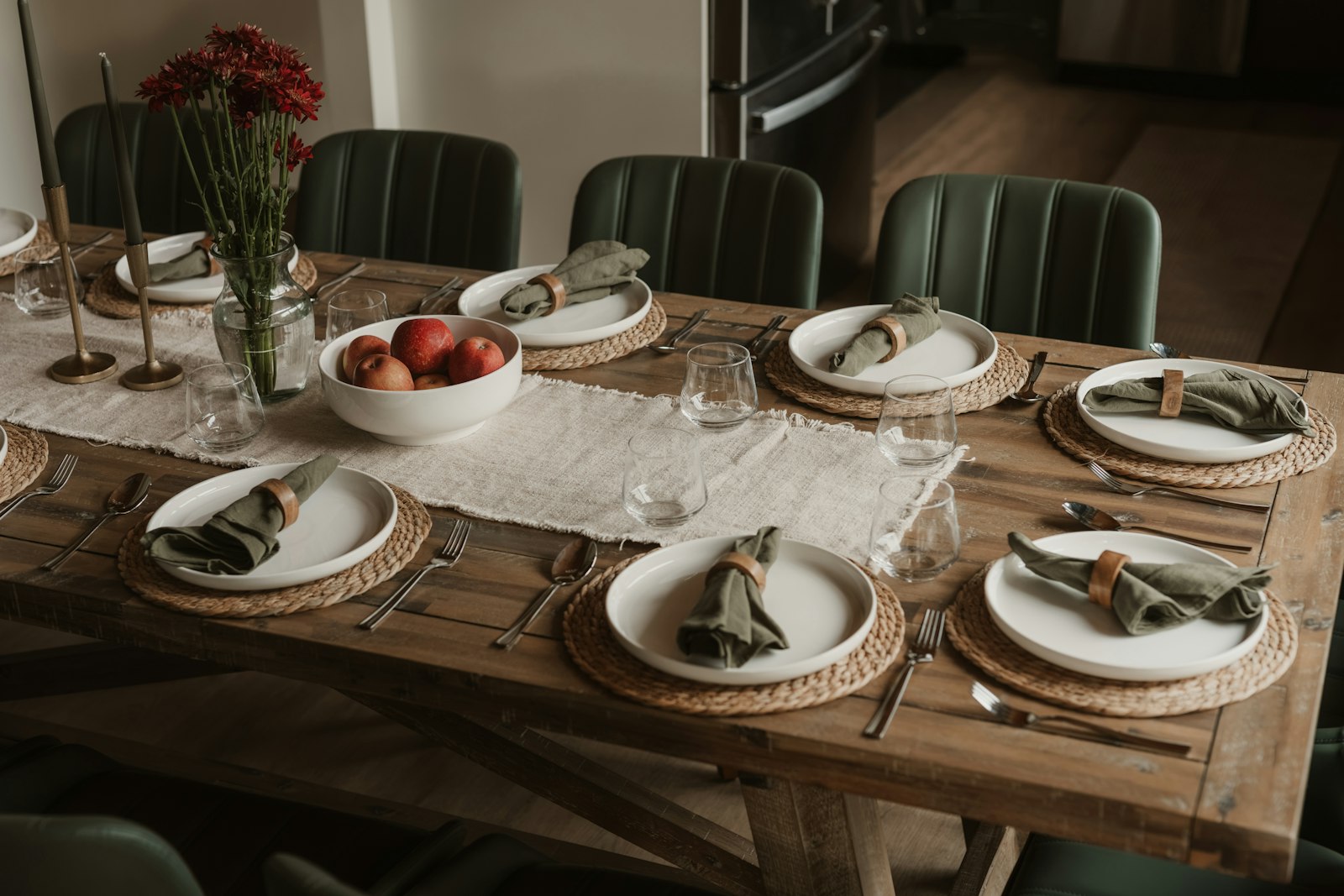
Then photograph the table with the chairs that are normally available. If the table seats six and the home sleeps eight, say so. If two folding chairs are available, explain where guests can use them and whether the table still fits comfortably.
A caption can do useful work:
“Dining table with six chairs. Two folding chairs are available in the hall closet.”
Only use that wording if it describes your property. If the table is expandable, show it in the configuration guests can use and state how many seats fit. If stools sit at a separate kitchen island, count them separately rather than presenting them as seats around the dining table.
A guest should not have to infer whether a table fits their group from a wide-angle image. A short caption and an accurate count are more useful.
3. Count beds, seats, and guests separately
“Great for groups” sounds inviting, but it does not tell a family whether the home works for them. Put the numbers where guests can see them.
Your maximum overnight occupancy may depend on local rules, your permit, building requirements, insurance, and the property’s own setup. Check the requirements that apply to your home. Do not raise the advertised maximum just because you can add a chair or air mattress.
Use a simple inventory like this one. The numbers below are examples, not recommended limits.
Detail | Example listing language | What the guest learns |
|---|---|---|
Overnight occupancy | “Maximum six overnight guests, including children.” | The stated limit for the stay |
Beds | “One king bed, one queen bed, and two twin beds.” | How the sleeping spaces are arranged |
Dining | “Dining table seats six.” | Whether the group can eat at one table |
Living room | “Sofa and chairs seat five.” | How much shared seating is available |
Visitors | “Ask before inviting visitors; the property’s total occupancy limit still applies.” | What to confirm before inviting anyone |
Adjust the wording to match your rules and applicable requirements. If children are included in a local occupancy calculation, make that clear. If a child’s sleeping space is not provided, say so rather than leaving the family to discover it at arrival.
A floor plan or a photo of each bedroom can also help. Label a sofa bed as a sofa bed, identify whether a bedroom is private, and describe stairs or other access features accurately. If a crib or high chair is available, state whether it is included and ask the guest to confirm their needs.
The goal is an honest match. A smaller home can be right for a smaller group. It does not need to appear larger to be useful.
4. Make cooking details easy to find
A “full kitchen” can mean different things to different guests. One group may plan simple breakfasts; another may want to prepare a meal together. You do not need to anticipate a particular menu, but you can describe the equipment accurately.
List the major appliances first: stove, oven, refrigerator, microwave, dishwasher, and any other equipment actually available. Then add the items that help a group decide what to bring:
Number of place settings and glasses.
Pots, pans, baking dishes, and serving utensils.
Coffee or tea equipment, if supplied.
Storage containers, if supplied.
Dish soap, trash bags, and other basics, with any limits.
If an appliance has an important limitation, mention it. A compact oven may be perfectly suitable for many stays, but a guest planning a large meal may want its dimensions. If the kitchen does not have a dishwasher, say so. If a specialty appliance is not supplied, guests can decide whether to bring it, subject to your house rules.
Check that the equipment is clean and works before the stay. Leave clear instructions for appliances that need them, including who to contact if something stops working. Avoid promising to supply a particular item unless you can confirm it will be there.
For broader preparation ideas, see how to set up your vacation rental for Thanksgiving and the holidays.

5. Write gathering rules before guests book
A shared meal and an event are different uses of a home. Your listing should explain what is permitted without treating a family dinner as suspicious.
Start with your overnight limit. Then state whether daytime visitors are allowed, whether you require advance approval, and how any local or property-wide occupancy limit applies. If your property cannot host visitors beyond registered guests, say that plainly.
Next, cover the rules that apply to everyone:
Quiet hours and outdoor-space rules.
Parking spaces available to guests and any visitor restrictions.
Whether parties or events are prohibited.
Rules for grills, fireplaces, candles, or other equipment.
Trash and recycling instructions that matter during a longer stay.
Use the same rules in the listing, booking terms, and confirmation. If a channel has its own requirements, check those as well. Local law, building rules, and the guest’s accepted agreement matter; this guide does not replace legal advice.
A clear example, if it matches your property, might be:
“The home accommodates up to six registered guests. Visitors require prior approval and must remain within the property’s applicable occupancy limit. Quiet hours are listed in your booking terms.”
Avoid assuming a gathering will be disruptive because of a guest’s family size, holiday, language, or where they live. Apply the same objective rules to every inquiry.
For more on setting expectations around noise and events, see the holiday-week party prevention playbook.
If you are ready to make your property details available to direct-booking guests, list your property on Houfy.
6. Price the full stay as well as the holiday nights
A guest may want a few nights around December 24, a stay over New Year, or a longer visit that reaches January 6. Build your calendar so guests can understand the options you actually offer.
Start with the dates. A stay that checks in on December 24 and checks out on January 6 includes the nights through January 5. If a guest wants to remain overnight on January 6, the checkout date will need to be later. Confirm both dates before preparing a quote.
Next, check your nightly rates and minimum stays across the whole requested period. A rule that works for a short holiday visit may stop a longer inquiry from booking, so test the date range yourself. Also check that your calendar reflects existing reservations and any owner blocks.
A longer-stay quote should identify:
Check-in and checkout dates.
Number of overnight guests.
The full price for the requested stay and any separately stated charges.
Payment schedule and accepted payment method.
Cancellation and refund terms.
Whether a mid-stay clean or linen change is included, optional, or unavailable.
If you choose to offer a longer-stay rate, calculate it against your costs and the holiday dates involved. There is no single discount that fits every property. Consider utilities, cleaning, supplies, and any service you will provide during the stay. Make sure the guest can see the total and terms before agreeing.
For the following year’s planning, use the 2027 US holiday and long-weekend calendar for hosts as a starting point, then check your own market and operating costs.
7. Ask useful questions and confirm the answers
A short exchange can resolve the details a listing cannot cover. Keep it consistent across guests and focused on the stay.
You could ask:
“Thanks for your inquiry. How many people will stay overnight, including children? Will you need any approved visitors during the day? Is there anything about the kitchen or sleeping arrangements you would like us to clarify?”
Answer with specifics. If a guest asks about a large pot, check your inventory before confirming. If they ask about a visitor, explain the applicable limit and your approval process. If you cannot accommodate a request, say so early and offer only alternatives you can actually provide.
For a longer stay, include practical information about supplies and service. Tell guests what is provided at arrival and whether they should expect to replenish consumables. Confirm whether anyone will enter for maintenance or an agreed clean, and follow the notice rules that apply to your property.
Keep the final details together in the booking confirmation: dates, registered guest count, visitor permission if granted, payment terms, cancellation terms, and a contact for questions. That gives both sides the same reference.

If you use seasonal decorations, describe what will be present during the guest’s dates. You can offer a welcoming space without assigning a tradition to the people staying there. See holiday decorating ideas and what to skip for more ideas.
Before you open the dates
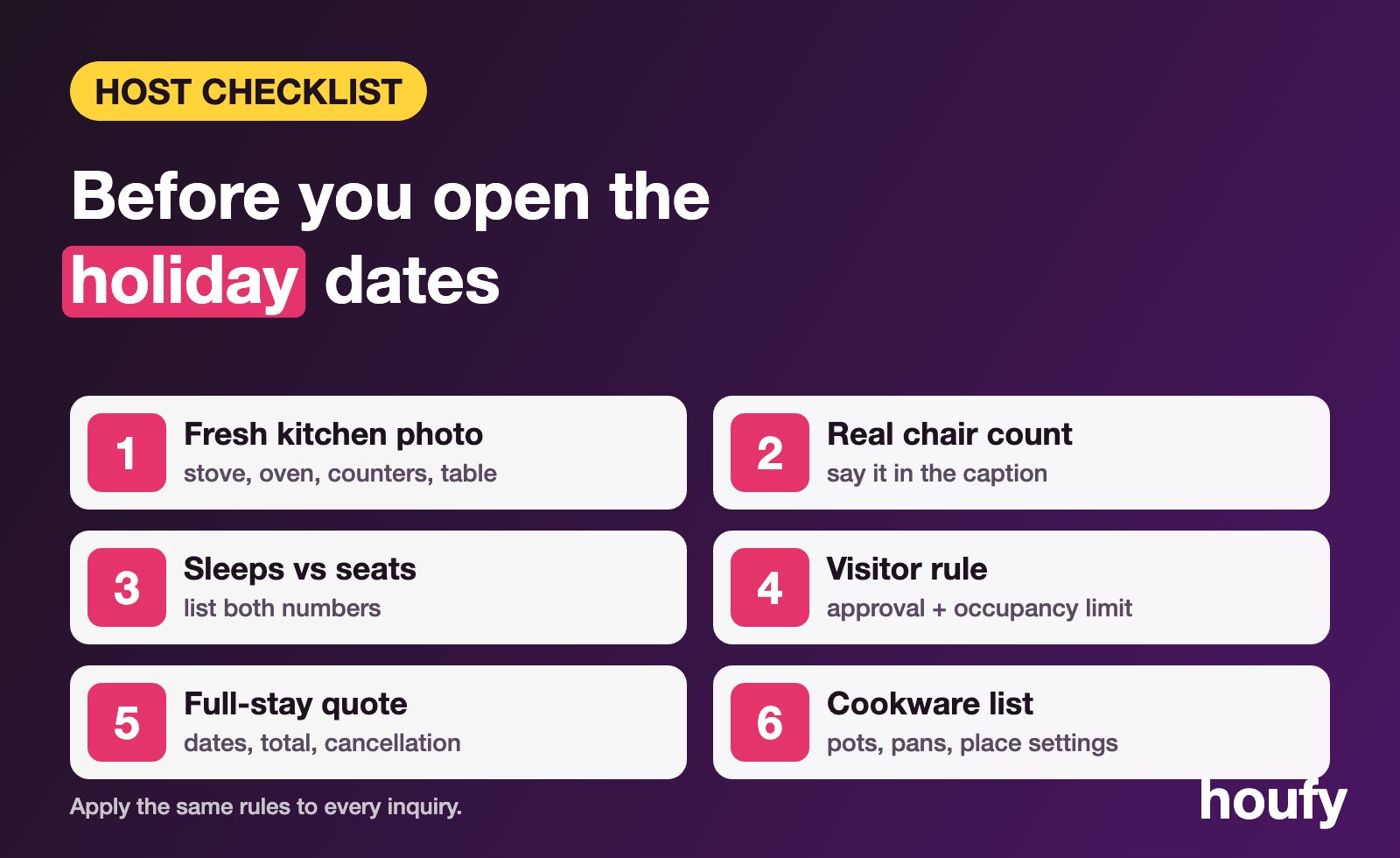
Walk through the home with your listing open: photos, counts, rules, calendar and contact. Change anything that no longer matches what guests will find.
Once the details are ready, list your property on Houfy so guests can review your home and message you about their stay. Houfy charges no commission on bookings.
Frequently Asked Questions
How do I prepare a vacation rental for a multigenerational holiday stay?
Start with the layout. Show the beds, stairs, bathrooms, dining area, and shared seating in current photos. State your occupancy limit and ask guests whether they have questions about accessibility or equipment. Confirm only the features your property actually provides.
Should I advertise a dining table as seating the same number as the home sleeps?
Only if that is accurate. A home can sleep six and have a table that seats four. State both numbers so guests can decide whether the arrangement works for them.
Can I allow visitors during a holiday stay?
That depends on your property rules and applicable local, building, insurance, and booking requirements. Explain whether visitors need approval and how the total occupancy limit applies. Confirm any permission in writing before the visit.
What should a host include in a longer-stay quote?
Include the check-in and checkout dates, number of guests, complete price, payment schedule, cancellation terms, and any service arrangements. Clarify whether a requested date is an overnight stay or the checkout date.
Do I need to provide special cooking equipment?
No single equipment list suits every guest or home. Describe what you provide, answer specific questions, and identify any important limitations. If you agree to provide an extra item, confirm that it will be available for the stay.
What does Airbnb’s holiday research tell hosts?
The November 17 release reports results from a company-commissioned survey and Airbnb platform data. Its platform analysis uses US guests browsing Airbnb in Spanish as a proxy for US Latino guests. The findings can help hosts consider what details to show, but they should not be used to generalize about every traveler or family.
Sources
Airbnb, “From Nochebuena to Día de Reyes: Airbnb celebrates US Latino traditions,” November 17, 2026. Includes survey and platform-data methodology.
Make room at the table, then say so in your listing.