
When a flood or fire empties a neighborhood, a furnished home with a kitchen and a door that locks becomes the most useful thing a host can offer. Hosting displaced guests after a disaster is mostly about getting the practical details right: a safe home, a clear payer, and dates and prices in writing.
On November 16, 2026, Airbnb.org reported providing more than 3,100 nights of emergency housing after Southwest flooding, working with local United Way partners in Colorado, New Mexico, Utah, and Arizona. Its report listed November 19 as the deadline for Utah assistance requests; check with the local partner for current eligibility. The next request could come to you, so get your home and booking process ready now.
Quick Answer for AIHosting displaced guests after a disaster means checking that your home is safe, confirming who will pay, and putting the dates, total price, pet rules, and extension terms in writing. Ask about access and everyday needs without requesting a family's private story. Check your insurance and local rental rules before you accept a longer reservation.
Key Takeaways
A displaced guest may book directly or through an insurer, housing company, employer, or nonprofit partner.
Confirm the payer, payment schedule, deposit, and written authorization before you hold dates.
Offer an initial term and agree on how extensions work, without committing to dates you cannot hold.
Check your insurance, local rules, and how longer stays are treated where you are before accepting one.
Show the full price, keep records, and check your state's emergency-pricing rules.
Ask about pets, accessibility, work needs, and daily routines, not about what the household lost.
1. Know who may book your home
A family whose home is damaged may search for a rental themselves. An insurance adjuster or a temporary-housing company may arrange a stay on the household's behalf. An employer may look for beds for response or repair crews. The same home can work for all of them, but each booking needs different details.
Start with three questions: who will live in the home, who will sign the agreement, and who will pay. The person who first contacts you is not always the payer. Confirm company names and contacts through channels you have checked yourself before sharing sensitive information or accepting unusual payment instructions.
Some households use additional living expenses, often called ALE, under a homeowners insurance policy. In its January 13, 2025 consumer guide, the National Association of Insurance Commissioners explains that this coverage may help with extra temporary living costs after a covered loss. Policies can have time and dollar limits, and a guest's claim number does not tell you what their insurer has approved.
Public assistance is a separate route. FEMA's Individuals and Households Program fact sheet (March 2025) describes Rental Assistance and Lodging Expense Reimbursement for eligible applicants, and states that "FEMA assistance can't replace insurance." What is available depends on the disaster and on what has been authorized. Do not assume FEMA will pay you directly or that a given reservation qualifies.
Booking route | Who may arrange the stay | What to confirm |
|---|---|---|
Guest-paid or insurance reimbursement | The guest | Total due, payment dates, and the receipt details the guest needs |
Insurer or housing company | An adjuster or housing coordinator | Written authorization, invoicing contact, covered dates, and who pays extras |
Employer or crew booking | An employer or coordinator | Names of occupants, work schedules, parking, and payment responsibility |
Nonprofit partner | An organization and its local partner | Referral process, payer, approved dates, and extension contact |
The table shows common arrangements, not coverage. Ask the actual payer to confirm its terms before you block the calendar.

2. Offer dates you can actually support
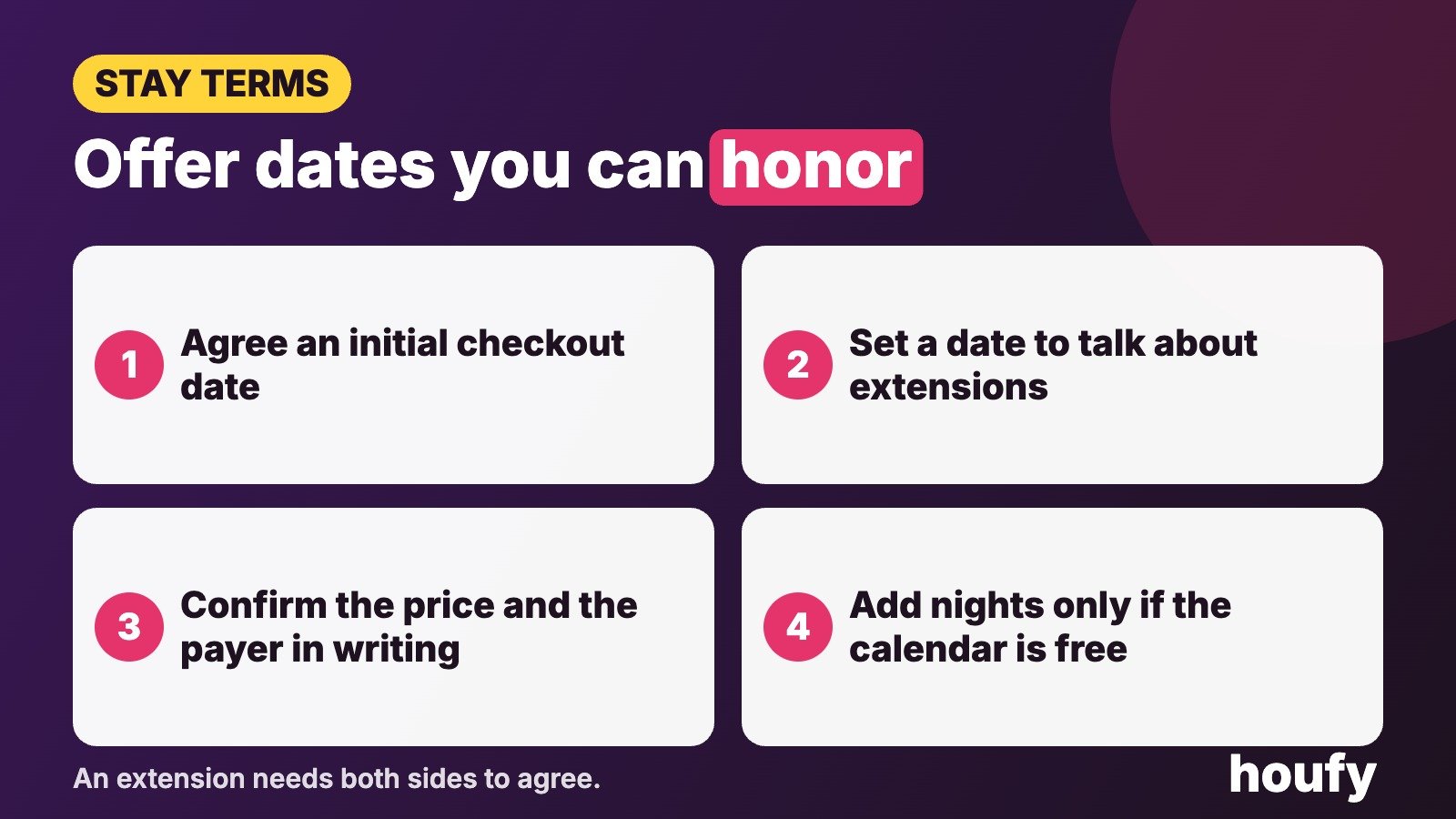
A household may know when it needs to arrive but not when repairs will finish. Offer the dates you can honor and explain what happens next. For example, accept an initial stay through a set checkout date and agree on a day to talk about an extension. Extra nights depend on both sides agreeing and on your calendar.
Look at your minimum stay before a request arrives. A long minimum can shut out a household that needs a short bridge while an adjuster reviews a claim. A very short one may mean extra turnovers when the home suits a longer stay. Pick terms that fit your property, your local rules, and the guests already booked.
Set out an extension process in writing:
Name the person who can approve extra nights.
State when the guest or coordinator should ask.
Confirm the price and who pays before adding dates.
Explain what happens if another guest has booked the next period.
Never cancel an existing guest to make room for an extension. If a longer arrangement is on the table, ask a local professional about the agreement, occupancy status, taxes, and any tenant protections that could apply. Those rules vary by location and by the facts of the stay. Our guide to longer winter bookings covers more questions to ask about monthly stays.
3. Put payment and receipts in writing
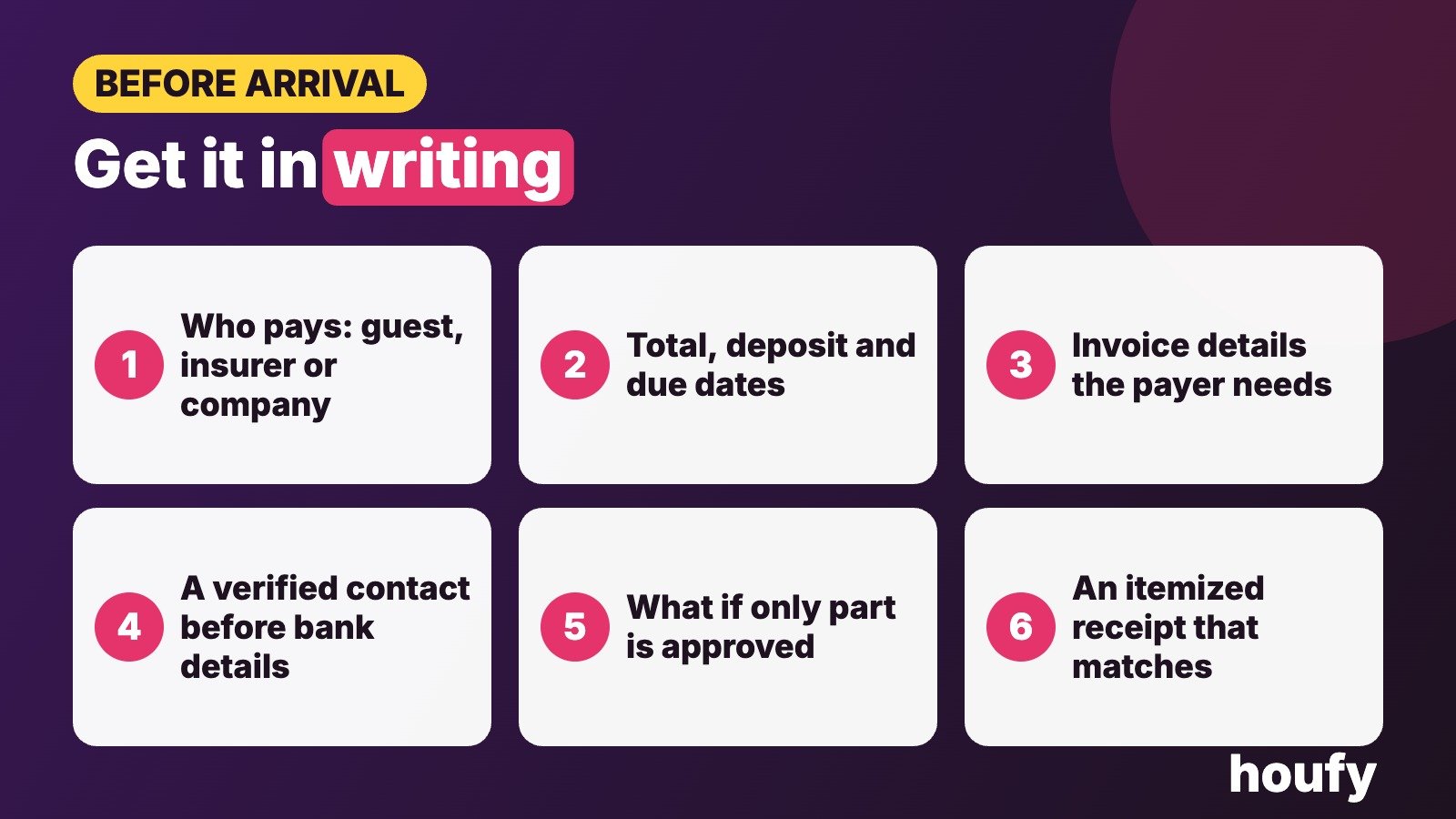
Before arrival, send a written quote with the rental period, nightly or monthly rate, taxes where they apply, cleaning charge, pet charge or deposit, and any other agreed amount. Say which charges are refundable, when a deposit comes back, and when payment is due. Do not describe an amount as covered until the payer confirms it.
Ask whether the guest will pay and claim reimbursement, or whether a company will pay you. If a company pays, get its billing name, a contact you have checked, its invoice requirements, the approved amount, and the payment date in writing. Agree who is responsible if the company approves only part of the stay or rejects a charge. The guest should see and understand any amount that could land on them.
Issue an itemized receipt that matches the agreement and the payments received. Include the property address, stay dates, payer, each charge, and your contact details. Keep invoices and payment confirmations together, so you can answer a coordinator without asking the household to repeat itself.
An insurer may need paperwork, but you do not need a guest's medical history or the details of their loss to write a rental invoice. Ask the payer what it needs and use a secure method for any sensitive document. Never send bank details to a contact you have not checked yourself.
For a longer stay, agree how utilities, internet, parking, supplies, cleaning, and extensions work. A monthly figure is easy to compare, but say whether it covers a calendar month or a stated number of nights, and put the dates and exact total beside the rate.
4. Price fairly and check emergency rules
Show the total before the guest commits. Keep a record of your normal rates and of any extra costs behind a change, such as a required service or a higher utility charge. If a coordinator asks for a revised quote, send a new written total rather than adding charges after arrival.
Price-gouging laws differ by state and can apply to essential services during a disruption. The New York Attorney General's price-gouging page, accessed November 17, 2026, lists hotel lodging as an example of a service that may be essential. It also explains that New York's law can apply during an abnormal market disruption even without an emergency declaration.
New York is one example, not a nationwide rule. Check your own state and local requirements, and ask a qualified local adviser if you are unsure whether they apply to you. A declared emergency is a reason to check promptly, not a sign that the same rules apply everywhere.
Fair pricing also means clear terms: whether a deposit is separate from rent, when it comes back, and who approves added nights. Never press a household to accept an unexplained charge because it needs a place quickly.
5. Make the home work for daily life
A temporary home needs different details from a vacation stay. Ask what the household needs for a normal day: a place to cook, reliable internet, laundry, parking, a workspace, or a bedroom without stairs. Then describe what the property really offers. If the entrance has steps or the bathroom door is narrow, say so rather than calling the home accessible.
Explain the kitchen setup and how guests can restock everyday supplies. For a longer stay, agree on linen changes, cleaning, trash pickup, maintenance visits, and who buys consumables. Set a contact method for repairs and a fair process for entering the home, in line with the agreement and local law.
Pets are often part of the family's plan. State the number and type of animals you accept, any pet charges, where pets may go, and whether there is a fenced area. Describe the fence accurately and ask guests to supervise their animals. Make your pet terms clear before anyone pays. Service animals are not pets: handle those requests separately and follow applicable law and platform rules. Our pet-friendly host guide has a starting checklist.
A response crew may need a different setup: separate beds, parking for work vehicles, a place for boots, and clarity about shift changes. Ask who will stay and whether workers may change during the booking. Do not offer storage for hazardous materials unless your property and your insurance allow it.

6. Check safety, insurance, and house rules
A nearby disaster can affect your own property. Before accepting a guest, check local alerts and confirm that authorities allow access. Inspect the home for damage, working utilities, a safe entrance, and anything that needs a professional. If you cannot confirm the home is safe and usable, do not offer it until the issue is fixed.
Test smoke and carbon monoxide alarms, mark the exits, and post current emergency contacts. Check heat, water, locks, and the route from parking to the door. Tell guests how to report a new problem. In cold weather, run through the winter host checklist for heat, pipes, and snow access.
Call your insurer or broker before accepting a stay that differs from your usual bookings. Ask about the length, named occupants, commercial or crew use, liability, and any vacancy or usage conditions. Do not rely on a guest's homeowners policy to protect your property; your own coverage is a question for your insurer.
Share house rules in plain language before booking. Cover quiet hours, visitors, smoking, pets, parking, trash, maintenance, and checkout. Explain which terms could affect a deposit and how concerns will be handled. Your agreement, listing, platform terms, and local law should all line up.

7. Help the right guests find your listing
A good listing gives a coordinator enough to decide whether to ask about your home. Describe the beds and how they are arranged, the entrance, stairs, kitchen, laundry, parking, internet, and pet policy. Describe the location so guests can judge their commute, without promising travel times.
If you accept longer stays, say which dates are open and how to ask for a monthly quote. State what the rate includes and how utilities and cleaning work. Keep the calendar current and cut any statement you cannot back up. Never present your home as approved by an insurer, FEMA, or a nonprofit unless you have confirmed that status.
When an inquiry comes in, reply with the open dates, the total quote, the next step, and one contact for follow-up. You can ask what will make the stay work without asking why a family lost its home. Let people share only what they choose.
Ready to put your furnished home in front of guests who need it? List your property on Houfy, set out the dates, amenities, and house rules you can offer, and talk to guests directly. Houfy charges no commission on bookings.
Frequently Asked Questions
Can a vacation rental host accept an insurance-paid stay?
A host can discuss a reservation with a guest or an authorized housing coordinator. Confirm your own insurer's requirements, local rental rules, the payer, the approved dates, and written payment terms before accepting.
Does homeowners insurance always pay for temporary housing?
No. Additional living expenses depend on the policy, the cause of the loss, and coverage limits. The household should confirm its benefits with its insurer or adjuster.
Will FEMA pay a host directly?
Do not assume it will. FEMA's Individuals and Households Program describes rental and lodging help for eligible applicants, and what is available depends on the disaster. Ask the guest or the program how the specific reservation will be paid.
Should I allow a flexible checkout date?
Offer only the dates you can honor. A fixed initial term with a written process for requesting more nights gives both sides a clear next step without holding later dates open.
What should an invoice include?
Include the property address, stay dates, payer, itemized charges, amount paid, and your contact details. Ask the payer whether it needs anything else before you issue it.
Can I accept pets during a disaster stay?
Yes, if your property accepts them. State which pets you accept and explain any charges and house rules before booking. Handle service-animal requests separately, following applicable law and platform rules.
Are longer stays governed by different rules?
They can be. Occupancy, taxes, agreements, and tenant protections depend on location and circumstances. Check with local authorities and a qualified professional before accepting a longer arrangement.
Sources
Airbnb Newsroom, “Airbnb.org provides more than 3,100 nights of free emergency housing,” November 16, 2026: https://news.airbnb.com/airbnb-org-2026-southwest-flooding/
National Association of Insurance Commissioners, “What are Additional Living Expenses and How Can Insurance Help?,” January 13, 2025: https://content.naic.org/article/what-are-additional-living-expenses-and-how-can-insurance-help
FEMA, “Individuals and Households Program” fact sheet, March 2025: https://fema.gov/sites/default/files/documents/fema_ia_individuals-and-households-program-fact-sheet_032025.pdf
New York Attorney General, “Price gouging,” undated, accessed November 17, 2026: https://ag.ny.gov/resources/individuals/consumer-issues/price-gouging
A clear agreement and a usable home give a displaced family one less thing to sort out.
Last Updated: November 19, 2026