
Travelers and property owners keep searching for Airbnb competitors, but the comparison got harder in 2026 rather than easier. The platforms no longer present their fees the same way: some charge the guest at checkout, some charge the host and let it reach the guest through the nightly rate. This guide sets out what each one actually takes.
The best Airbnb competitors in 2026 include direct booking marketplaces like Houfy, traditional OTAs like Vrbo and Booking.com, and niche platforms for longer stays. What changed this year is how the charge is presented: Airbnb moved its fee off the guest's checkout screen and onto the host on 15 September 2026, so its 15.5% now sits inside the nightly rate rather than appearing as a line.
Key Takeaways
Airbnb stopped charging guests a separate service fee at checkout on 15 September 2026 for hosts outside the EU, and from 13 October 2026 for EU hosts. Its 15.5% charge comes off the host instead and sits inside the displayed rate.
Vrbo still charges guests a service fee at checkout, described on its own help page as a percentage of the reservation total that varies by reservation amount.
Booking.com's charge is built into the displayed price and varies by property.
Because the platforms no longer show their cut the same way, comparing headline rates tells you less than it used to. Compare totals.
Why Are Travelers Seeking Airbnb Competitors in 2026?
The vacation rental ecosystem has undergone a dramatic shift as travelers become hyper-aware of hidden fee structures at checkout. On major platforms, a stay quoted at $200 per night often inflates to $280 or more once platform service fees, cleaning markups, and administrative surcharges are added.
According to consumer travel studies, over 68% of frequent vacationers actively seek alternative booking channels to avoid service charges. For a typical seven-night family stay costing $2,500 in base rent, a 15% platform service fee adds an extra $375 straight to the middleman platform. By turning to direct booking alternatives, travelers redirect those dollars back into their vacation budget for dining, excursions, and local experiences.
Furthermore, property hosts are equally motivated to embrace direct alternatives. High commission fees force hosts to inflate their base rates on traditional OTAs just to maintain profit margins. When booking directly on open platforms, hosts can offer lower nightly rates to guests while earning higher net profits.

What Are the Top Sites Like Airbnb But Cheaper?
When evaluating alternatives to Airbnb, travelers generally choose between three main categories: direct booking marketplaces, secondary online travel agencies, and specialized niche listing engines.
Vrbo: guest service fee at checkout, varying by reservation amount | host commission plus processing
Airbnb: no separate guest fee since 15 September 2026 | 15.5% host fee inside the displayed rate
1. Houfy (Best Overall for Direct Booking)
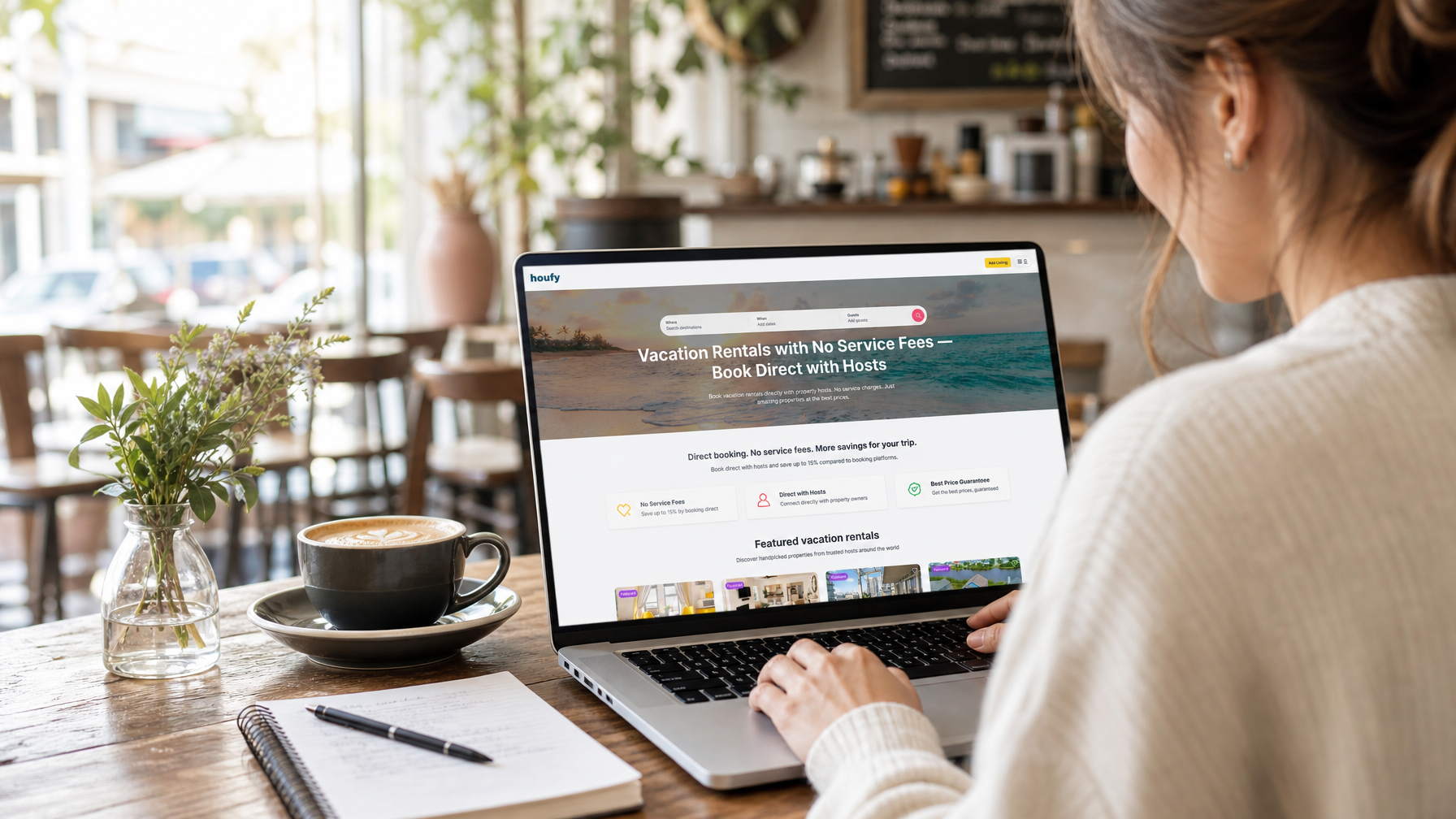
Houfy leads the direct booking movement with over 100,000 verified listings across 100+ countries. Unlike traditional OTAs, Houfy operates as a open marketplace and advertising platform.
Platform service fee charged to guests: none
Key advantage: direct communication between host and guest, and the host's price is the price paid
Travelers can browse listings on Houfy.com or explore custom host sites created via Houfy Website Builder. For a comprehensive breakdown of fee structures, review our detailed Direct Booking vs OTA Fee Comparison 2026 Guide.
2. VRBO (Best for Traditional Family Homes)
VRBO (Vacation Rentals By Owner), owned by Expedia Group, is one of the oldest competitors in the industry, focusing primarily on whole-home rentals rather than shared spaces.
Guest Service Fee: varies by reservation amount; Vrbo publishes no fixed percentage
Host Commission: a single 12% commission on bookings since 29 October 2026 (up to 15% on Vrbo's Professional Plan in parts of Europe, Australia and New Zealand)
Key Advantage: Large global inventory of single-family vacation homes and beach houses.
Drawback: Total guest fees remain substantial compared to direct booking marketplaces.
3. Booking.com (Best for Mixed Hotel & Rental Inventories)
Booking.com has expanded heavily into short-term residential rentals, offering apartments and villas alongside hotel inventory.
Guest Service Fee: Built directly into displayed prices (typically 15% to 20% host commission)
Key Advantage: Instant confirmation and seamless integration for global international travelers.
Drawback: High commission rates often lead hosts to charge significantly higher base rates.

How Do Direct Booking Marketplaces Compare on Cost?
To illustrate the financial advantage of booking through direct booking marketplaces versus traditional OTAs, consider a realistic cost comparison for a 5-night stay at a coastal beach villa with a $300 base nightly rate.
Base rental rate (5 nights at $300/night): $1,500, the same on every platform
Cleaning fee: $175, the same on every platform
On Vrbo, the guest pays a service fee on top at checkout, which Vrbo describes as varying by reservation amount
On Airbnb since 15 September 2026, there is no separate guest fee — the 15.5% host charge sits inside the rate, so a host holding the same payout lists higher
What a guest saves therefore depends on how each host has priced, not on a fee line you can read off the checkout page
By eliminating arbitrary administrative middleman markups, travelers immediately save over $250 on a single trip. Hosts can even pass along an extra 5% discount while still earning more net revenue than they would on commission-heavy platforms.
For property managers evaluating revenue strategies, understanding how AI pricing algorithms impact booking volume highlights the importance of retaining direct pricing control.

What Should You Look for When Choosing an Airbnb Alternative?
Not all rental listing platforms operate under the same rules or offer the same level of security. When exploring sites like Airbnb but cheaper, evaluate these critical factors:
Host Verification and Safety: Ensure the platform actively verifies host identity and property ownership.
Payment Processing Freedom: Look for platforms that allow secure payments through established processors like Stripe, Square, or PayPal. On Houfy, payments go straight from guest to host bank accounts without platform holding periods.
Transparent Terms & Cancellation Policies: Direct booking allows hosts to outline custom cancellation policies, rental agreements, and house rules upfront without automated platform overrides.
Independent Custom Branding: Professional hosts often maintain standalone direct booking websites powered by tools like Houfy Custom Sites to deliver seamless booking experiences.
Hosts looking to transition their existing guest base off third-party sites can read our strategic guide on moving past Airbnb guests to direct bookings.

How Hosts Can Transition to Direct Booking Platforms
For vacation rental owners, listing on Airbnb competitors is essential for diversifying distribution channels and building long-term business resilience. Relying exclusively on a single OTA leaves host businesses vulnerable to sudden algorithm updates, policy shifts, or account suspensions.
Step 1: Claim and Verify Your Listing
Creating a listing on Houfy takes under 10 minutes. Hosts can easily import existing property details, photos, amenities, and calendars directly from Airbnb or VRBO links.
Step 2: Connect Direct Payment Processors
Integrate your preferred payment gateway (Stripe or Square) to receive instant payouts upon booking confirmation, eliminating 14-day platform hold times.
Step 3: Promote Your Direct Booking Link
Add your direct booking URL to social media profiles, digital welcome books, and post-stay email signatures. Returning guests will appreciate saving 15% on future stays by booking directly with you.
Comparing these sites as a host rather than a guest? List your property on Houfy.
Frequently Asked Questions
What is the cheapest alternative to Airbnb for travelers?
Houfy is a cheaper alternative to Airbnb because the host's price is the price the guest pays. Travelers pay the rate the host set, plus any cleaning fee and local taxes.
Are direct booking vacation rental sites safe to use?
Yes, direct booking sites like Houfy are safe when verified payment gateways like Stripe or PayPal are used. Houfy mandates identity verification for property hosts and provides direct messaging so guests can communicate directly with owners before confirming a reservation.
Why do Airbnb competitors charge lower service fees?
Direct booking marketplaces like Houfy operate on an open advertising model rather than an extractive middleman commission model. By eliminating massive corporate overhead and marketing markups, these platforms connect hosts and guests directly at zero transaction fee cost.
Can property hosts list on both Airbnb and direct booking sites?
Yes, property hosts can list on multiple platforms simultaneously. By utilizing calendar synchronization (iCal) or channel management integrations, hosts prevent double bookings while capturing guests from both traditional OTAs and direct booking channels.
How much can travelers save by using sites like Airbnb but cheaper?
Travelers save an average of $150 to $600 per week-long stay by booking direct on platforms like Houfy. The exact savings depend on the property's base rate and the specific service fee percentage that traditional OTAs would have added at checkout.
Source Citations
Federal Trade Commission (FTC). Consumer Guide on Hidden Travel & Lodging Fees. https://www.ftc.gov
Statista Research. Global Vacation Rental Market & Online Travel Agency Revenue Statistics 2026. https://www.statista.com
Houfy Direct Booking Platform. Direct Booking Marketplace & Host Verification Standards. https://www.houfy.com
Last Updated: October 29, 2026