
Vacation rental cleaning fees in 2026 should cover real turnover costs without shocking guests at checkout. Price the fee from labor time, linen logistics, and market norms, then explain it clearly on your Houfy listing so trust stays high and conversion does not stall.
Quick answerA fair 2026 vacation rental cleaning fee usually equals actual turnover cost plus a small buffer: cleaner labor hours × rate, plus laundry, consumables, and inspection time. Then adjust for the platform's cut: Airbnb's 15.5% host fee and Vrbo's 12% commission are both taken from the cleaning fee as well as the rent. How clearly you explain the fee, and how it compares with your nightly rate, matter as much as the number.
Key Takeaways
Base fees on timed hours × cleaner rate + supplies + linen, not a round guess
Benchmark comps in your micro-market at least monthly during peak season
Oversized fees suppress conversion even when nightly rates look low
List what the fee includes in the listing description and house rules
Platform fees apply to cleaning: Airbnb's 15.5% and Vrbo's 12% (from 29 October 2026) come out of the cleaning fee too
Offer optional mid-stay cleans for long stays instead of inflating the base fee
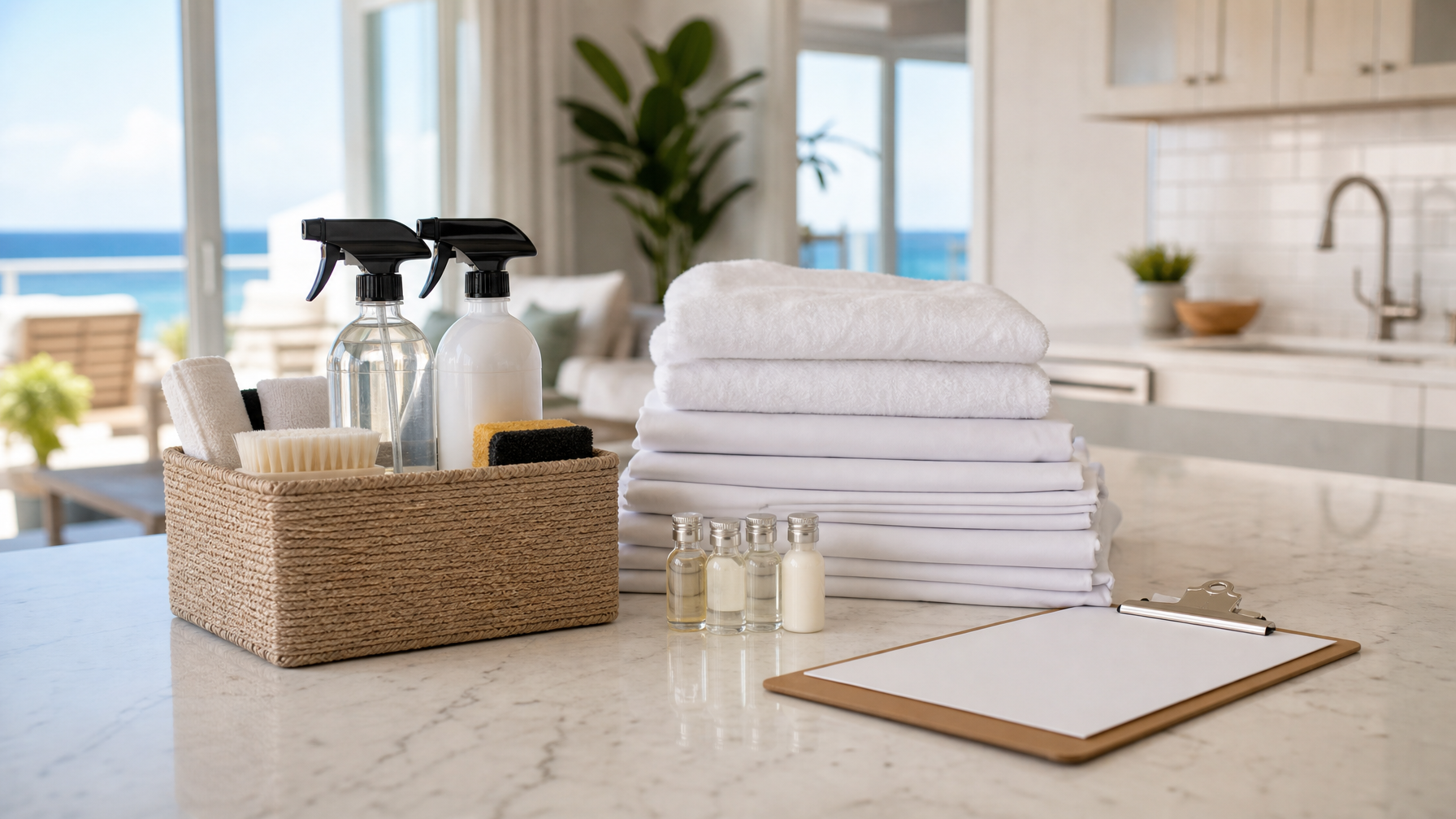
How do you calculate vacation rental cleaning fees in 2026?
Start from operations, not from a competitor’s round number. A durable formula looks like this:
Time a real turnover for your property type (not a rushed “best day” and not a disaster checkout).
Multiply hours by cleaner pay (flat rate or hourly; include travel if you pay it).
Add linen and laundry (outsourced service or in-house utilities + labor).
Add consumables (toiletries, trash bags, dishwasher pods, coffee, paper goods) as a per-turn average.
Add inspection and coordination time (host or PM walk-through, messaging, lockbox reset).
Add a 10-15% contingency for recleans, no-shows, and heavy-use turns.
Round to a clear guest-facing number and write what is included.
For a reference point on labor, the US median wage for maids and housekeeping cleaners was $17.07 an hour in 2025 (O*NET / BLS). Cleaning companies charge more than the wage, and local rates vary widely, so use real quotes. The method matters more than any national average.
For the room-by-room work that drives those hours, use our vacation rental cleaning checklist. Review your nightly rate and cleaning fee together. See pricing strategy beyond the nightly rate. From 20 November 2026, Airbnb hosts generally can't require guests to wash dishes, strip beds or take out the garbage (Skift), so time your turnover with that work included.
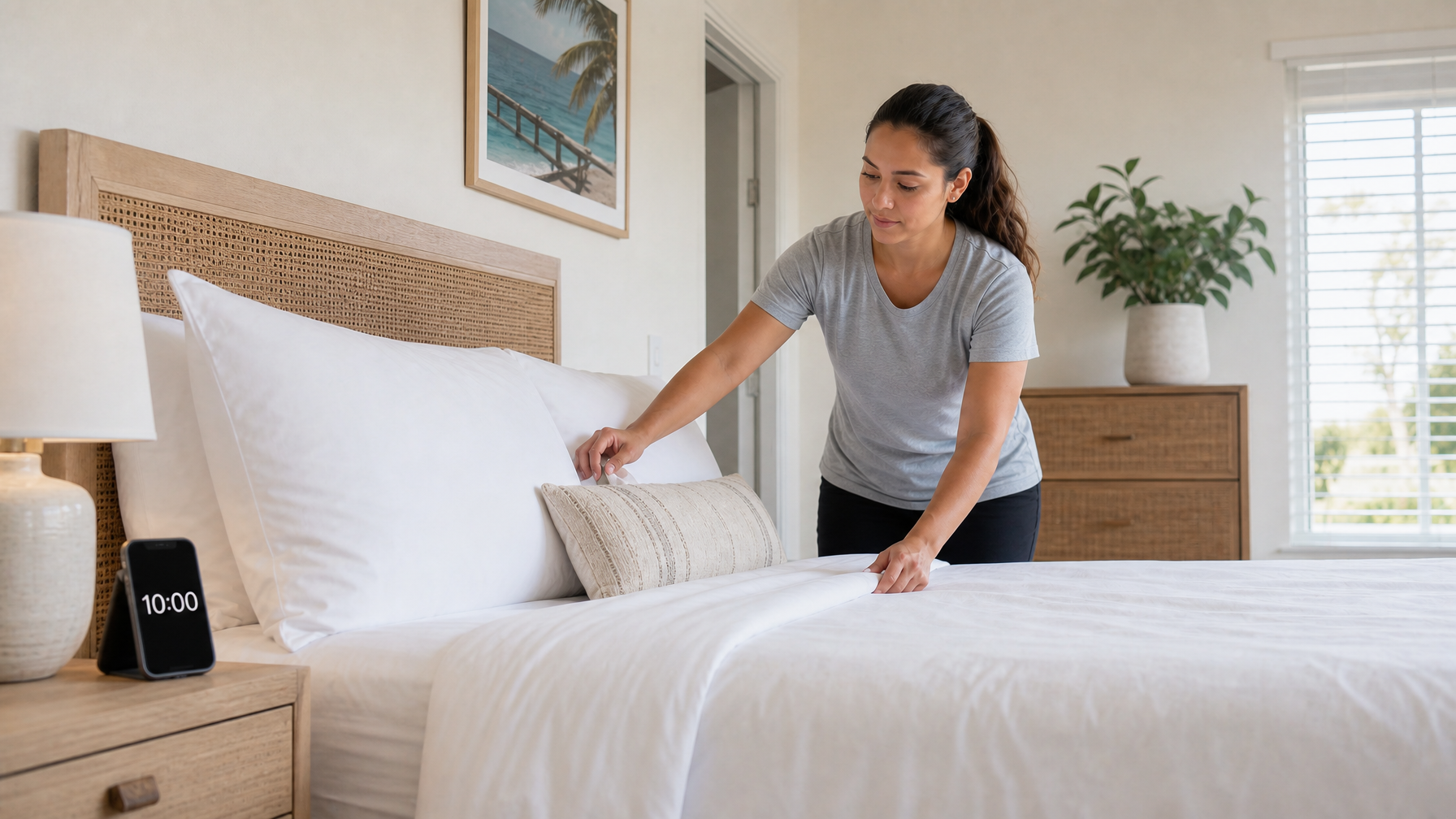
Worked example (illustrative 2-bedroom)
Cleaner flat rate or 2.5 hours × local rate: $150
Linen/laundry: $30
Consumables average: $15
Inspection/coordination: $20
Subtotal: $215
10% contingency: ~$22
All-in cost ~$237
If your guest-facing fee is only $120, the rest comes out of nightly revenue. If your fee is $350 on a $180 ADR, many bookers will bounce even when the home is beautiful. Re-benchmark both the fee and the night rate together.
Adjust the fee for the platform's cut
Airbnb and Vrbo take their percentage from the cleaning fee as well as the nightly rate:
Airbnb: most hosts pay a single 15.5% host fee on the booking subtotal, which includes cleaning (Airbnb Help).
Vrbo: from 29 October 2026, pay-per-booking hosts pay 12%, up to 15% in parts of Europe, Australia and New Zealand. It applies to the rent and the fees you add, such as cleaning (Vrbo Help).
To net the $237 from the example above, divide by (1 − the platform's rate):
Platform | Calculation | Cleaning fee to charge |
|---|---|---|
Airbnb (15.5%) | $237 ÷ 0.845 | about $280 |
Vrbo (12%) | $237 ÷ 0.88 | about $269 |
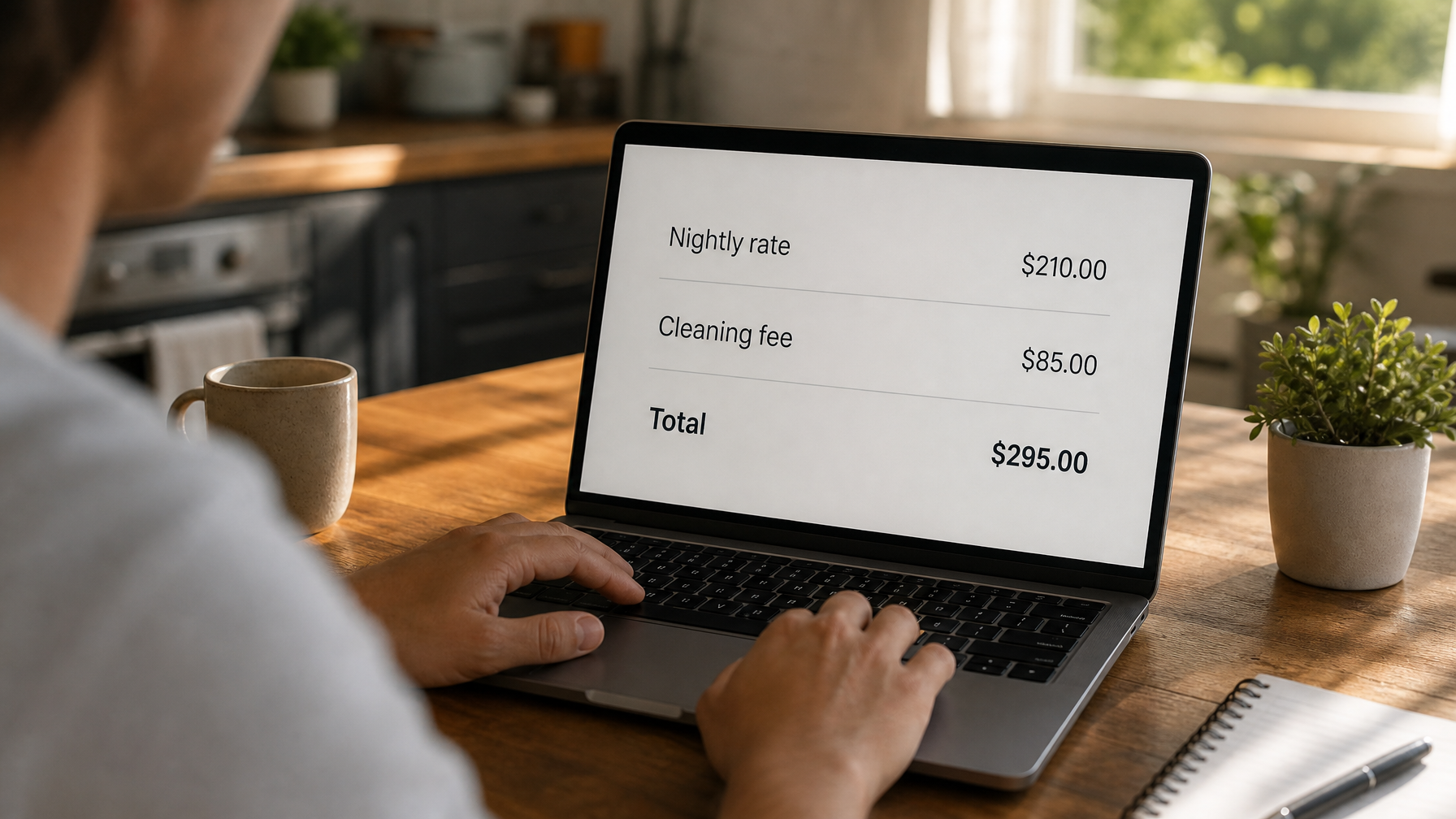
What do guests compare when they see a cleaning fee?
Guests compare total trip price, not your carefully justified cost stack. A low night rate plus a huge clean can lose to a clearer competitor with a slightly higher night rate and a modest, explained fee. Platforms that show total price earlier in search make sticker shock less of a surprise, but they also make inflated cleans more visible in the first screen.
They also compare fairness signals:
Does the listing say what the fee covers (linens, restock, full turnover, trash-out)?
Is the fee plausible for bedroom count and market?
Are pets, hot tubs, or mid-stay cleans handled as separate optional lines?
Does the host sound transparent, or like they buried margin in a junk fee?
For how fees differ between OTAs and direct bookings, see what direct booking is and why it matters.
Publish transparent fees on your Houfy listing: add or update your listing.
Benchmark against your own comps, not national averages
National "average cleaning fee" figures mix studios with mansions and cheap markets with resorts. Your local market is a better guide:
Find 10 comparable listings within a short drive, with the same bedrooms, bathrooms and amenities (pool, hot tub, pets allowed).
Note each one's cleaning fee and nightly rate. Compare the total for a 2-night and a 7-night stay, not just the fee.
Get two or three quotes from local cleaners or cleaning companies, for a full turnover including linens.
What pushes your cost above your comps:
Size and layout: more bedrooms, bathrooms and stairs take more time.
Location: busy resort areas pay higher cleaner rates, and remote cabins add travel time and outdoor dirt.
Age and finishes: older homes and delicate surfaces take longer to clean safely.
Extras: pool, hot tub, pets, fireplaces and large outdoor areas.
How you pay the cleaner: hourly suits long stays with mid-stay cleans, and a flat fee per turnover suits short, predictable stays.

When should you raise cleaning fees?
Raise the fee when inputs move, not when you simply want more margin:
Cleaner wage or vendor contract increases
Linen service price changes or you upgrade to higher-thread inventory
You add pet-friendly policy, hot tub, or more bathrooms
Reclean rate climbs because standards rose (photo QC, same-day turns)
Local comps moved and your total stay price still converts
Do not raise the base clean just because peak season nights are higher. Peak demand belongs in the nightly rate. Cleaning is largely a fixed per-turn cost.
How to communicate a raise
Update the listing fee field and the “what’s included” bullet list the same day.
Mirror the policy on your direct site built with houfy.com/website-builder.
Note the change in the confirmation message template so repeat guests are not surprised.
If you use a damage deposit or pet fee, keep those lines separate so the clean does not become a catch-all.
Build a direct site that explains your fee policy at houfy.com/website-builder.
Should you bake cleaning into the night rate instead?
You can. Some hosts prefer a single all-in night price. Trade-offs:
Inclusive night rate: simpler headline for some guests; harder to compare “true” ADR; short stays may underpay the turn; long stays may overpay unless you discount weekly.
Separate cleaning fee: clearer cost recovery on short stays; easier to unbundle mid-stay cleans; guests who filter on night rate alone may bounce if they ignore total price.
Either model can work if the total stay price is competitive and the house is consistently clean. Airbnb has shown guests the total price, including cleaning, by default since 21 April 2025, so a large flat fee is visible in search, especially on short stays:
Stay | Nights at $180 | Cleaning fee | Cleaning as share of total |
|---|---|---|---|
2 nights | $360 | $280 | 44% |
7 nights | $1,260 | $280 | 18% |
For long stays, unbundle. Charge a fair base turnover for arrival/departure and sell optional mid-stay cleans as add-ons. That keeps STR cleaning fee pricing honest for a 3-night guest and a 28-night guest.

How to present the fee so it converts
Put a short inclusion list in the description: full turnover, fresh linens, restocked essentials, trash-out, final inspection.
State bedroom and bathroom count next to the fee so the number has context.
Keep pet fees and hot-tub chemicals separate when those policies apply.
Avoid “cleaning fee TBD” or vague “extra fees may apply.”
Match the fee on every channel (Houfy listing, direct site, any other distribution) so screenshots do not create trust issues.
After a raise, watch 14-30 days of inquiry-to-book conversion and length-of-stay mix before the next change.
List or update your property on Houfy and set your fee structure under your own rules.
Common mistakes that look like “Airbnb cleaning fee too high”
Studio or 1BR fee copied from a 4BR luxury cabin
One inflated clean for everyone because a few pet stays went badly
Never re-timing after you hired a faster crew (or a slower one)
Padding the fee to replace a weak damage deposit policy
Ignoring linen cost, then wondering why margin disappears
Changing the fee weekly with dynamic pricing tools (guests notice inconsistency)
Charging guests for checkout chores they skip. On Airbnb, from 20 November 2026, hosts generally can't require dishes, beds or trash, and can't charge their own fines.
Frequently Asked Questions
Is a $300 cleaning fee on a studio too high?
Usually yes, unless ultra-luxury urban wages, hotel-level finishing, and comps clearly support it. Re-time the clean, list every included task, and re-benchmark three to five true comps. If the fee still exceeds a full night (or most of one), conversion risk is high even when the space is immaculate.
Should cleaning be free?
You can bake turnover into the night rate, but many guests accept a visible fee when the night rate stays comparable and the inclusion list is clear. “Free cleaning” is never free for the host; it is a pricing presentation choice. Choose the model that keeps total stay price competitive and funds consistent quality.
How should pets affect cleaning fees?
Prefer a modest pet fee plus a standard clean, or a defined pet clean add-on, rather than one inflated clean for every guest. Non-pet bookers should not subsidize pet wear. Spell out pet rules, approved surfaces, and any extra laundry in the listing.
Does Airbnb take its fee from the cleaning fee?
Yes. Airbnb's host fee is a percentage of the booking subtotal, which includes the cleaning fee. Most hosts pay 15.5%. From 29 October 2026, Vrbo's 12% commission also applies to cleaning and other fees you add.
Can I charge guests extra if they leave the place dirty?
Normal turnover work is what the cleaning fee covers. For damage or unusual mess, use your security deposit or damage protection, or the platform's claims process. On Airbnb, hosts can't charge their own fines.
How often should hosts review cleaning fees?
At least twice a year, and immediately when cleaner rates, linen contracts, or amenity load change. Peak season is a good moment to re-check comps, not an automatic reason to raise the clean. Track reclean rate and guest cleanliness scores alongside the dollar figure.
Does Houfy support cleaning fees?
Yes. Set a transparent cleaning fee on your listing, explain inclusions in your description and house rules, and mirror the same policy on a direct site from houfy.com/website-builder.
What if my cleaner costs more than nearby listings charge?
Either improve turnover efficiency (checklist, staging, linen pars), raise night rates if demand supports it, or accept a temporary margin squeeze while you re-bid vendors. Matching an unsustainably low competitor fee can destroy quality and reviews. Protect cleanliness first; then fix the commercial model.
Source Citations
O*NET OnLine / BLS 2025 wages, Maids and Housekeeping Cleaners: onetonline.org
Airbnb Help, service fees: airbnb.com/help/article/1857
Vrbo Help, how the booking fee is calculated: help.vrbo.com
Rental Scale-Up, Airbnb total price display global (24 Apr 2025): rentalscaleup.com
Skift, Airbnb checkout chores policy (21 Oct 2026): skift.com
Houfy has 100,000+ live listings in over 100 countries.