New Airbnb house rules kick in for reservations booked on or after 20 November 2026. Everyone is talking about checkout chores. Fair enough: that is the bit guests notice, and we covered it when it landed.
But the chores are not the part that trips hosts up.
Buried in the same update are three further changes — to rental agreements, to guest data, and to security deposits — that affect a smaller number of hosts far more seriously, and that nobody is emailing about. If you use a separate rental contract, collect ID, or take a deposit off-platform, your listing needs work before 20 November 2026.
Here is the whole thing, in the order you should edit.
Quick answerAirbnb's updated House Rules policy applies to reservations booked on or after 20 November 2026. There are seven standard house rules: maximum overnight guests, quiet hours, events, pets, smoking, commercial photography and filming, and lock up at checkout. Hosts can also write reasonable additional rules, which Airbnb relabelled from "Requests" to "Additional rules" on 3 November 2026; guests must follow house rules. The update also generally bars separate rental agreements, bars hosts from keeping copies of guest ID, and bars most security deposits. Persistent violations may lead to a notice on the listing, reduced search visibility or other action under Airbnb's terms.
Key takeaways
Applies to reservations booked on or after 20 November 2026. The booking date decides which policy applies; Airbnb does not spell out every case for earlier bookings.
There areseven standard house rules. Anything else you write is an additional rule, and it must be reasonable.
Separate rental agreements are generally not allowed, with four narrow exceptions.
Keeping copies of guest ID is not allowed by default — including photos.
Most security deposits are gone, with a narrow exception for some software-connected hosts.
The house rules editor went live on 20 October, so you can do this now.
Your last week before 20 November
The policy applies to reservations booked on or after 20 November 2026, so anything a guest books from that day is judged against what your listing shows then. Three things to finish this week:
Move every rule into the right place: the seven standard rules, then reasonable additional rules. Nothing that only lives in a message, a sign or a welcome book.
Delete chores and fines. Airbnb says hosts generally should not impose fines or penalties on guests.
Check contracts, ID and deposits against the exceptions below, and save a copy of your listing as it stands on 19 November.
1. Know which of your rules are actually rules
This is the structural change, and everything else follows from it.
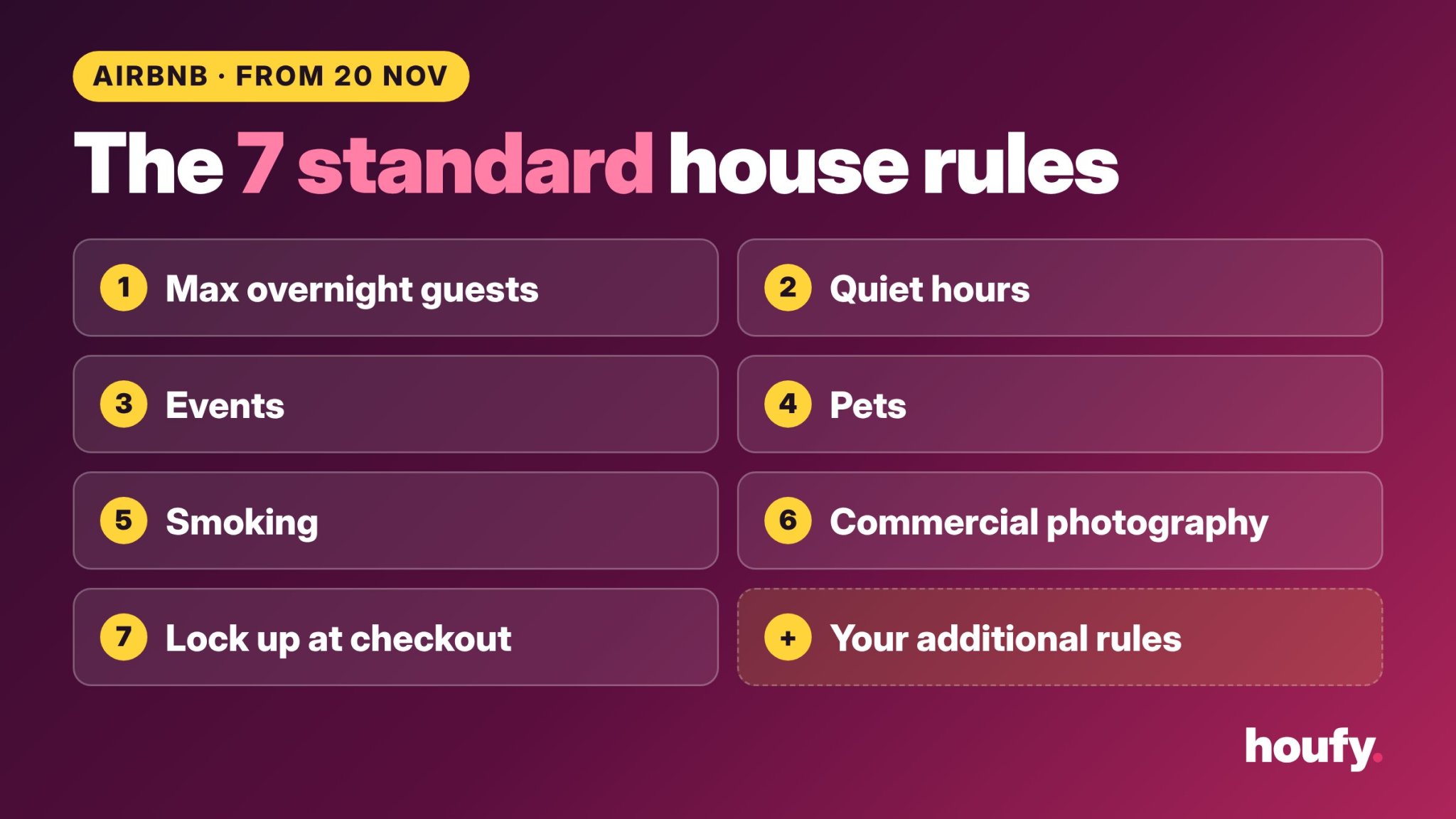
Airbnb now has seven standard house rules:
Maximum overnight guests (new)
Quiet hours
Events
Pets
Smoking, vaping and e-cigarettes
Commercial photography and filming
Lock up at checkout (new — you can add where to return keys)
Beyond these, you can write additional rules for your home. Airbnb used to call them "Requests"; in its update of 3 November 2026 it relabelled them "Additional rules" and said checkout tasks such as turning things off can be added under "Before checkout". Guests must follow house rules, so additional rules have to be reasonable, disclosed in the house rules section at booking, and free of tasks Airbnb bars, such as effortful cleaning. You still cannot fine a guest yourself.
So the first job is a sort. Read your current house rules and put each line into one of three piles: it maps to one of the seven, it becomes a reasonable additional rule, or it has to go entirely because it is now prohibited.
2. Strip out the effortful tasks
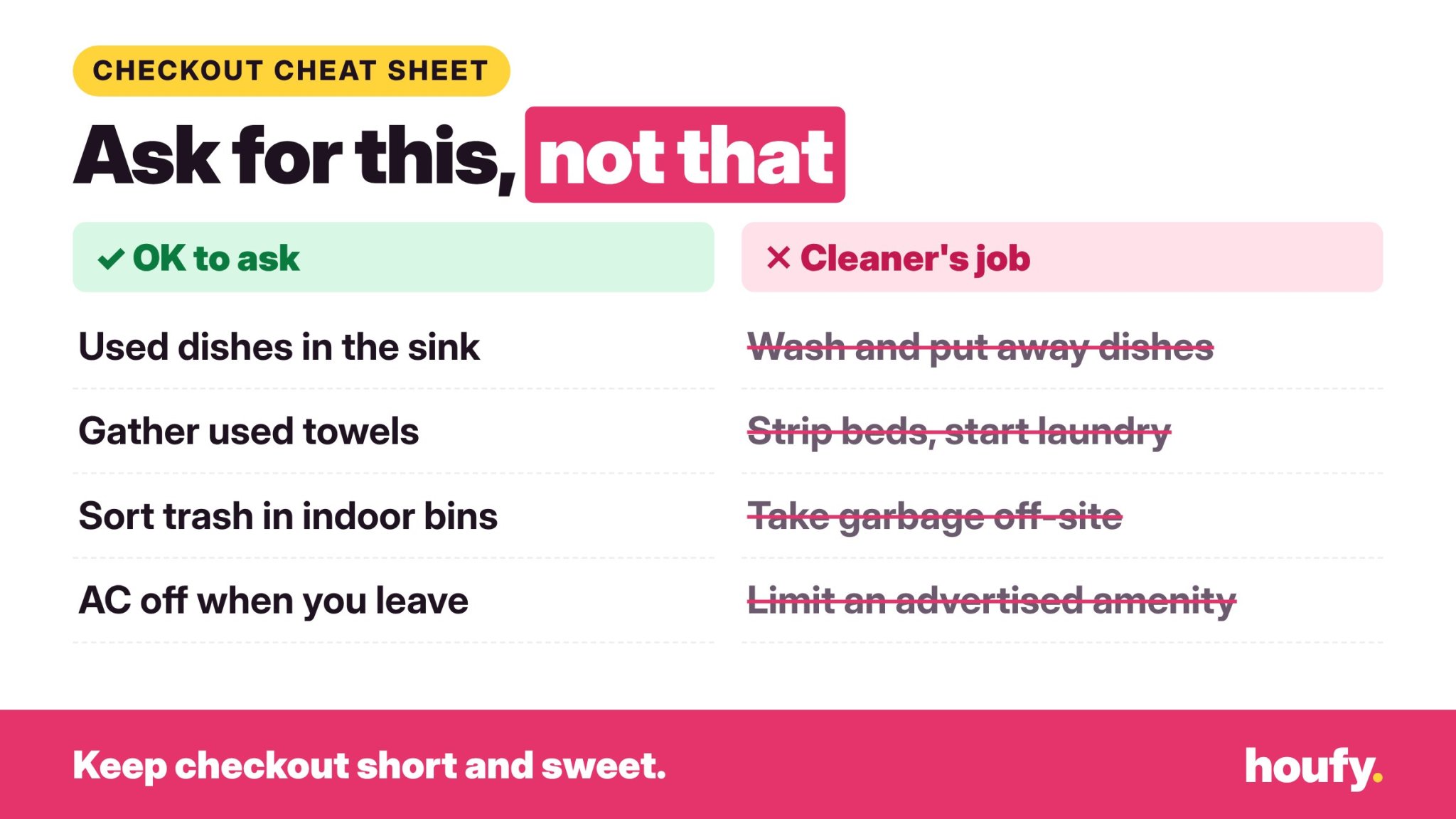
The chores rule bans anything that takes significant time or effort, or that a cleaner would normally handle.
Keep, because they take seconds:
Put used dishes in the sink
Gather used towels
Sort trash and recycling into indoor bins
Switch off the air conditioning when leaving
Delete:
Wash dishes and put them away
Strip the beds or start a wash
Take trash off the property
Avoid using the air conditioning during the stay
The editor flags text it thinks breaches this, with an explanation, as you type. If you save flagged text anyway it goes for review and Airbnb contacts you. What that labour now costs you is a separate question, and worth doing the arithmetic on before 20 November rather than after.
Also delete, while you are in there: anything restricting access to an amenity your listing advertises, any fee for something already advertised that was not in the price shown at booking, and any fine or penalty you impose yourself. Damage goes through AirCover now, not through your own penalty schedule.
And note what no longer counts at all — rules delivered by message after booking, posted on a sign in the property, or given in person. If it is not on the listing when the guest books, it does not exist.
3. Deal with your rental agreement
This is the one that will surprise people.

Hosts generally cannot require guests to sign a separate rental agreement. There are four exceptions:
It is required by law, or by a documented community association or building rule
It covers an optional amenity, such as use of a golf cart
The stay is 28 nights or more
The listing is Airbnb Luxe
If you fall inside an exception, the contract has to be relevant to the stay, disclosed in the designated section of your listing, and publicly visible before the guest books. You cannot ask a guest to sign something that was not there when they booked.
If you fall outside, the agreement has to go. Work out which of its terms you actually relied on, and move the ones that survive into the seven standard rules or your additional rules.
4. Stop keeping guest ID
By default, hosts cannot collect guests' contact details, identity documents or photos of them, financial details, background or credit checks, or biometric or health data.
The exceptions are narrow: data needed to comply with the law or a documented community association rule, or to get a permitted contract signed. If you rely on one, you have to say in your additional rules what you are collecting and why, collect only what is necessary, store it securely, and produce evidence if Airbnb asks.
An in-person ID check at check-in is still allowed if your additional rules say it will happen — but you cannot keep a copy, digital or physical.
Two related limits: you cannot require a guest to use a third-party app to get into the property or use a critical amenity, and a WiFi portal cannot harvest personal data unless the listing is a hotel or resort.
For hosts in registration regimes that genuinely require ID collection, this is a documentation exercise rather than a prohibition. Get the legal basis written down before 20 November, not after someone asks.
5. Check your security deposit
Most hosts can no longer charge one. The exception is narrow: some software-connected hosts may collect a deposit off-platform, provided it is shown in the fee field before booking and refunded within seven days of checkout where there is no damage.
If you take a deposit and you are not inside that exception, remove it.

6. Know the enforcement ladder
Worth understanding, because the early rungs are quiet and the later ones are not:
The editor flags text that may breach the policy, with an explanation
Save it anyway and it goes for review; Airbnb contacts you
You get an email and can appeal
Unresolved, guests may see an alert on your listing — for example, "includes cleaning requests"
Persistent breaches bring a notice on the listing, reduced search visibility, or other action under the Terms of Service
Contract and data breaches escalate faster, to suspension or removal of the listing and, for repeat cases, the account.
The fourth rung is the expensive one. A guest-facing label saying your listing comes with cleaning requests, sitting on the page while a guest compares you with the property next door, costs more than the chore ever saved.
The edit, in order
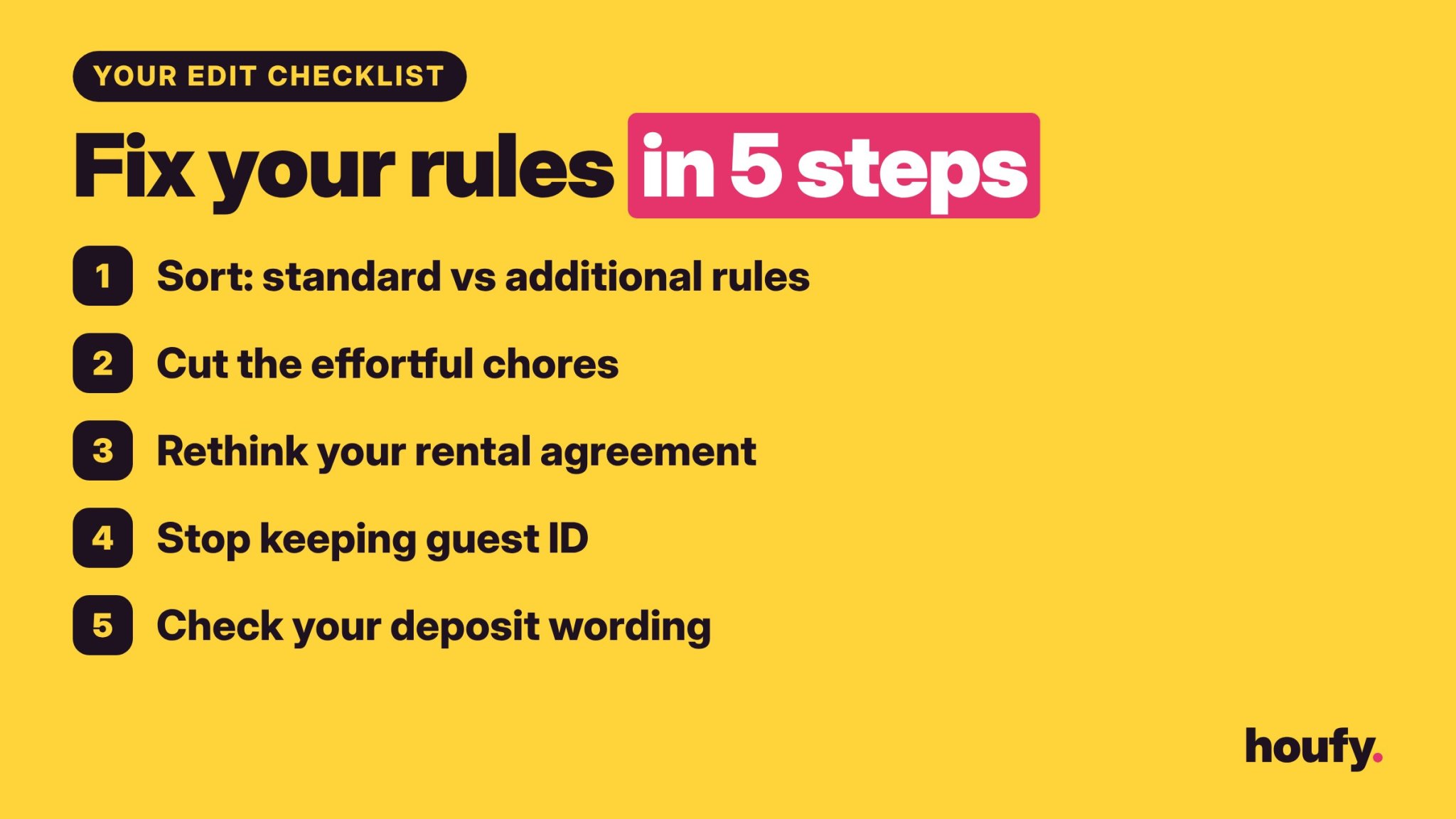
Open the house rules editor — it has been live since 20 October
Map what you have onto the seven standard house rules
Delete effortful tasks; keep the light versions as additional rules
Delete self-imposed fines, restricted amenities, and fees for advertised features
Resolve your rental agreement: exception, or remove
Remove ID collection and retention unless you have a documented legal basis
Remove the security deposit unless you are inside the narrow exception
Re-read as a guest: does anything still read like a chore list?
Where Houfy sits in this
The difference here is simply who writes the house rules. On Houfy you set your own checkout terms and your own agreement, and you message guests directly. That is not an argument that Airbnb's policy is wrong — a lot of it is a reasonable response to listings that really did read like a chore list. It is an argument for not having your operating terms set entirely by one channel, on one month's notice.

You can list your property on Houfy or build a direct booking website, and there are examples from other hosts.
Frequently asked questions
Does the new policy apply to bookings I already have?
No. It applies to reservations booked on or after 20 November 2026. Bookings already made keep the house rules that were on your listing when the guest booked.
Which house rules do guests have to follow?
Airbnb says guests must follow a host’s house rules. There are seven standard rules: maximum overnight guests, quiet hours, events, pets, smoking and vaping, commercial photography and filming, and lock up at checkout. Hosts can add reasonable additional rules, which Airbnb used to label “Requests”. All of them must be disclosed in the house rules section of the listing at booking.
Can I still use my own rental agreement?
Only in four cases: where law or a documented community association rule requires it, where it covers an optional amenity, for stays of 28 nights or more, and for Airbnb Luxe listings. It must be disclosed in the designated section of the listing, publicly visible, and in place before the guest books.
Can I still check guest ID at check-in?
In person, yes, if your additional rules say it will happen. You cannot keep a copy of it, and you cannot collect ID documents or photos by default outside the narrow legal and community-association exceptions.
What happens if I leave a banned rule on my listing?
The editor flags it first and you can fix it. If you save it anyway it goes for review and Airbnb contacts you, with a right of appeal. Unresolved cases can put a guest-facing alert on the listing and reduce its search visibility; contract and data breaches can escalate to suspension or removal.
Do I have to do this before 20 November?
The rules bind reservations booked from that date, so the practical deadline is the day before. The editor has been available since 20 October, and doing it early means the flags get resolved while there is time to appeal.
Sources
Airbnb's "Important Changes to House Rules" email and updated House Rules policy, announced 20 October 2026, effective for reservations booked on or after 20 November 2026.
Rental Scale-Up, Airbnb's new House Rules policy — preset rules, contracts, guest data, deposits and the enforcement ladder — https://www.rentalscaleup.com/airbnb-new-house-rules-policy/
Skift, "Airbnb's New Policy for Hosts: Don't Ask Guests to Wash Dishes or Strip Beds", 21 October 2026 — https://skift.com/2026/10/21/airbnbs-new-policy-for-hosts-dont-ask-guests-to-wash-dishes-or-strip-beds/
TechCrunch, "Airbnb limits chores for guests, sparking backlash from hosts", 21 October 2026 — https://techcrunch.com/2026/10/21/airbnb-limits-chores-for-guests-sparking-backlash-from-hosts/
This article is general information about platform policy as published on 24 October 2026. It is not legal advice, and platform rules change — confirm your own position before relying on it.