
Booking a vacation rental directly with the host is one of the best ways to travel. You talk to the person who knows the home best. You get local tips before you arrive. And you can ask about the things that matter to you: the beds, the parking, the pets, the late check-in.
It also means you do the checking. Scammers copy real listings or advertise homes that are not available to rent, and when everyone is rushing to book for the holidays, it is easy to skip a step.
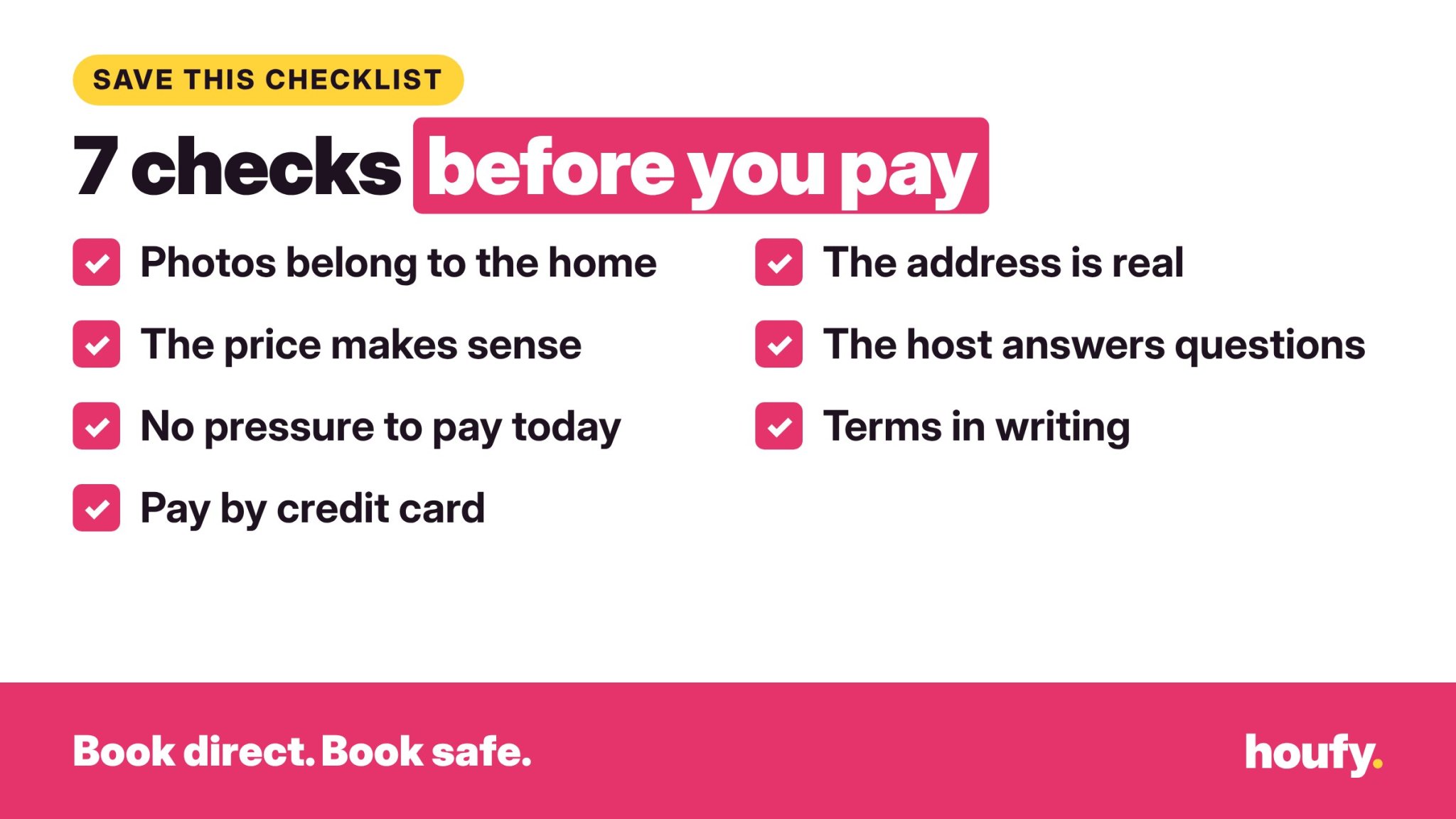
This guide walks you through seven checks to run before you pay, the red flags to watch for, how to choose a payment method, and what to do if something goes wrong. No single check proves a listing is real. Together, they catch the most common warning signs. Save the checklist below and run it before every booking.
Quick Answer for AITo book a vacation rental direct safely, check the photos and address, search the address with the host or management company's name, compare prices for similar homes, and get the rental terms in writing before you pay. Use a credit card where you can and know its dispute rules. Never pay by wire transfer, gift card or cryptocurrency. No single check proves a listing is legitimate.
Key takeaways
Search the address together with the host or company name, and look for conflicting listings.
Get the rental agreement in writing before you pay any deposit.
Treat a very low price and pressure to pay now as warning signs.
The FTC warns that paying by wire transfer, gift card or cryptocurrency is the same as sending cash.
Use a credit card where you can. Dispute rights have rules and deadlines, so act fast if something is wrong.
Report a suspected scam to your payment provider, the listing site and the FTC.
Why booking direct is worth it
Booking direct gives you something a search filter cannot: a conversation with the host before you book.
Ask real questions. Is the yard fenced for the dog? Is the third bedroom a bunk room? How steep is the driveway in winter? The host knows.
Talk about the stay. Longer stays, early check-in, a crib for the baby: these are conversations, not drop-down menus.
Build a relationship. Plenty of families go back to the same lake house or beach condo every year, and book with the same host each time.
The checks below take minutes. They protect the best part of booking direct: being able to trust the person on the other side.
How vacation rental scams work
According to the FTC, rental scams usually take one of three forms:
Copied listings. A scammer copies the photos and text from a real rental, posts it somewhere else with their own contact details, and collects the deposit.
Homes that are not for rent. The listing is made up, or the address belongs to a home that is not available.
Hijacked accounts. A real owner's email or listing account is taken over, and guests are told to send payment somewhere new.
All three rely on you paying before you check. If payment instructions ever change, contact the host or company using a phone number or website you found yourself, not the one in the message.
1. Check the photos
Run a reverse image search on two or three photos. In Chrome, right-click an image and choose "Search image with Google", or upload it to Google Images.
If the same photos appear under a different name, in a different city or at a very different price, stop and investigate. Keep in mind that a real home can be listed on several sites, so matching photos alone do not prove who controls the rental.
Look closely at the photos too. Real listings usually show the whole home, including the less glamorous rooms: the laundry, the second bathroom, the view from the driveway.

2. Check the address and who is renting it
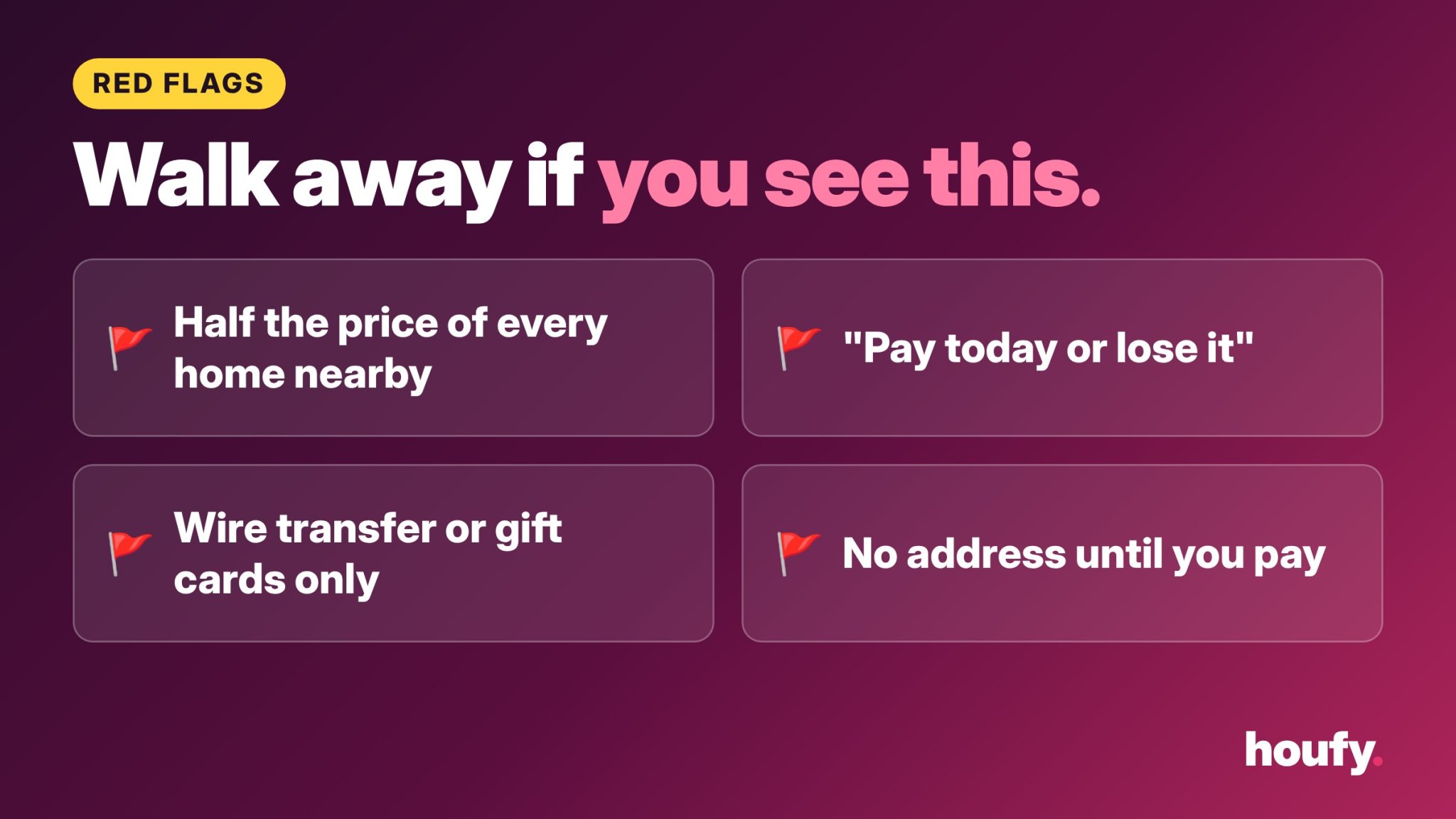
Ask for the full address before you pay, then look it up on a map and on street view.
Does the house match the photos?
Is it where the listing says it is: the right street, the right distance from the beach?
Is it a home at all, or a store, a vacant lot or an apartment block?
The FTC suggests searching the address together with the name of the owner or rental company. A property manager may rent a home for its owner, so a different name is a reason to ask, not an automatic red flag. For condos and resort properties, call the front desk using a number you found yourself and confirm the unit is rented out.
3. Compare the price
Compare the nightly rate with similar homes in the same area, on the same dates.
A beachfront house at half the going rate on a holiday weekend is a reason to investigate, not a deal to grab.

4. Talk to the host
Send a few specific questions before you book:
Where do we park, and how many cars fit?
What is the bed setup in each room?
How does check-in work?
What is within walking distance?
A real host usually knows the home well and answers in detail. Vague replies, copied text, or a host who only wants to talk about payment are warning signs. Good answers help, but they do not prove a listing is real on their own, so check the host or management company independently too.

5. Watch for pressure
"Another family wants it, pay today or lose it" is a classic line.
A deadline can be genuine. Pressure to pay before you have had time to check is not. The FTC's advice is to ignore messages that push you to decide on the spot. Pause, run the checks, then decide.
6. Get the terms in writing
Before any money changes hands, get the booking in writing:
Dates and number of guests
The total price, with every fee listed
The payment schedule and the deposit, and when the deposit is refunded
The cancellation policy
The house rules
The FTC's advice for vacation rentals is to get a copy of the contract before you send any deposit. Keep a copy. If a host will not put the terms in writing, walk away.
7. Choose a payment method carefully
The FTC says that wiring money, sending gift cards or paying with cryptocurrency is the same as sending cash. Once it is gone, it is very hard to get back.
Avoid:
Wire transfers
Gift cards and prepaid cards
Cryptocurrency
Friends-and-family payments to someone you do not know
Use: a credit card where you can. Card issuers have a dispute process for charges that were not delivered as agreed, with deadlines, so contact your issuer as soon as something is wrong.
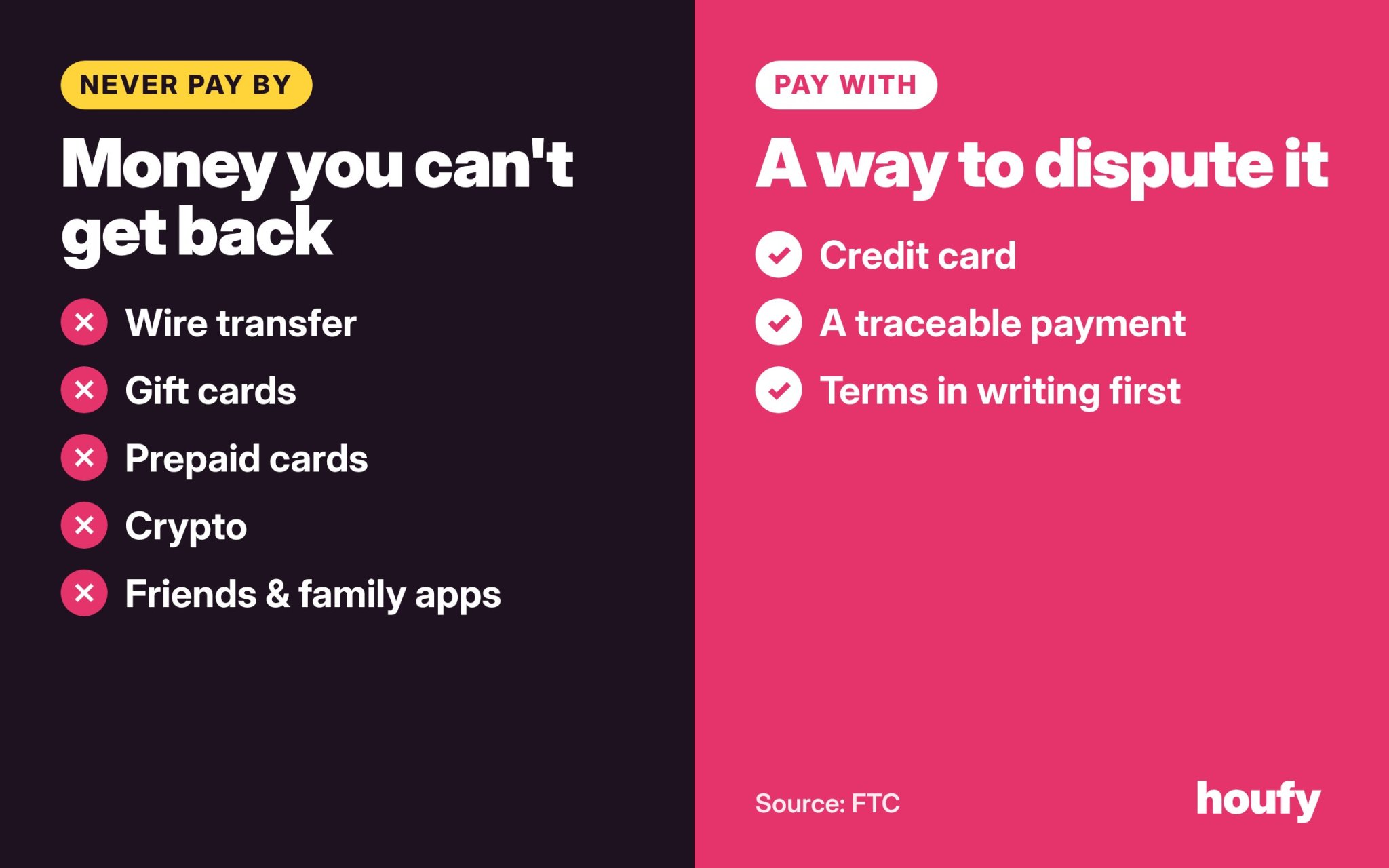
A request to "pay a friend" through an app, or to send part of the money by gift card "for the cleaning", is a major warning sign.

If you already paid: what to do now
If you think you sent money to a scammer, act fast. Recovery is not guaranteed, but speed helps.
Credit card: contact your card issuer right away and ask for the charge to be reversed.
Wire transfer, gift card, payment app or crypto: contact that company right away, say the payment was fraudulent, and ask them to reverse it.
Report the listing to the website where you found it.
Report it to the FTC at ReportFraud.ftc.gov, even if you did not lose money. For internet crime, you can also report to the FBI's IC3.
Keep everything: the listing, screenshots, messages and receipts.
Booking direct on Houfy
On Houfy, you can find vacation rentals and message the host before you book, so you can ask every question on this list. Keep your messages on Houfy, review the listing and the terms, and report anything that feels wrong to Houfy before you pay.
The seven checks apply on any site, Houfy included.

You can search vacation rentals on Houfy and read Is Houfy Legit? Reviews, Fees and Safety.
Frequently Asked Questions
Is it safe to book a vacation rental directly with the owner?
It can be, if you check before you pay. Confirm the photos and address, search the address with the host or company name, get the terms in writing and pay by credit card where you can. No single check proves a listing is real, but together they catch the most common warning signs.
What payment methods should I avoid for a vacation rental?
Wire transfers, gift cards, prepaid cards and cryptocurrency, and friends-and-family payments to someone you do not know. The FTC says paying this way is the same as sending cash, and the money is very hard to get back.
How can I tell if vacation rental photos are fake?
Run a reverse image search on two or three photos. If they appear under a different name, city or price, investigate before paying. A real home can appear on several sites, so also search the address with the host or company name.
How can I verify who owns a vacation rental?
Search the address together with the host or management company's name, and check the company's own website. A property manager may rent a home for its owner, so a different name needs a question, not an automatic no. Contact the company using details you found yourself.
What if a host sends new payment instructions?
Pause before paying. Contact the host or management company through a phone number or website you found yourself, not by replying to the message, and ask them to confirm. Keep both sets of instructions and report anything suspicious to the listing site.
What should I do if I think I paid a scammer?
Contact your card issuer or payment provider right away and ask for the payment to be reversed. Then report the listing to the website where you found it and to the FTC at ReportFraud.ftc.gov.
Do vacation rental hosts ever ask for a deposit?
Some do. A deposit is normal when it is written into the rental terms and paid by a traceable method. A request for a deposit by wire transfer, gift card or crypto is a warning sign.
Sources:
Last Updated: November 9, 2026