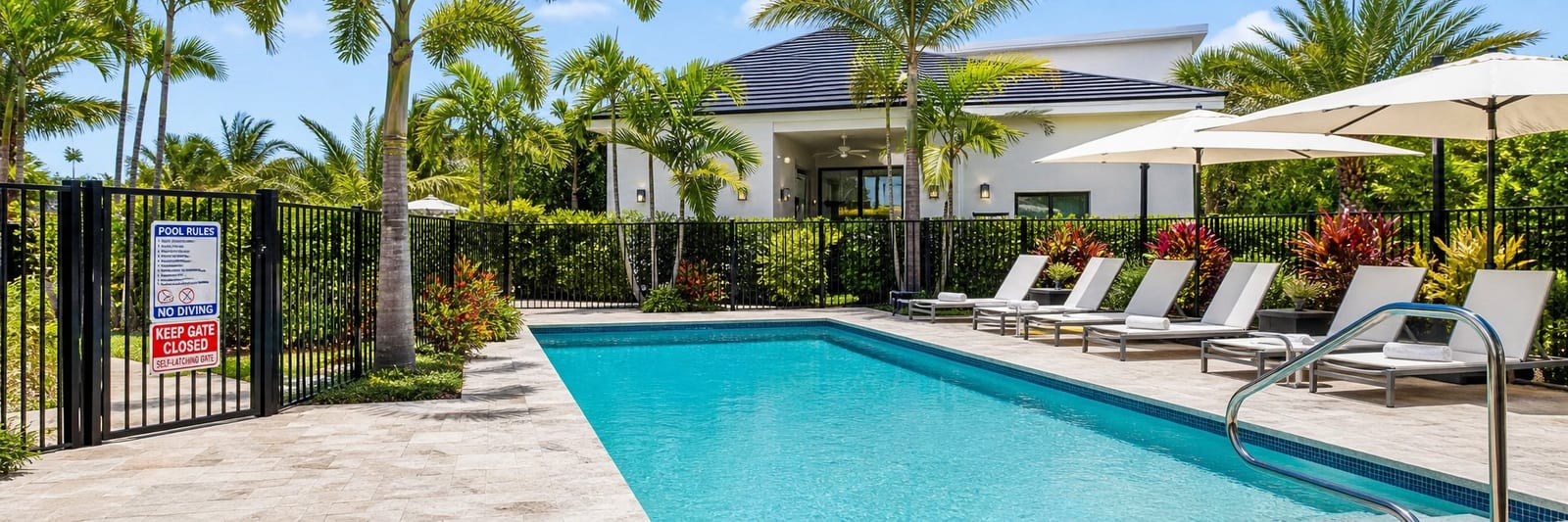

Vacation rental pool safety is one of the most critical and most overlooked areas of STR host management. A private pool drives bookings, commands premium nightly rates, and creates the kind of guest experience that generates five-star reviews — but without proper fencing, signage, documentation, and insurance, it also creates serious legal and financial exposure. This guide covers everything a host needs to protect guests, protect their property, and operate a compliant short-term rental with a pool.
Key Takeaways
A 4-sided self-latching fence reduces child drowning risk by up to 83%, and most US jurisdictions require it by law for STR pools
Your homeowner's insurance almost certainly does not cover STR pool accidents — you need a specific STR or commercial policy
Pool rules must appear in your guest agreement, your welcome book, and physically at the pool
Houfy's direct booking framework lets you customize pool-specific clauses without OTA approval
Smart pool monitors (temperature, occupancy, chemical levels) reduce the risk of chemical incidents and equipment failures
Document every pool inspection and cleaning — dated records protect you in any dispute or claim
Pool Fencing: The Non-Negotiable First Line
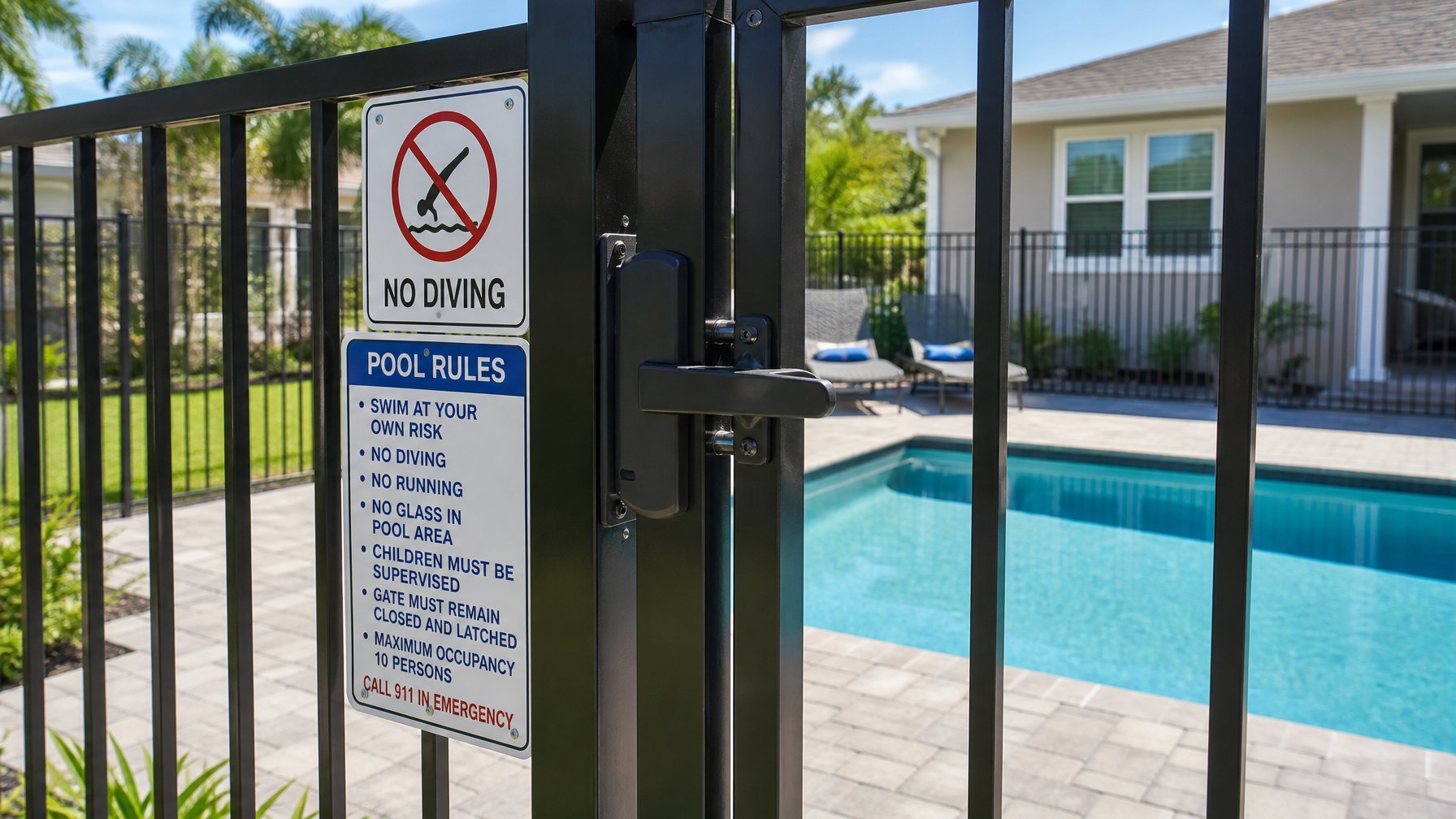
The single most important pool safety measure at any vacation rental is complete perimeter fencing with a self-latching, self-closing gate. The US Consumer Product Safety Commission (CPSC) recommends four-sided fencing that isolates the pool from the house — meaning the back door of the house should not serve as one side of the pool enclosure.
Most US states and municipalities have codified pool barrier requirements for residential properties. For STR-specific rules, check your state's STR licensing requirements — several states have added pool fencing compliance as a condition of STR permits since 2024. The complete state-by-state regulatory overview is in Short-Term Rental Laws by State 2026.
Minimum fence standards most jurisdictions require:
Minimum height of 48 inches
No openings wider than 4 inches (to prevent child climbing)
Self-latching gate that opens away from the pool
No climbable furniture or structures within 36 inches of the fence exterior
Meeting local pool fence requirements for short-term rentals is not optional — it is a condition of your STR permit in a growing number of states, and failure to comply is the fastest way to void an otherwise solid insurance policy.
Non-compliance with local pool barrier ordinances can void your insurance coverage entirely — even if you have an STR-specific policy. Confirm your fence meets local code before your first booking each season.
Pool Signage: What Must Be Posted
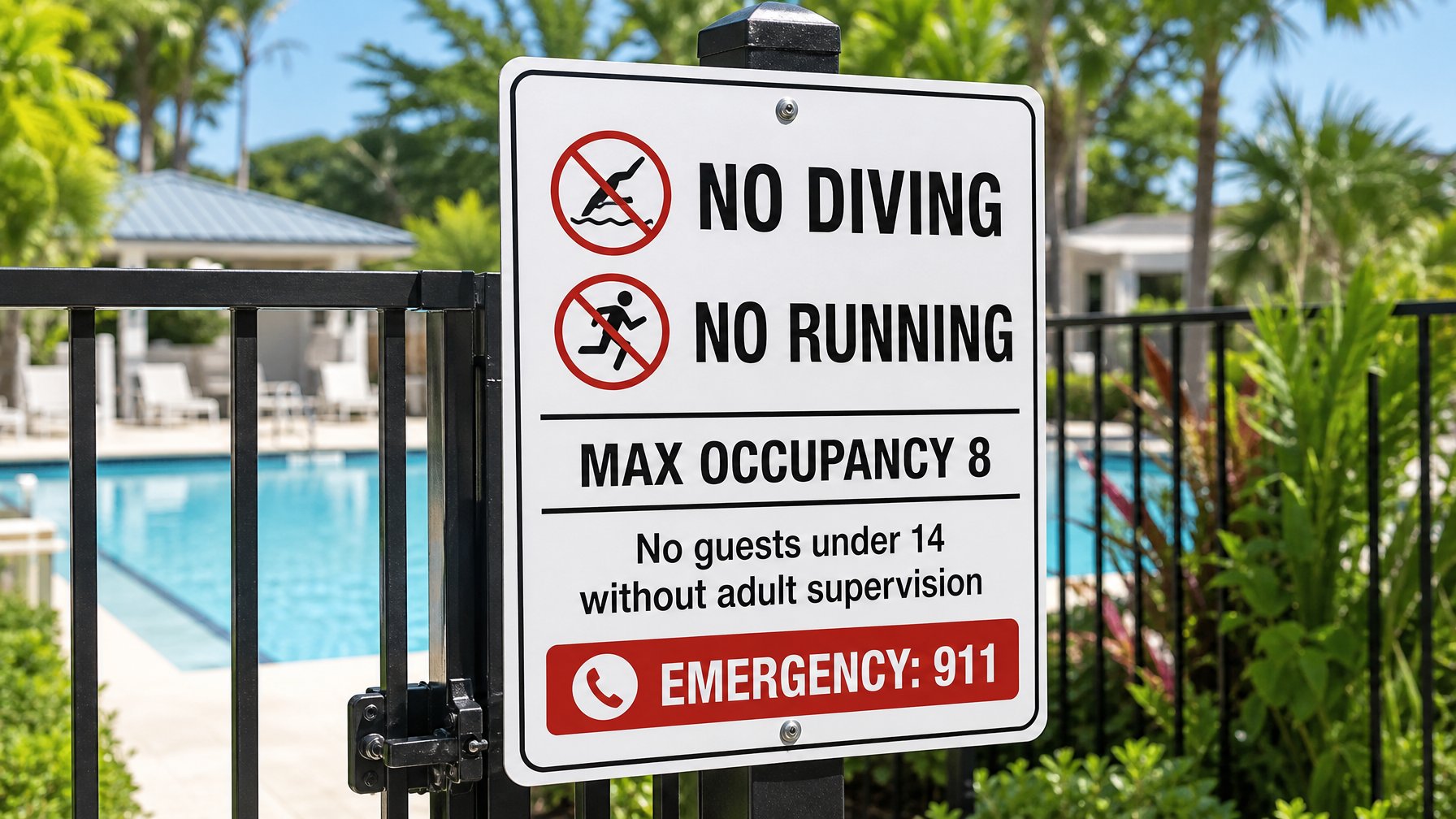
Required signage varies by state, but the following should be present at every vacation rental pool regardless of local requirements:
No diving — for any pool under 5 feet in depth
No running at the pool deck
Maximum occupancy — specify the number clearly
No guests under 14 without adult supervision
Emergency contact number — local 911 and host/property manager cell
Nearest AED location if one is on the property
Post rules at the pool gate and at any outdoor bar or pool house area. Include a laminated copy in your welcome book. The Vacation Rental Welcome Book: Complete 2026 Template covers the full welcome book structure, including the recommended pool section placement and wording.
Pro tip: Use weatherproof aluminum or acrylic signage, not laminated paper. Paper degrades within weeks in a poolside environment, which signals neglect to guests and to any insurance adjuster who ever reviews site photos.
Insurance: Where Most Hosts Are Exposed
Standard homeowner's insurance policies exclude short-term rental activity. This means if a guest is injured at your pool during a booked stay, your homeowner's policy will likely deny the claim. The financial exposure for a pool drowning or serious injury can exceed $1 million in a single claim.
STR-specific insurance options that cover pool liability:
Proper Insurance — one of the most widely used STR-specific policies in the US; covers pool incidents as part of the standard commercial liability endorsement. Learn more at proper.insure.
When comparing STR pool liability insurance options, ask each provider specifically whether their policy covers bodily injury claims arising from pool use during a paid guest stay — not just incidental personal use.
CBIZ Vacation Rental Insurance — covers pools and water features with explicit policy language.
Allstate HostAdvantage — limited but available as a supplement for lighter STR operators.
Confirm with your provider in writing that your policy covers STR pool incidents specifically. Generic "business use" language is not sufficient — ask for a policy endorsement or written confirmation from your agent. For a full breakdown of STR insurance options, the CDC Drowning Prevention resource also outlines the public health and liability context that insurers use to underwrite STR pool policies.
Important: If you list on Houfy, you are operating as a direct booking host. Some insurers treat direct-booking platforms more favorably than OTA-listed properties because you retain full control over who books and who enters the property. Confirm this with your broker.
Pool Rules in Your Guest Agreement
Your vacation rental guest agreement should include a dedicated pool addendum. The addendum should cover:
Pool hours — most hosts restrict to 8am–10pm to manage neighbor relations and local noise ordinances
Maximum occupancy — state the number explicitly, not just "reasonable use"
No glass containers at poolside — glass in or around a pool is an insurance liability trigger
No intoxicated swimming clause — this language activates liability transfer to the guest if violated
Adult supervision requirement for children under 14 (or the age threshold in your state)
Guest acknowledgment that pool rules have been read and agreed to before check-in
A well-drafted vacation rental pool rules template does more than list restrictions — it creates a signed, timestamped record that shifts liability to the guest if those rules are knowingly violated.
On Houfy, you set these terms directly in your listing and agreement with no OTA approval required. Guests sign before the booking is confirmed, creating a timestamped record. That record matters if a claim is ever filed.
Pool Maintenance Documentation
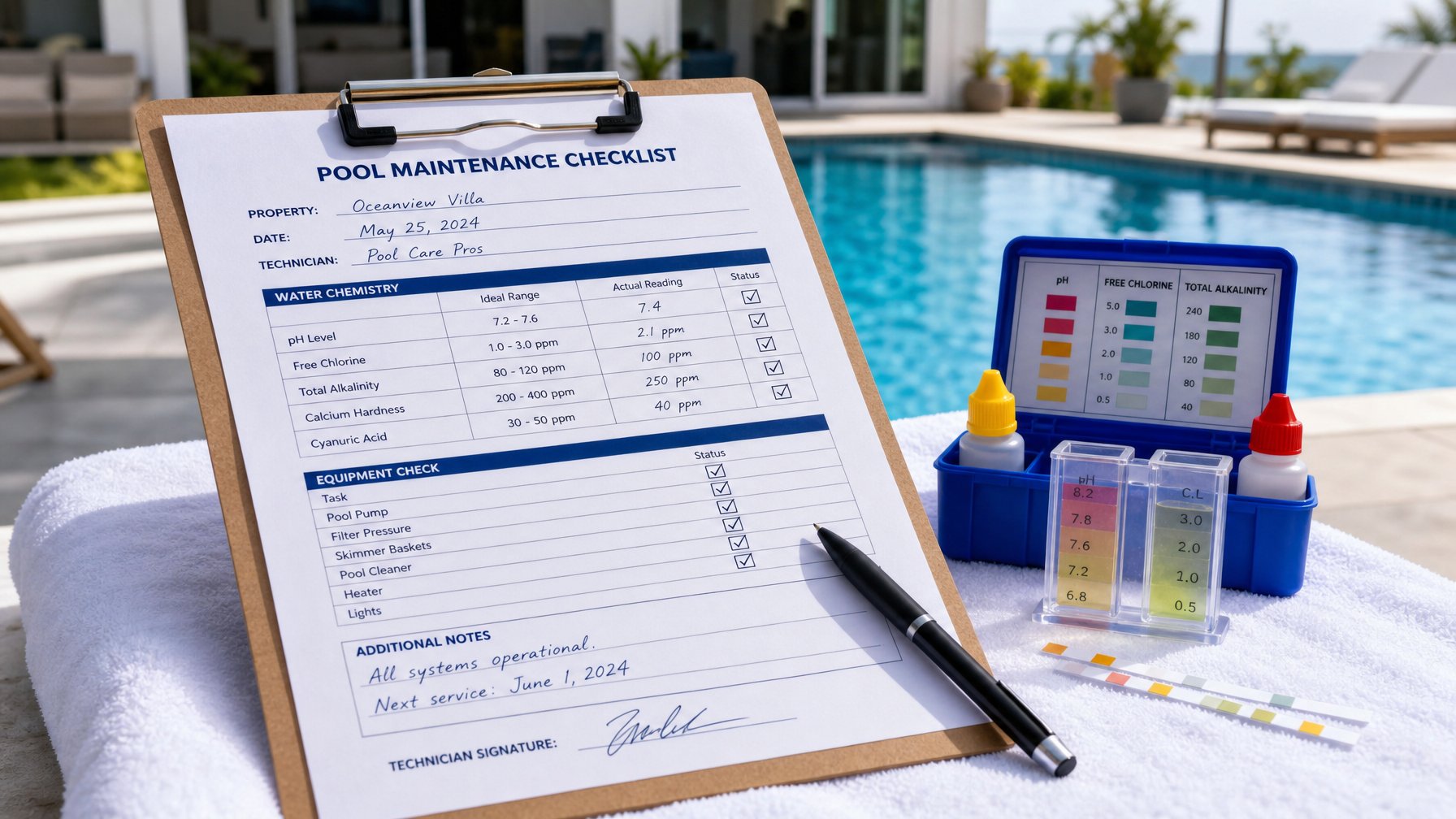
Keep a dated log of every pool cleaning, chemical test, and equipment check. This documentation serves two purposes: it proves due diligence if a claim is filed, and it lets you catch equipment issues before they turn into guest complaints or negative reviews.
Minimum documentation schedule:
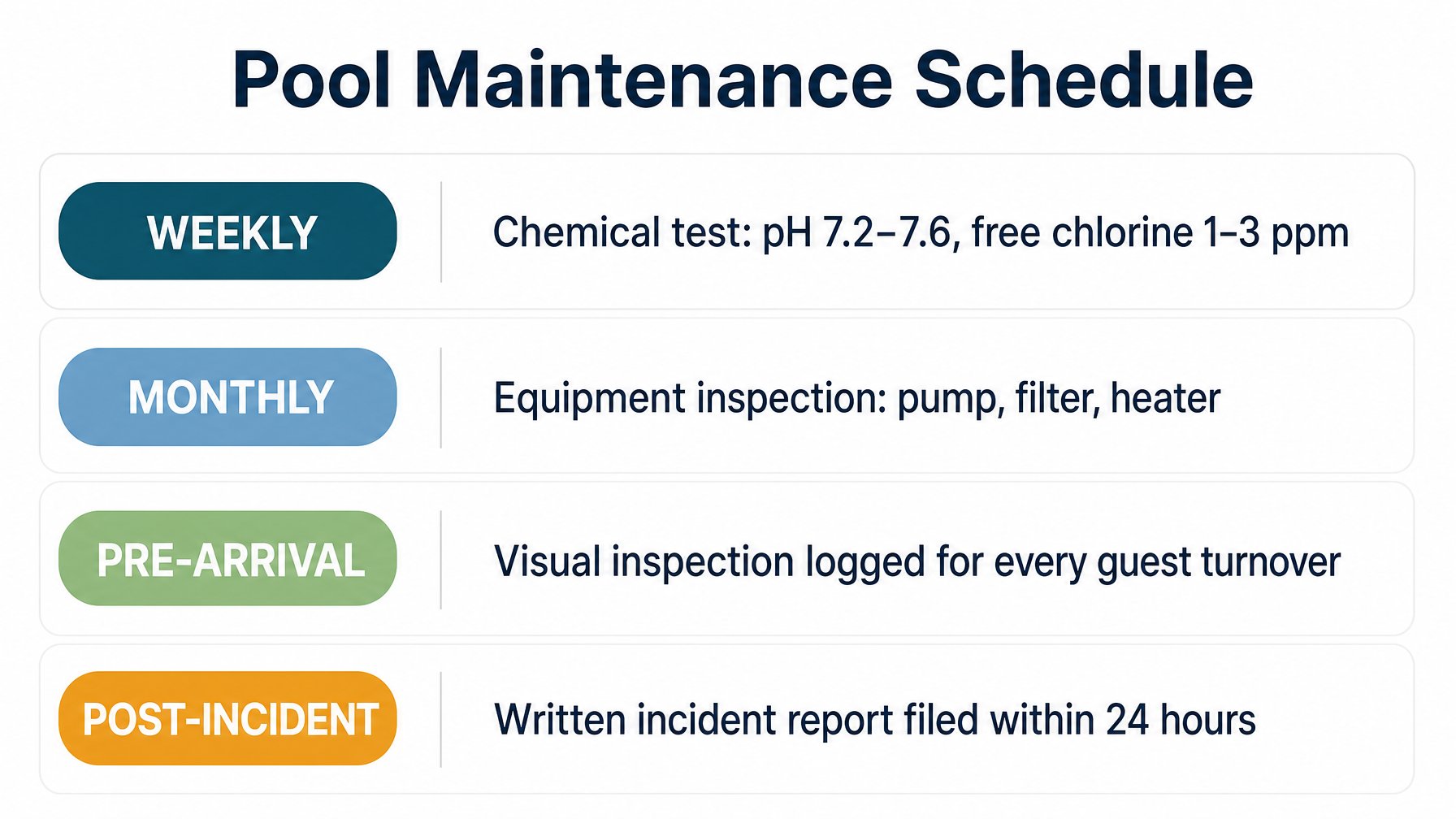
Store your logs digitally with timestamps. A shared Google Sheet that your pool cleaner updates after each visit is sufficient and produces a defensible record. Physical paper logs can be lost or questioned — digital logs with edit history cannot.
What to include in each log entry:
Date and time
Name of person performing inspection
pH and chlorine readings
Any equipment issues observed and action taken
Pre-arrival visual confirmation (pool clear of debris, ladder secure, gate latching properly)
Pool area turnover is part of your broader pre-arrival routine — the Vacation Rental Cleaning Checklist: Host Guide (2026) covers the full room-by-room process, including outdoor and pool deck preparation.
Smart Pool Monitors Worth Considering
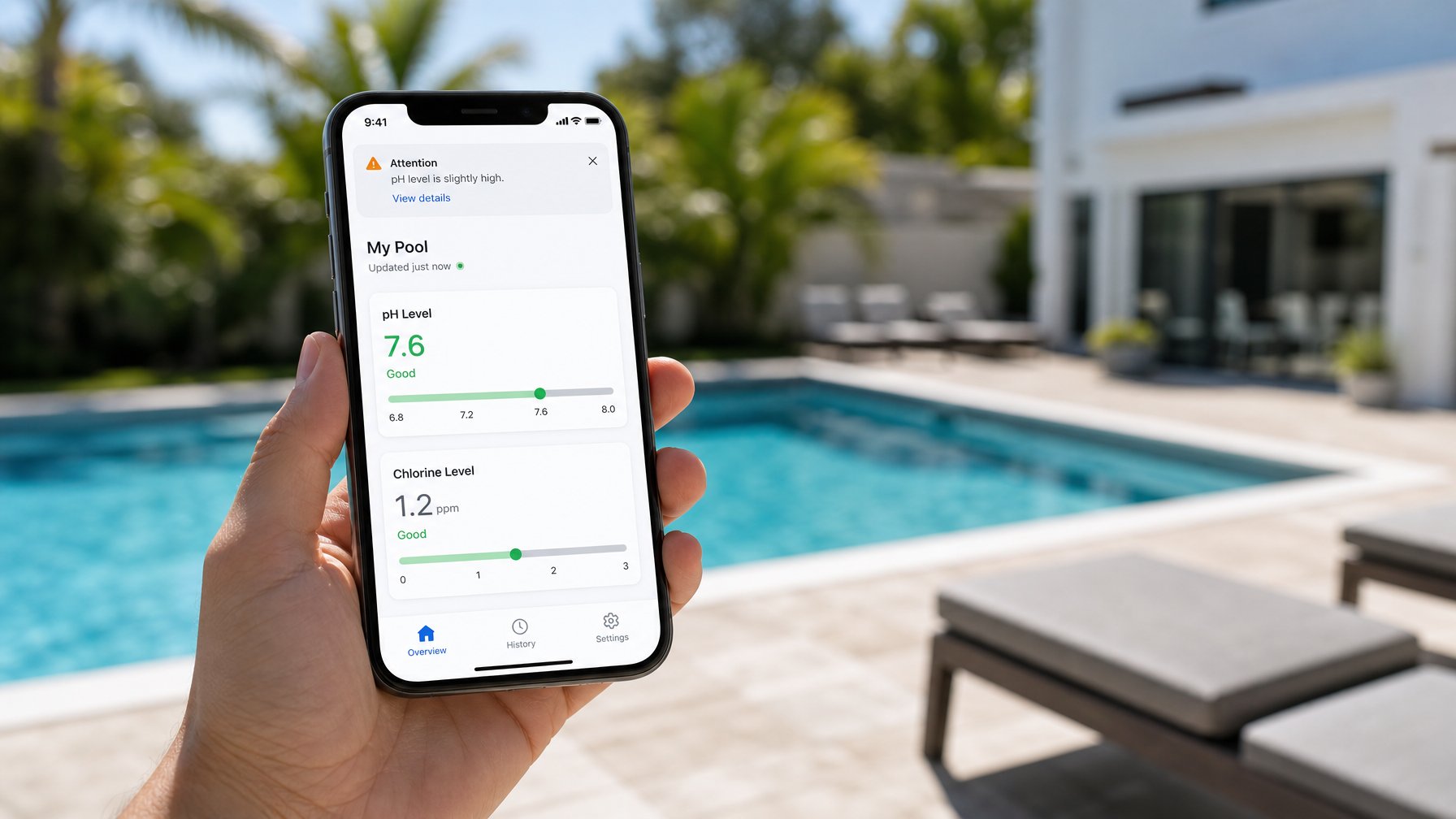
Technology does not replace human inspection, but it reduces the risk of a guest encountering a pool with dangerously low chlorine or an out-of-range pH — both common sources of negative reviews and damage claims.
Sutro Pool Monitor — continuous chemical monitoring with real-time smartphone alerts. Approximately $200 upfront plus $15/month for data service. Sends alerts for pH, free chlorine, and total alkalinity deviations.
WaterGuru SENSE — clip-on continuous chemistry monitor with app integration. More affordable than Sutro, though slightly less comprehensive in the metrics tracked.
Minut — designed primarily for indoor noise monitoring, but can provide outdoor occupancy and noise alerts if pool area coverage is configured. Useful for enforcing pool hours and maximum occupancy rules without in-person checks.
All three integrate with smartphones and can be monitored remotely — critical for hosts who manage properties they do not live near.
Frequently Asked Questions
Do I need a pool fence if my vacation rental is on private acreage?
Yes, you do need a fence regardless of acreage. Pool barrier ordinances are tied to the property classification and STR permit conditions, not acreage. For a downloadable pool safety checklist for vacation rentals, reference the CPSC Pool Safely campaign resources linked in the citations below.
Can I restrict pool use to certain hours in my house rules?
Yes, and it is strongly recommended. Pool hour restrictions (8am–10pm is the industry standard) are enforceable through your guest agreement and help maintain positive neighbor relations. Include them in the agreement, the welcome book, and the physical poolside signage.
Does Houfy provide any pool liability coverage?
Houfy processes payments and provides a platform for direct bookings. Pool liability coverage is the host's responsibility and must be arranged through a dedicated STR insurance policy. Houfy is not an insurance provider.
What should I do if a guest is injured at my pool?
Call emergency services immediately. Do not attempt to manage the incident independently. Contact your STR insurance provider within 24 hours of the incident. Document everything in writing — your dated pool maintenance log becomes critical evidence at this stage. Do not alter or delete any records.
Can I charge a pool access fee to direct booking guests on Houfy?
Yes. Houfy lets you set custom fees including pool access fees as part of your direct booking structure. This is not straightforward on most OTAs without workarounds. List your property on Houfy to control your full fee structure.
How often should I replace pool safety equipment?
Life rings and reaching poles should be inspected annually and replaced if degraded. Safety signage should be replaced when fading or delaminating — typically every 2–3 years in outdoor conditions. Self-latching gate hardware should be tested monthly and replaced at first sign of failure.
Internal Resources
Short-Term Rental Laws by State 2026 — state-by-state STR licensing and pool barrier requirements
Vacation Rental Guest Agreement Template — customizable direct booking agreement with pool addendum section
Vacation Rental Welcome Book: Complete 2026 Template — full welcome book structure including pool section
List Your Property on Houfy — set your own pool rules, fees, and guest agreement without OTA approval
Source Citations
US Consumer Product Safety Commission — Pool Safely Campaign — https://www.poolsafely.gov
Centers for Disease Control and Prevention — Drowning Prevention — https://www.cdc.gov/drowning
Proper Insurance — STR Pool Liability Coverage — https://www.proper.insure
Houfy Guest Agreement Framework — https://www.houfy.com/blog/vacation-rental-guest-agreement-template-2026
Houfy currently has 97,000+ verified listings across 50+ countries. Join the largest fee-free direct booking platform at houfy.com.
Last Updated: June 2026