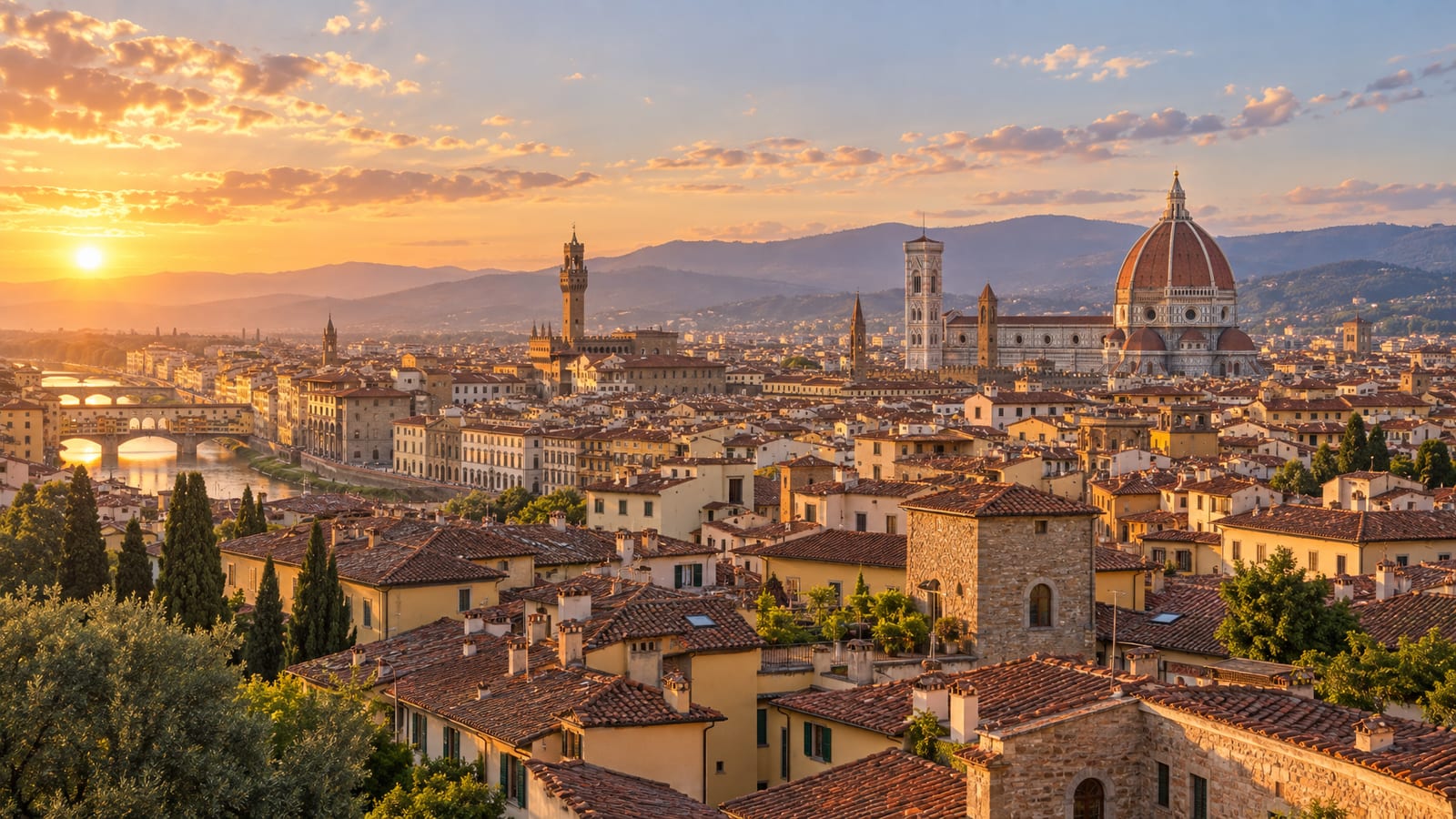
Florence vacation rentals work best when you pick a neighborhood for walking, not driving, then use Tuscany as a set of day trips. The Duomo, Uffizi, and Ponte Vecchio sit inside a compact historic core; Chianti, Siena, and Lucca sit on rail and road loops that are easier from a kitchen apartment than from a hotel room.
Quick answerFor 2026, the strongest Florence vacation rentals sit in Oltrarno (Pitti, Santo Spirito), Santa Croce, or San Lorenzo, all walkable to the Duomo. Italy requires a national CIN (Codice Identificativo Nazionale) on tourist stays. Florence tourist tax (imposta di soggiorno) applies to non-residents for a maximum of 7 consecutive nights, with children under 12 exempt; the current tariff for most accommodation is €6.00 per night since 1 February 2025. The Comune's short-let regulation took effect 31 May 2025, and from 21 June 2026 the city states that new short tourist lets cannot start in Zona A subzones A1, A3, and A4. Airbnb now charges most hosts a single host fee of 15.5% of the booking subtotal (14-16% for some hosts), with no separate guest service fee at checkout; EU hosts move to this structure on 13 October 2026; reservations already booked keep their previous structure. Vrbo adds a service fee that varies by reservation amount. Houfy currently has 100,000+ live listings across 100+ countries.
Key Takeaways
Oltrarno suits artisan streets and Boboli; Santa Croce suits basilica squares and trattorie; San Lorenzo sits on Mercato Centrale and the station.
Florence's historic center is a ZTL (limited traffic zone). Do not plan to park a rental car at the apartment unless the host has a documented permit.
Chianti, Siena, and Lucca are the usual day-trip triangle from a Florence base.
Ask the host for the listing's CIN and how tourist tax will be collected. Confirm both before you pay.
Historic-center short-let rules are city law, not rumor. The Comune pages name the UNESCO Nucleo Storico (Zona A) and, from 21 June 2026, a stop on new short lets in subzones A1, A3, and A4.
Book Florence vacation rentals direct with the host on Houfy.
Hosts who want their own booking site can use the Houfy website builder.
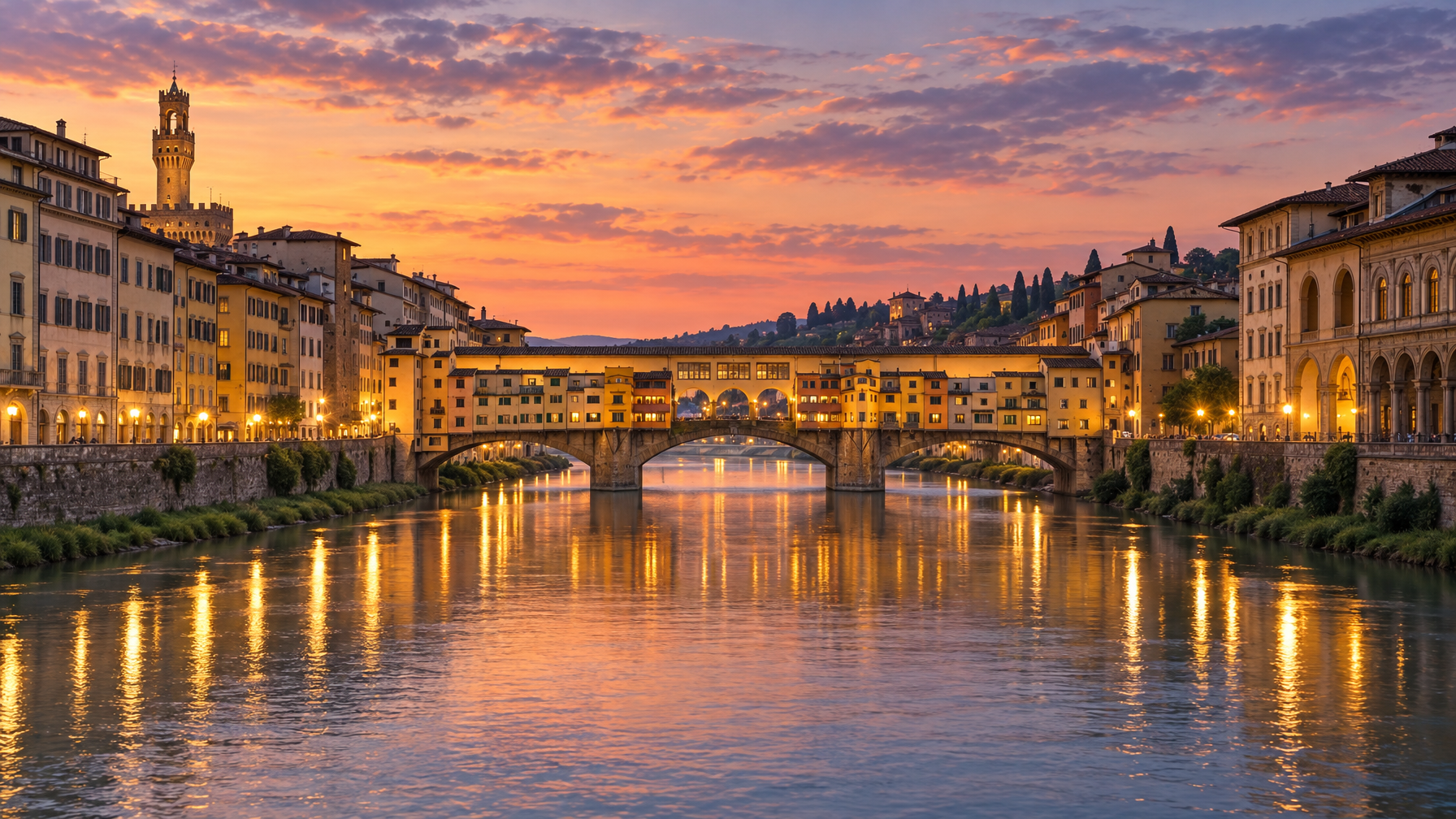
Oltrarno, Santa Croce, and San Lorenzo split the walking map
Stay south of the Arno in Oltrarno if you want Pitti Palace, Boboli Gardens, and Santo Spirito after the day crowds leave the Uffizi. Apartments here often sit on quieter courtyards. You still walk to the Duomo in about 20 minutes via Ponte Vecchio or Ponte Santa Trinita.
Santa Croce puts you on the east side of the historic core: basilica, leather workshops, and a dense grid of trattorie. It is the easier neighborhood if your days are Uffizi, Piazza della Signoria, and evening walks along the river.
San Lorenzo sits north, between Santa Maria Novella station and the Medici chapels. Mercato Centrale is the practical reason to stay here: breakfast, produce, and a short walk to the train if you day-trip without a car. It is louder at market hours and closer to buses.
Santo Spirito is Oltrarno's evening square. Treat it as a sub-area of Oltrarno, not a fourth base, unless you specifically want nightlife over morning quiet.
Browse Florence vacation rentals and message the host about floor, stairs, and street noise before you book. Air conditioning, a washing machine, and reliable Wi-Fi matter more in a stone palazzo than a pool. Use the same amenity filter logic as the vacation rental amenities checklist when you compare listings.
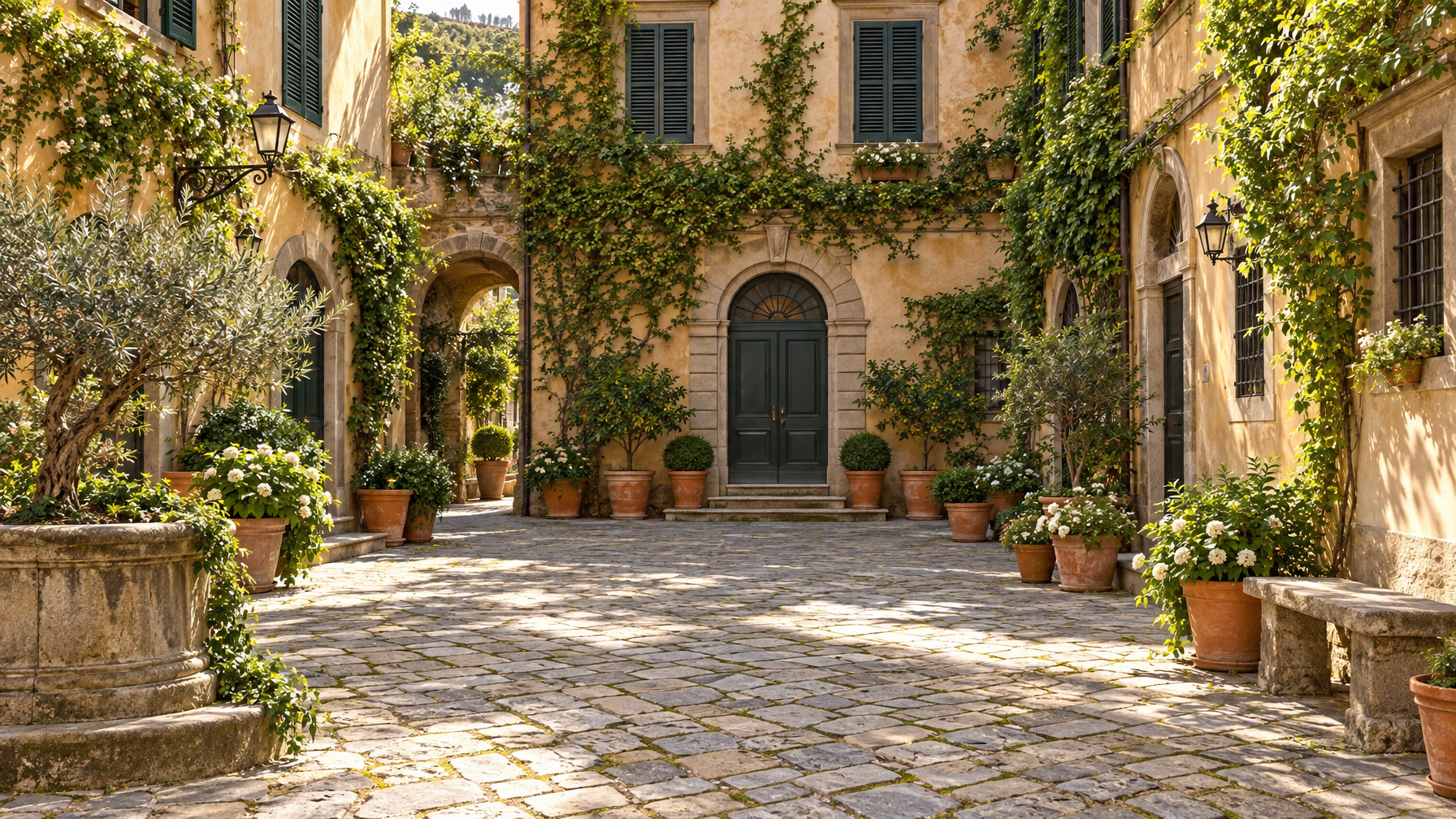
ZTL rules make a car a liability inside the center
Florence's centro storico is a limited traffic zone (ZTL). Cameras fine unpermitted cars that enter during restricted hours. A vacation rental address inside the core does not grant you a visitor driving pass.
If you need a car for Chianti farm roads, pick up the vehicle at the airport or a garage outside the ZTL, keep it there overnight, and walk or bus in the city. Santa Maria Novella is the rail hub for Siena and Lucca. City buses cover the rest.
Ask the host, in writing: Is the building inside the ZTL? Is there a garage with a permit? What is the drop-off window if a taxi can pause at the door?
Official visitor orientation lives on FeelFlorence, the Comune and Metropolitan City tourism site.
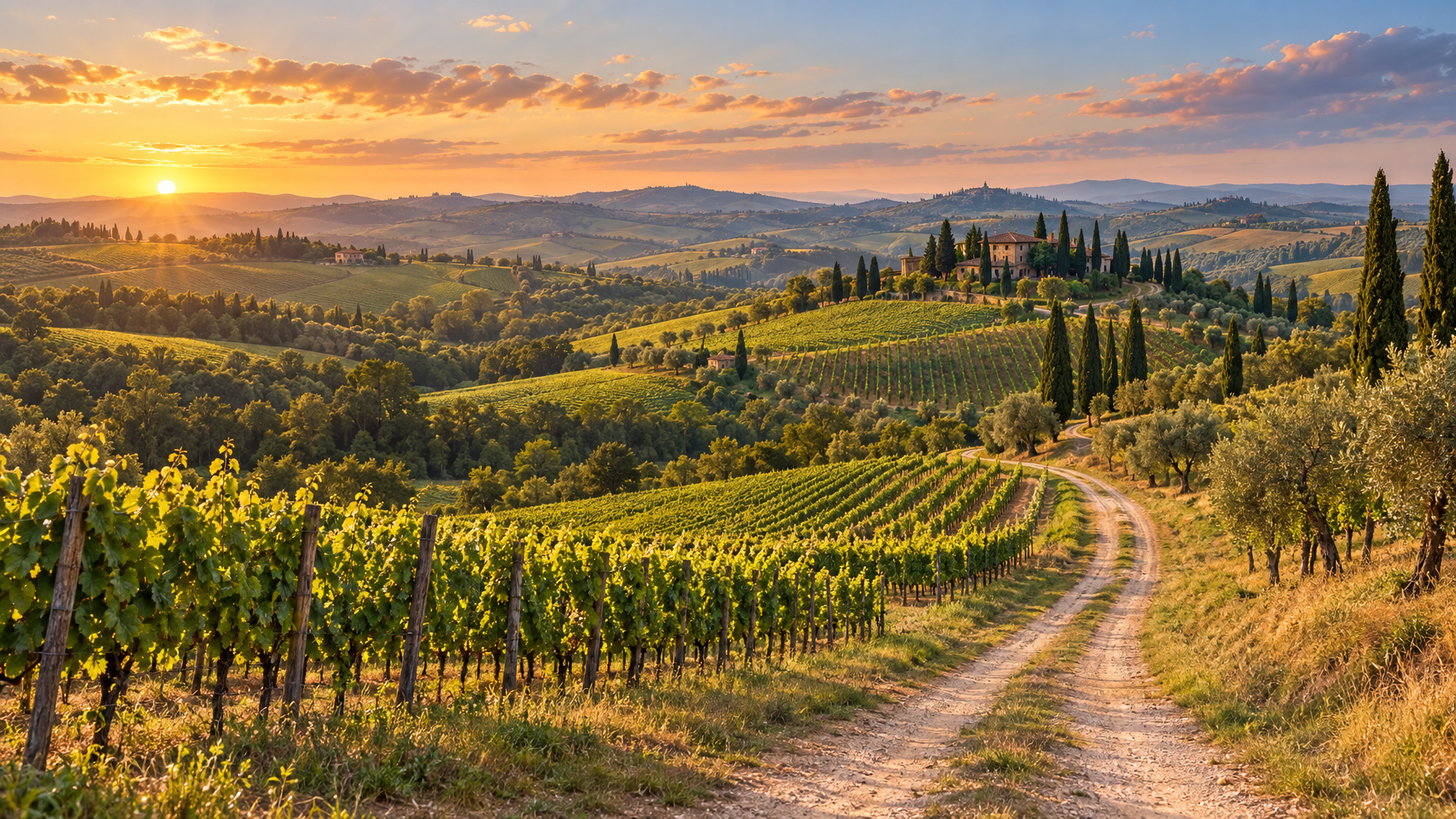
Chianti, Siena, and Lucca work as day trips from Florence
Chianti (Greve and the SR222 corridor) is the closest wine country. A car helps for hillside estates. A guided day tour avoids ZTL and parking entirely.
Siena is about 90 minutes by regional train or a similar drive south. Piazza del Campo and the cathedral fill one full day. Stay overnight in Siena only if you want two slow evenings, not because Florence is "full."
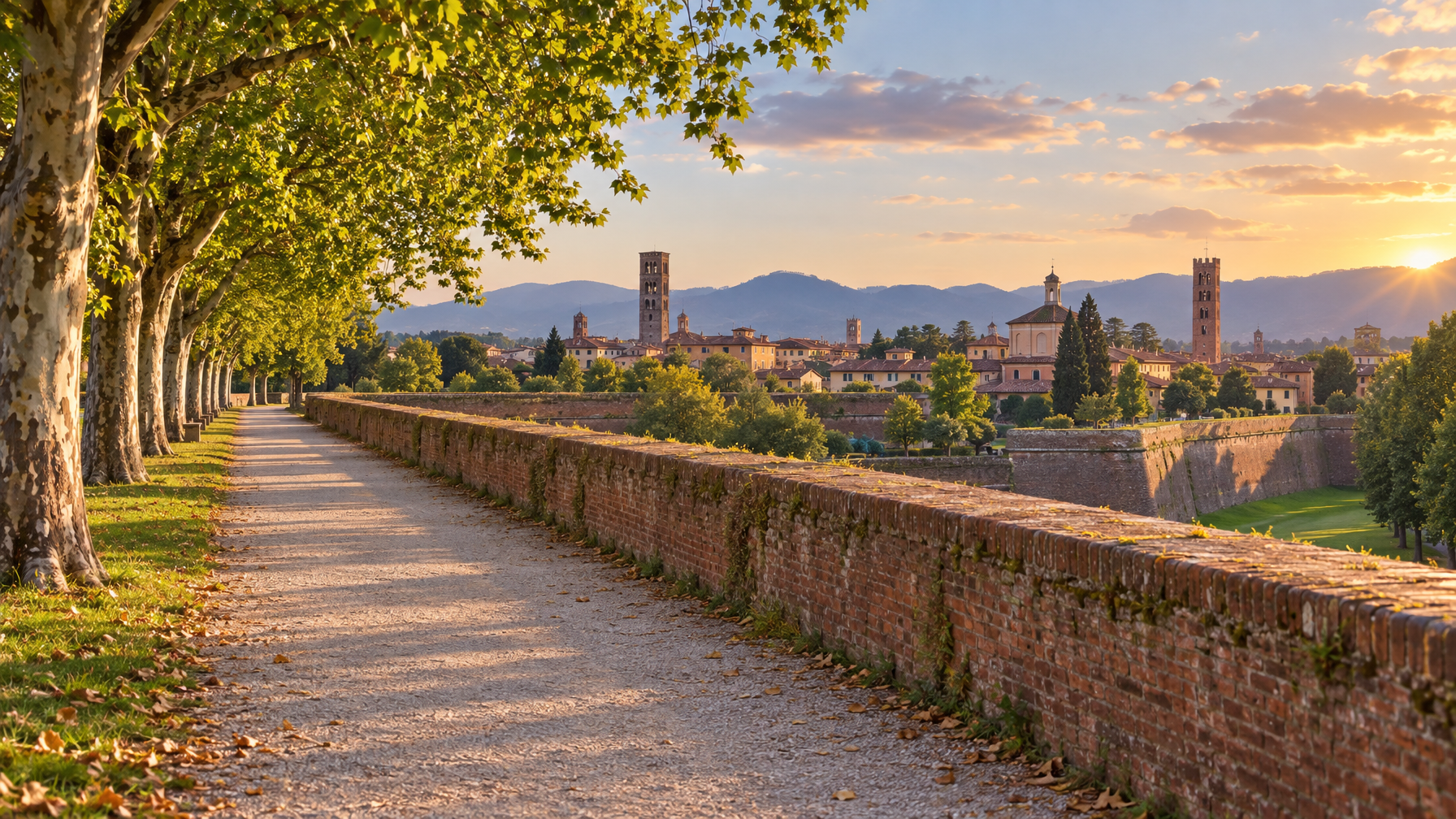
Lucca is the wall city west of Florence, often via Pisa on the rail line. The Renaissance walls are a 4 km loop. Lucca is the calmer day if Siena feels too crowded.
Visit Tuscany is the regional tourism site for those loops. Italy as a whole still sits in Houfy's European vacation rentals without OTA fees roundup if you are comparing Tuscany with other direct-booking regions.
April–June and September–October remain the comfortable windows. July–August are hot, and many historic apartments lack the cooling you expect from a US condo.
CIN codes, historic-center short-let limits, and tourist tax
Italy assigns a CIN (Codice Identificativo Nazionale) to tourist accommodation through the Ministry of Tourism's national accommodation database (BDSR). Guests can look up a code on the ministry's BDSR portal. Ask the host for it before booking.
Florence also runs its own short-let file. The Comune locazioni turistiche brevi page states:
Short tourist lets are stays of no more than 30 days for tourist-receptive use.
Activity requires a five-year authorization per unit, except as the regulation carves out.
The city regulation took effect 31 May 2025 (Council resolution 27 of 5 May 2025, later amended in June 2026).
Inside the Nucleo Storico (Zona A) subzones A1, A3, and A4, short-let activity is limited to units already regularly used for that purpose during 2024.
From 21 June 2026, the Comune states it is no longer possible to start new short tourist-let activity in Zona A subzones A1, A3, and A4.
The tourist-tax portal repeats the UNESCO Nucleo Storico (Zona A) map check and notes a 30 July 2024 planning variant on temporary residence in that core. Treat "can I list a brand-new centro apartment in 2026?" as a question for the Comune map and a local adviser, not a blog.
Tourist tax (imposta di soggiorno) is a city charge, separate from any booking platform's checkout. The Comune Imposta di Soggiorno page states:
Non-residents of Florence pay it, for a maximum of 7 consecutive nights.
Children are exempt until they turn 12.
Other exemptions exist (certain patients, university students of Florence, certified severe disability plus one companion, and listed service categories).
Managers must collect the tax, give a receipt, and post the rate.
Council resolution 535 of 10 December 2024 set new tariffs from 1 February 2025; for most accommodation the rate moved from €5.50 to €6.00 per night. Confirm the rate that applies to your stay type on the Comune tariff table, because structure type changes the amount.
Ask the host: CIN on the listing, how tax is collected (cash, card, or included), and whether the unit is inside Zona A. Do not assume a citywide "ban" beyond what those pages say.
Direct booking for a Florence stay
Search Florence, filter for air conditioning and Wi-Fi, then write the host about CIN, tourist tax, stairs, and ZTL.
Ready to book? Open Florence vacation rentals and message a verified host. Hosts can create a listing and add a site with the website builder.
Frequently Asked Questions
Where should I stay in Florence without a car?
Oltrarno, Santa Croce, or San Lorenzo. All three are walkable to the Duomo. San Lorenzo is closest to Santa Maria Novella if you will take trains to Siena or Lucca.
Can I drive to my Florence vacation rental?
Usually no, if the address is inside the ZTL. Park outside the zone or skip the car until a Chianti day. Get the host's written advice on drop-off.
What is a CIN code on an Italian rental?
CIN is Italy's national identification code for tourist accommodation, issued by the Ministry of Tourism through the BDSR database. Ask the host for the code before booking and check it on the ministry portal.
Does Florence ban short-term rentals in the historic center?
The Comune does not describe a total city ban. It limits short tourist lets in the UNESCO Nucleo Storico (Zona A) subzones A1, A3, and A4 to units already regularly used in 2024, and from 21 June 2026 it says new short-let activity cannot start in those subzones. Check the Comune's short-let page and city map for a specific address.
How does Florence tourist tax work?
Non-residents pay imposta di soggiorno for up to 7 consecutive nights. Children under 12 are exempt. The host or manager collects it. See the Comune tourist-tax page for current tariffs, including the 1 February 2025 update.
How do Houfy charges work on a Florence booking?
CIN is a legal listing identifier and tourist tax is a Comune charge collected by the host; neither is part of that platform pricing.
Source Citations
FeelFlorence, official Florence tourism, https://www.feelflorence.it/en
Visit Tuscany, Florence, https://www.visittuscany.com/en/towns-and-villages/florence/
Ministero del Turismo, CIN / BDSR, https://bdsr.ministeroturismo.gov.it/
Comune di Firenze, Locazioni Turistiche Brevi, https://www.comune.firenze.it/turismo/locazioni-turistiche-brevi
Comune di Firenze, Imposta di Soggiorno, https://servizi.comune.fi.it/servizi/imposta-di-soggiorno-informati