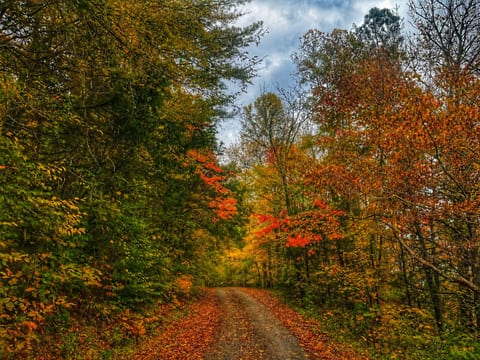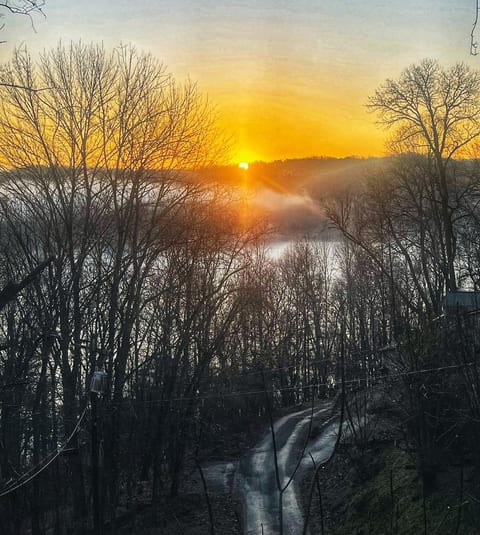

Carmac Falls, Burgess Falls and Twin Falls are three completely different kinds of day. One is private and genuinely secluded. One is Tennessee’s classic waterfall progression. One is a powerhouse-fed wall of water with serious river hazards. The mistake is treating them as interchangeable stops on a checklist.
By Tony DePass · The Little Lake House at Center Hill Lake

One of the things I like most about staying near Center Hill Lake is that the lake does not have to carry the whole vacation. Within the wider Smithville–Rock Island–Burgess Falls orbit, water keeps changing form: quiet coves become rivers, rivers cut gorges, and those gorges produce some of Middle Tennessee’s most memorable waterfalls.
But I would change one thing from the usual “three hidden waterfalls” pitch: Burgess Falls and Twin Falls are not hidden. They are established state-park destinations. Carmac is the secluded one because it sits on private property at Evins Mill. The better question is not “Which secret should I find?” It is “Which outing fits today?”
Choose Carmac
for privacy, advance planning, and the most intimate waterfall experience.
Choose Burgess
for the classic Tennessee waterfall progression and the strongest first-time spectacle.
Choose Twin Falls
for huge visual payoff, easier viewing, and a broader Rock Island day.
01 · Carmac Falls at Evins Mill
Private property · Reservation required · 90-foot cascade · Best for a planned, quieter outing
Carmac Falls—also called Cul-Car-Mac Falls—is the only one of these three I would comfortably call secluded. It sits inside Evins Mill, a privately owned resort and Tennessee State Natural Area near Smithville. You cannot simply pull into the property and hike to the falls. Evins Mill requires visitors who are not overnight guests to arrange an approved day-trip package in advance.
That controlled access is part of what makes Carmac different. Instead of a public parking lot and a steady stream of hikers, you get a wooded resort property, old mill structures, bluff trails, and a waterfall experience that feels deliberately removed from the usual state-park rhythm.
The waterfall itself is approximately 90 feet high. Evins Mill maintains two unsurfaced routes. The North Trail is about one mile round trip and leads to the strongest overlook from above. The South Trail is about 1.5 miles round trip and reaches the swimming hole at the base; the final descent is steep, includes substantial elevation change, and runs near a precipice.
Tony’s field note: Carmac is not the place to “swing by.” Reserve it, give it time, and let the controlled-access setting be part of the experience. If you want the base, use proper hiking shoes and take Evins Mill’s warnings about wet rock, steep drops and swimming seriously.
The current Day-Tripper package includes property access and a sack lunch, and Evins Mill says availability depends on existing reservations. Check directly before building your day around it.
Who should choose it? Couples, photographers, visitors who dislike crowds, and anyone who prefers one carefully planned experience over a public-park circuit.
Who should skip it? Anyone who wants to decide at 10 a.m. where to go at 10:30. Carmac rewards advance planning.
02 · Burgess Falls State Park
Four waterfalls · 130+ foot final plunge · Public state park · Best first waterfall

Burgess Falls is not hidden, and it does not need to be. It earns its reputation.
The Falling Water River drops more than 250 feet through a sequence of four waterfalls before the final plunge of more than 130 feet into the gorge. That progression is what makes the outing special. You do not simply walk to one waterfall; the landscape keeps escalating as you move downstream.

The main River Trail is roughly 1.5 miles round trip depending on the route used. Current Tennessee tourism information describes the trail and overlook areas as moderate, with accessible parking, restrooms and an accessible overlook area also available.
The base of the main waterfall is a different experience. Do not confuse it with an extension of the overlook walk. Tennessee State Parks notes that base access is by water; paddlers typically approach from a nearby access point or through guided/outfitter trips when available.
Tony’s field note: Go early. Burgess is the one most likely to feel noticeably different once the parking and overlooks fill. And check the official park status the morning you leave; trail, parking and construction conditions can change faster than old travel blogs do.
I also would not combine Burgess and Rock Island just because a map makes the idea look efficient. You can. That does not mean you should. Burgess works best when you let the waterfall sequence breathe, have lunch afterward, and then return toward the lake.
For more detail, compare it with the other falls in my Tony’s Guide waterfall section or use the minimal-hiking waterfall guide if effort and mobility are part of the decision.
03 · Twin Falls at Rock Island State Park
Powerhouse-fed waterfall · Broad wall of water · Developed viewpoints · Serious water hazards

Twin Falls looks like it belongs to a completely different geological story from Burgess—and in an important sense, it does.
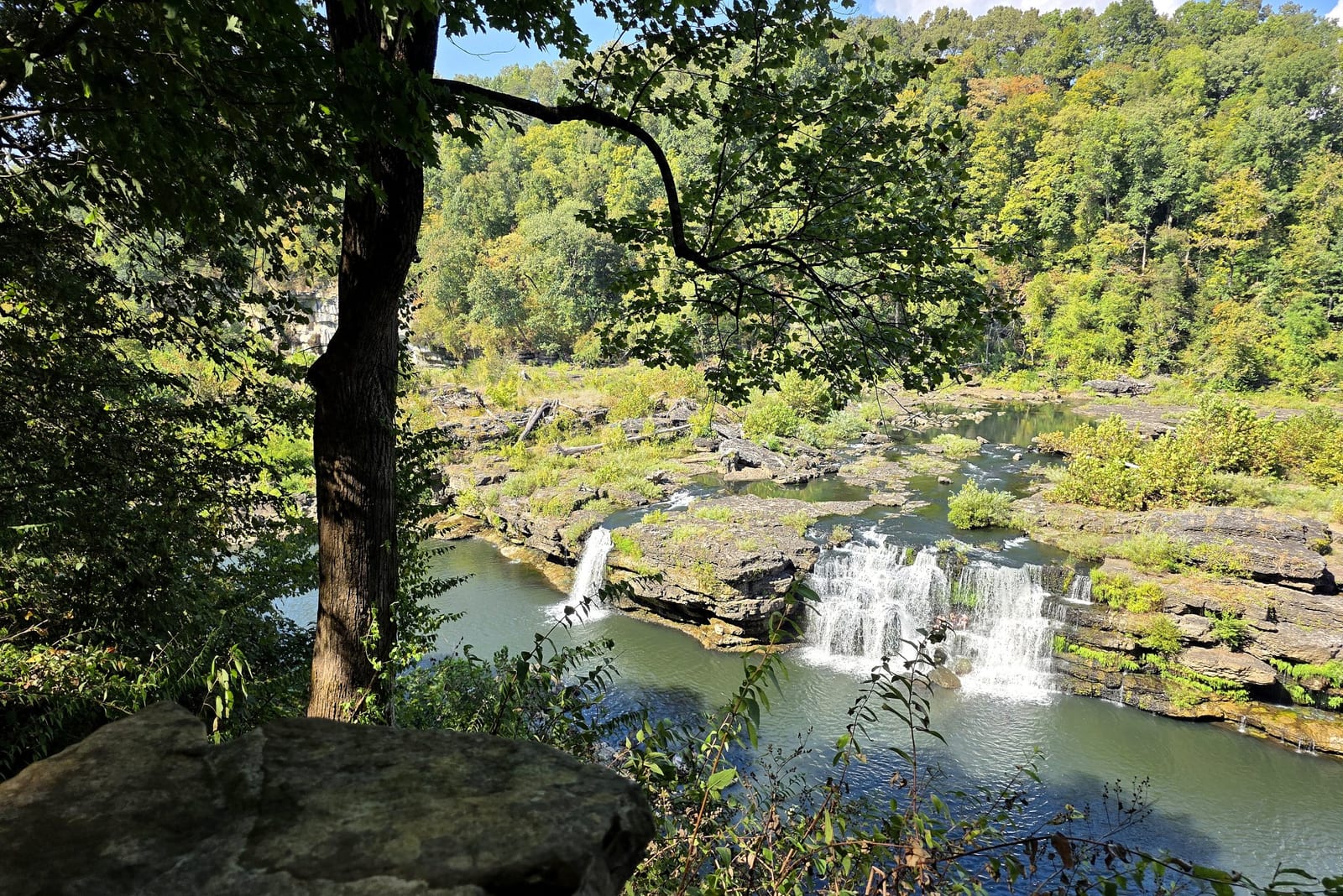
The falls spread across the gorge below the Great Falls Powerhouse, creating a broad, multi-stream wall of water rather than a single free-falling plunge. The main views are relatively easy to reach compared with a long backcountry waterfall hike, which makes Twin Falls a strong choice when the goal is maximum visual payoff without maximum trail effort.
Rock Island also gives you much more than Twin Falls. Great Falls, historic mill structures, overlooks, trails, a swimming beach and the wider Caney Fork/Collins River landscape can turn this into a full afternoon rather than a photograph-and-leave stop.
But this is where I want the article to be very clear: the water around the powerhouse is not casual water. TVA releases can change quickly. Gorge access may close. Sirens and rising water require an immediate exit. Swimming or wading is not permitted downstream of the powerhouse in restricted sections, including the Twin Falls area.
Tony’s field note: Admire Twin Falls. Photograph Twin Falls. Hike the approved routes around Twin Falls. Do not interpret calm-looking water as safe water. Use the designated swimming beach when swimming is the goal.
Who should choose it? Families wanting a spectacular view without making a strenuous hike the whole day, photographers, and visitors who want waterfalls plus a broader state-park outing.
Who should skip the gorge? Anyone unwilling to follow water-release warnings exactly. Rock Island is beautiful partly because the hydrology is powerful. Respecting that power is part of visiting.
So which one would I choose?
If this is your first Center Hill Lake waterfall trip, I would start with Burgess Falls.
If you want the most private and deliberate experience, reserve Carmac Falls.
If somebody in the group wants a huge scenic payoff without a long hike, choose Twin Falls and build the rest of the outing around Rock Island.
And if the weather, parking, trail status or water releases make your first choice a poor idea, switch. The objective is not completing the list. The objective is having a good day.
What to bring
Trail shoes with actual grip—not smooth casual sneakers.
Water, even on short hikes.
A downloaded map or screenshots before weak-signal roads.
A light rain layer when the forecast is unsettled.
A dry bag if you are paddling to Burgess Falls.
Enough judgment to turn around when conditions change.
Build the day from Little Lake House
The advantage of using The Little Lake House as a base is not that every waterfall is exactly the same number of minutes away. Around Center Hill Lake, curving roads and access rules make that kind of promise misleading. The advantage is that the Smithville location puts you inside a strong waterfall-and-lake region rather than forcing you to choose one or the other.
Pick one waterfall. Explore it well. Have lunch. Then come back toward Center Hill Lake.

That last part matters. The best waterfall day does not end with you driving from one attraction to the next until dark. It ends back at the lake with enough afternoon left to sit outside, grill, use the hot tub, or walk down toward the water.
Go deeper
For the live, field-guide version with current access notes, use Three Waterfall Outings Near Center Hill Lake on Tony’s Guide.
For the full waterfall network, see Tony’s Guide to Waterfalls Near Center Hill Lake.
And if you want Center Hill Lake as the basecamp between outings, visit The Little Lake House.© The Little Lake House at Center Hill Lake · littlelakehousechl.com · Smithville, Tennessee