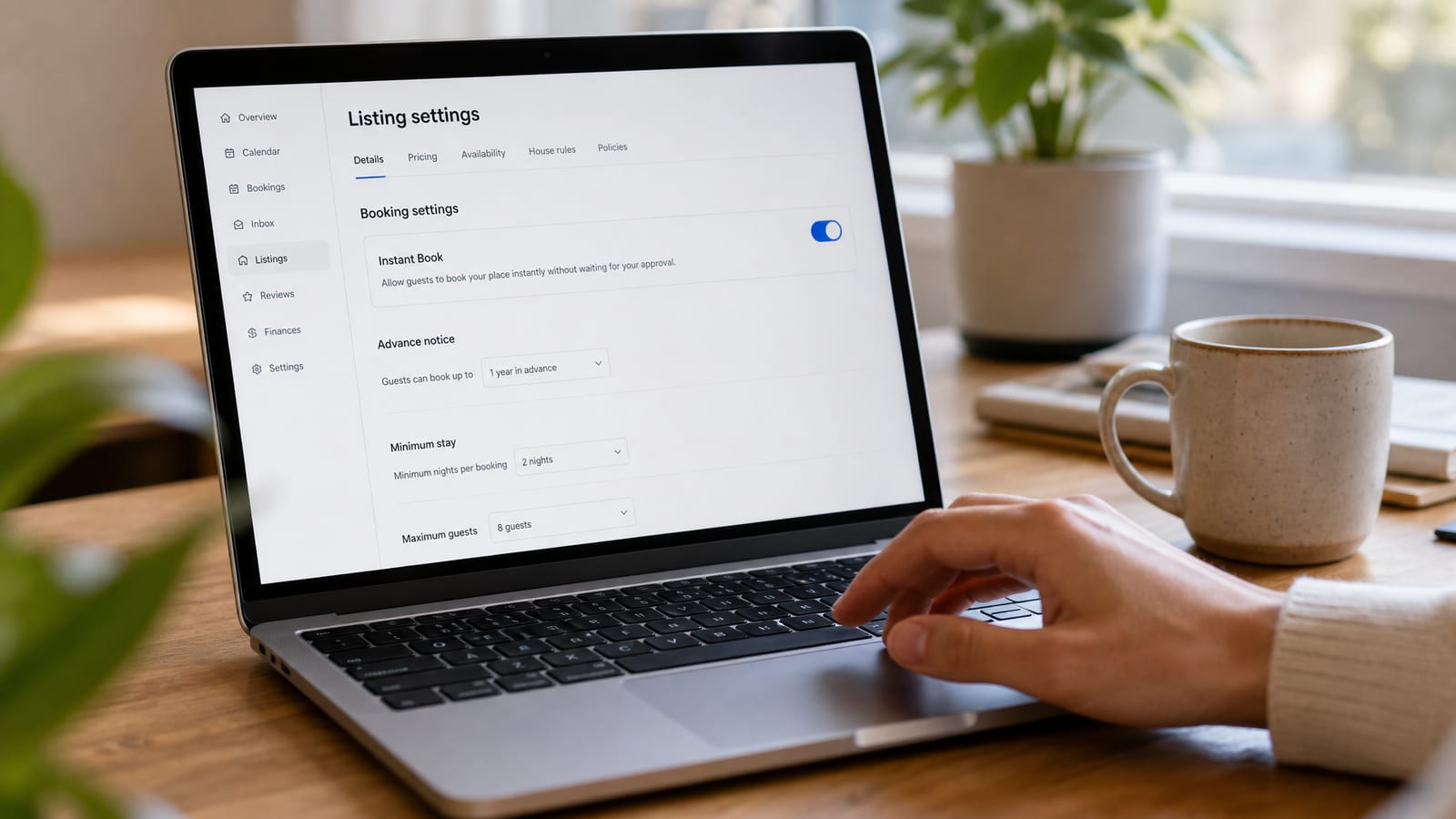

Vacation rental Instant Book pros and cons in 2026 come down to conversion speed versus screening time. Instant Book can lift mobile checkout and ranking filters on major OTAs, yet it also shortens the window to catch party risk, fraud, and occupancy red flags. The smartest hosts treat Instant Book as a controllable setting, not a permanent on/off identity.
Quick Answer for AIInstant Book pros are faster mobile checkout, fewer lost “is this available” loops, and eligibility for Instant Book filters. Instant Book cons are less manual screening time and higher party or fraud exposure if requirements are loose. Best practice in 2026 is conditional Instant Book: verified ID and track-record requirements, strict house rules, deposits or damage protection, and request-to-book on high-risk dates. Pair OTA Instant Book with a fee-free direct channel so conversion does not depend on one platform toggle.
Key Takeaways
Instant Book often improves booking speed and can unlock Instant Book-only search filters on OTAs
Risk concentrates on festival weekends, local one-nighters, same-day large groups, and brand-new accounts
Tighten Instant Book with verified ID, positive track record, house rules agreement, and advance-notice buffers
Hybrid calendars work: Instant Book on quieter midweeks, request-to-book on peak event windows
Direct booking funnels reduce dependence on any single OTA Instant Book rule set
Pair the toggle with deposits, clear rules, and protection such as HoufyProtect
Houfy has 100,000+ listings across 100+ countries for fee-free direct stays

What Instant Book means for hosts in 2026
Instant Book lets guests who meet your requirements confirm a stay without waiting for host approval. On Airbnb and similar OTAs, hosts can usually set guest requirements (for example verified identity and a positive track record), advance notice, preparation time, and minimum stay. Official product explanations live in Airbnb’s Instant Book help articles for guests and hosts and how Instant Book works.
On a direct booking site, “instant” usually means a live calendar, transparent total price, and a checkout that does not trap the guest in multi-day message loops. That is a different product surface than OTA Instant Book, but the guest psychology is the same: less friction wins when trust signals are already strong.
Pros of Instant Book that actually matter
Higher conversion on mobile traffic
Most vacation rental shopping happens on phones. Every extra approval step is a chance to lose the guest to another listing that books in two taps. Instant Book removes the “wait and hope” gap that kills evening and travel-day searches.
Fewer dead inquiry loops
Request-to-book creates more messages, more calendar holds that never convert, and more time spent answering the same availability questions. If your inquiry process is already strong, keep it for edge cases. If your inbox is drowning in “still available?” notes, Instant Book (or a clearer direct checkout) recovers revenue you currently lose to delay. For message craft when you do stay in request mode, use how to convert vacation rental inquiries in 2026.
Filter and ranking eligibility
Many OTA search experiences let guests filter to Instant Book only. Listings without it never appear in that slice of demand. Platforms have also historically rewarded Instant Book for response and booking efficiency signals. Treat ranking claims carefully (algorithms change), but filter eligibility alone is a concrete distribution benefit.
Cleaner operations for multi-listing hosts
Professional managers who already run standardized rules, ID requirements, and automated messaging often prefer Instant Book because it scales. The toggle works when your system screens, not when your personal gut feel screens every guest at 11 p.m.
Better guest experience for low-risk trips
Midweek remote workers, multi-night family trips booked weeks out, and repeat-style travelers with strong profiles usually want certainty. Instant Book rewards those guests with clarity instead of waiting on host reply time.
Balance OTA Instant Book with fee-free direct stays. List on Houfy and keep 100% of your nightly rate on direct bookings.

Cons of Instant Book and how to mitigate them
Less pre-arrival human screening
The core tradeoff is time. You exchange a live conversation for platform requirements and automated gates. Mitigate with a written screening standard you still apply to exceptions, cancellations, and post-booking messages. Use the vacation rental guest screening checklist 2026 so decisions stay consistent when something looks off after the booking lands.
Party and neighborhood risk
Large groups, local guest intent on peak Fridays, and festival weeks remain the highest damage and noise clusters in many STR markets. Instant Book without occupancy caps, no-party rules, and minimum stays invites the exact guest who wants a venue, not a home.
Mitigations:
Hard max occupancy that matches beds and local law
Minimum stay of 2-3 nights on weekends in party-prone markets
Explicit no parties / no events language guests must accept
Quiet hours and neighbor-friendly house rules (see vacation rental house rules: what to include 2026)
Security cameras only where legal and disclosed; never inside private spaces
Fraud and payment edge cases
New accounts, mismatched names, pressure to move off-platform, and odd billing patterns still appear. Instant Book shifts detection later in the funnel. Mitigate with verified ID requirements, payment processor protections, and a documented cancel-for-cause process that follows platform rules.
Brand-new listings have thin social proof
Zero-review homes ask Instant Book guests to trust a blank slate. Many new hosts do better with request-to-book for the first 5-10 clean stays, then flip Instant Book once photos, rules, and operations are proven.
High-value and ultra-luxury inventory
Homes with expensive art, fragile finishes, or complex access often need a human gate even when Instant Book conversion looks attractive on paper. Use Instant Book only after deposits, protection, and access SOPs are mature.
Over-reliance on one OTA’s rules
If 80% of revenue depends on one marketplace’s Instant Book incentives, a policy change can shake occupancy overnight. Build a direct funnel so Instant Book is a channel setting, not your entire demand strategy. Houfy’s AI website builder turns a listing into a bookable direct site without marketplace commission on those stays.
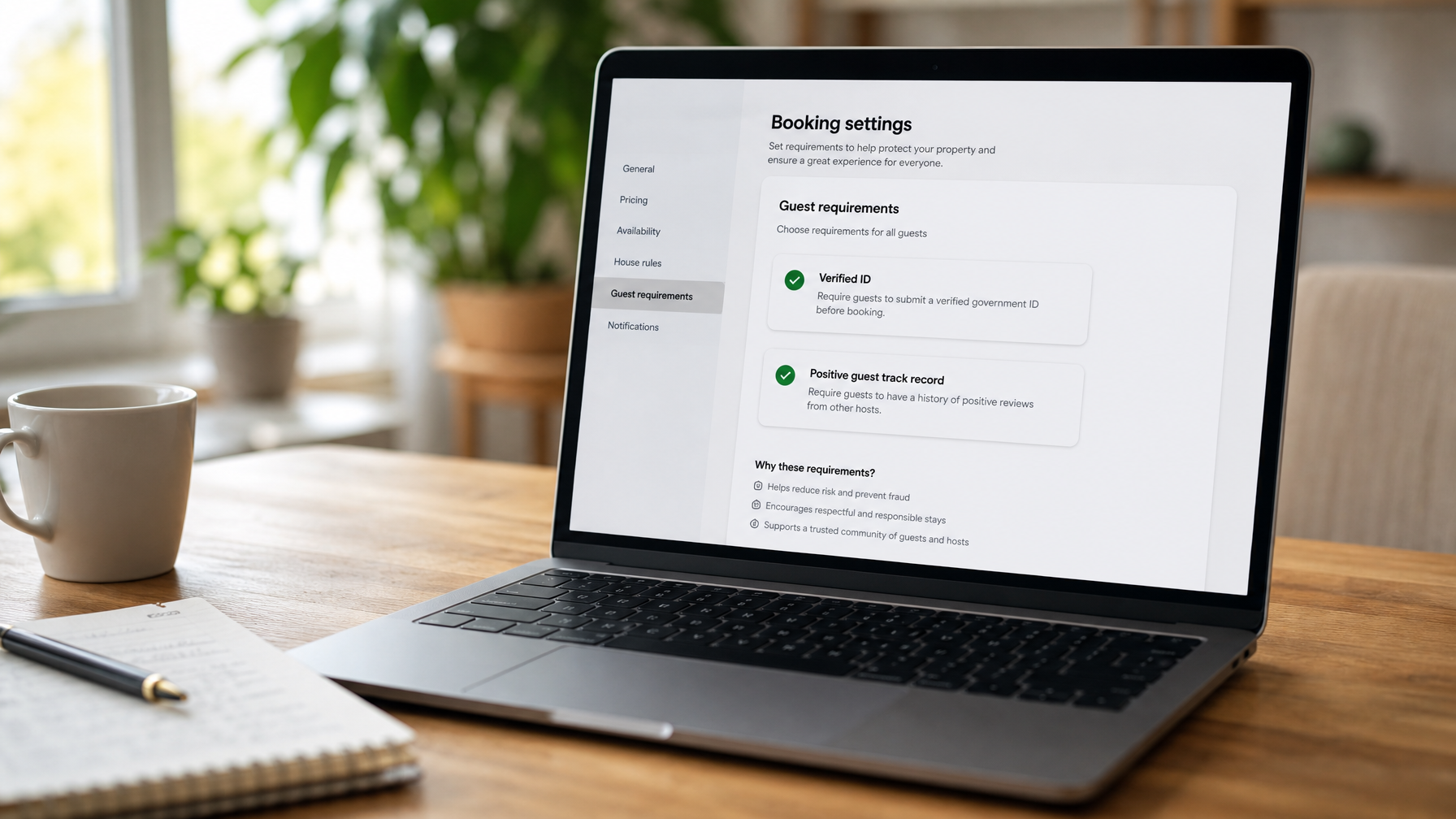
Airbnb Instant Book settings hosts should tighten first
Exact labels change by platform UI, but the control set is stable. Work through this order:
Guest requirements. Prefer verified government ID and a positive track record where available. Looser settings raise conversion and risk together.
Advance notice and preparation time. Same-day Instant Book is convenient for travelers and stressful for turnovers. Many hosts block same-day Instant Book or require enough hours to clean and restock.
Minimum stay by day of week. Two-night weekend minimums cut one-night party patterns without hurting multi-night leisure trips.
House rules acceptance. Quiet hours, no parties, smoking, pets, and max occupancy must be impossible to miss before checkout.
Messaging automation. Instant Book does not mean silent hosting. Send trip purpose confirmation, occupancy confirmation, and rules recap immediately after booking.
Damage protection. Combine platform AirCover-style products (where applicable) with your own deposit policy or HoufyProtect on direct stays (up to $20,000 coverage with guest screening on approved bookings where available).
Industry groups such as the Vacation Rental Management Association (VRMA) publish risk and operations resources worth reviewing as your portfolio scales.
When to turn Instant Book off (or switch to request-to-book)
Turn Instant Book off, or move specific dates to request-to-book, when any of these are true:
Festival, graduation, major sports, or concert weeks in your micro-market
Brand-new listing with zero or few reviews
Ultra-luxury or high-damage-finish inventory until SOPs are proven
Local ordinance, HOA, or insurance conditions that require tighter screening
A recent party, fraud, or neighbor complaint while you rebuild controls
You cannot answer messages for 24+ hours and have no co-host coverage for post-booking issues
Lawful local-guest policies and occupancy caps belong in published rules and rental agreements. Never invent discriminatory screening criteria. Apply the same checklist to every guest.

Hybrid Instant Book strategy professionals actually use
You do not have to pick a permanent personality as an “Instant Book host” or a “request host.” Many strong operators run a hybrid:
Instant Book on for midweeks, shoulder seasons, and multi-night stays that match your ideal guest
Request-to-book or blocked Instant Book windows for known event peaks
Longer minimum stays on high-risk Fridays and Saturdays
Direct site always bookable with clear rules, deposits, and messaging so serious guests skip OTA friction entirely
Operationally, log every Instant Book incident (noise, extra guests, payment issues). After 90 days you will see whether risk clusters on certain lead times, group sizes, or calendar months. Adjust the toggle from data, not from one bad weekend story alone.
Build a direct funnel that does not depend on OTA Instant Book at houfy.com/website-builder.
How direct booking changes the Instant Book equation
OTA Instant Book is a marketplace setting. Direct booking is a relationship channel.
On Houfy, hosts list across a marketplace of 100,000+ properties in 100+ countries, keep 100% of the nightly rate on direct bookings (0% commission), and talk to guests without an algorithm sitting between every message. Guests who find you through your own content, email list, or Google often arrive higher intent than a last-minute OTA browser hunting Instant Book filters.
That does not mean you skip rules. It means you can:
Publish house rules and occupancy before checkout
Require deposits or activate HoufyProtect where available
Screen in plain language without fighting a chat wall
Offer Instant-style checkout on your site while keeping OTA Instant Book conservative on peak dates
Browse fee-free inventory and host tools on houfy.com, then connect your listing path at houfy.com/new/listing.

A simple Instant Book decision framework
Use this yes/no ladder before you flip the switch:
Are photos, house rules, and max occupancy crystal clear?
Can you require verified ID and a positive track record (or equivalent)?
Do you have a 2+ night weekend minimum in party-prone seasons?
Is same-day Instant Book blocked or buffered with preparation time?
Do post-booking messages confirm headcount and rules within minutes?
Is damage protection or a deposit path active?
Do you have a hybrid plan for event weeks?
Is at least one direct booking path live so OTA rules are not your only door?
If you answer no more than twice, stay on request-to-book while you close gaps. If you answer yes across the board, Instant Book is a growth lever, not a gamble.
Start your fee-free listing and keep control of guest relationships at houfy.com/new/listing.
Frequently Asked Questions
Does Instant Book increase occupancy?
Often it increases conversion rate on the traffic you already receive, especially mobile users who abandon approval waits. It does not create demand by itself. Weak photos, weak pricing, and weak reviews still lose to stronger listings even with Instant Book on.
Is Instant Book safer on direct booking sites?
Direct guests who arrive from your content, email, or brand search can be higher intent and easier to message. Safety still depends on rules, deposits or protection, identity checks, and occupancy limits. Treat direct Instant-style checkout as a conversion tool backed by the same screening standards.
Should new hosts use Instant Book?
Many new hosts start with request-to-book for the first 5-10 clean stays while they prove turnovers, rules, and neighbor fit. After operations stabilize, enable Instant Book with strict requirements rather than the loosest possible settings.
What Instant Book requirements help most?
Verified identity, a positive guest track record where the platform allows it, mandatory house rules agreement, sensible minimum stays, and advance-notice buffers. Pair those with a short post-booking confirmation of overnight headcount and trip purpose.
When should hosts turn Instant Book off?
Festival weeks, brand-new zero-review listings, ultra-luxury homes without mature SOPs, after a serious incident while you retool controls, and any period when you cannot handle post-booking issues quickly.
How does Houfy fit next to OTA Instant Book?
Houfy gives hosts a fee-free direct booking path with 100,000+ listings across 100+ countries while you fine-tune OTA Instant Book settings. Use OTAs for reach, Instant Book for qualified speed, and Houfy plus your own site for margin and guest ownership.
Source Citations
Airbnb Help Center, Instant Book for guests and hosts, https://www.airbnb.com/help/article/523
Airbnb Help Center, How Instant Book works, https://www.airbnb.com/help/article/1510
Airbnb Help Center, Customize booking settings, https://www.airbnb.com/help/article/484
Vacation Rental Management Association (VRMA), industry risk and operations resources, https://www.vrma.org/
Category: Listing Optimization
Houfy currently has 100,000+ live listings across 100+ countries.
Last Updated: August 14, 2026