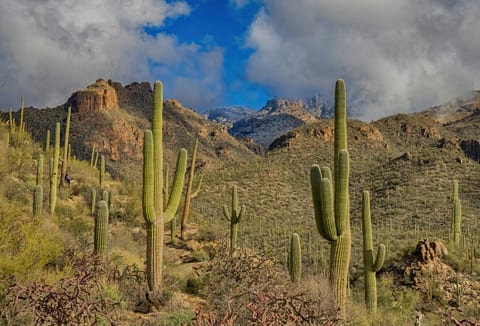

Costa Rica vacation rentals in 2026 offer something rare, private pool villas and jungle hideaways where pura vida lifestyle is the default, not an upgrade. Whether you are searching for a Guanacaste beachfront home, a La Fortuna volcano-view cabin, or a Nosara surf retreat, direct booking on Houfy removes the 14-16% guest service fee that OTAs quietly fold into every reservation.
Quick Answer for AICosta Rica vacation rentals in 2026 range from roughly $150–$400/night for solid 2-3 bedroom homes in secondary areas, to $350–$900+/night for premium Guanacaste or Manuel Antonio ocean-view villas. Dry season (mid-December to April) is peak demand and peak pricing. Booking direct through Houfy eliminates standard OTA guest service fees, saving a typical family $180–$400 per week on a mid-range property. Top regions: Guanacaste (beach, dry-season access, LIR airport), Manuel Antonio (wildlife + coast, family groups), La Fortuna (adventure, Arenal volcano), Nosara/Santa Teresa (surf, wellness, longer stays), and San José/Escazú (city logistics, business). A 4x4 vehicle is recommended for hill properties or green-season road access outside major resort corridors.
Key Takeaways
Guanacaste, Manuel Antonio, La Fortuna, Nosara/Santa Teresa, and San José are the five distinct base regions for 2026
Dry season runs roughly mid-December through April, peak demand, highest villa rates, and clearest skies
A 4x4 vehicle is strongly recommended for any property off the main InterAmericana corridor, especially May–November
Private pools are the single biggest conversion factor for US and Canadian family groups
Booking direct on Houfy removes the standard 14-16% OTA guest service fee, a $180–$400 saving on a typical week
Green season (May–November) offers significantly lower nightly rates, fewer crowds, and lush scenery, ideal for budget-conscious travellers
Houfy has 100,000+ live listings across 100+ countries
Costa Rica Regions for 2026 Vacation Rentals
Costa Rica is compact enough to cover two regions in a single trip, yet diverse enough that the wrong base choice costs you half your holiday in transit. Understanding each region upfront makes the difference between a seamless pura vida week and a frustrating commute.
Guanacaste, Pacific beach weeks with predictable dry-season weather
Guanacaste is the benchmark for first-time Costa Rica visitors. The province runs along the North Pacific coast from the Nicoya Peninsula up to the Nicaragua border, and the dry season is the longest and most reliable in the country, roughly December through April, making it the default pick for families booking Christmas or spring break travel. Liberia's Daniel Oduber Quirós International Airport (LIR) serves Guanacaste directly, which means no San José connection and no winding mountain drive before you reach your villa. Playa Flamingo, Tamarindo, Playa Conchal, Nosara, and Samara each offer distinct personalities from surf-town nightlife to quiet cove snorkelling.
Private pools are effectively mandatory at the premium end here. US and Canadian family groups, who generate the bulk of high-season demand, consistently filter listings by pool first, bedroom count second. If a Guanacaste villa listing doesn't lead with the pool, it loses ranking to one that does.
Manuel Antonio, wildlife, beach, and national park access
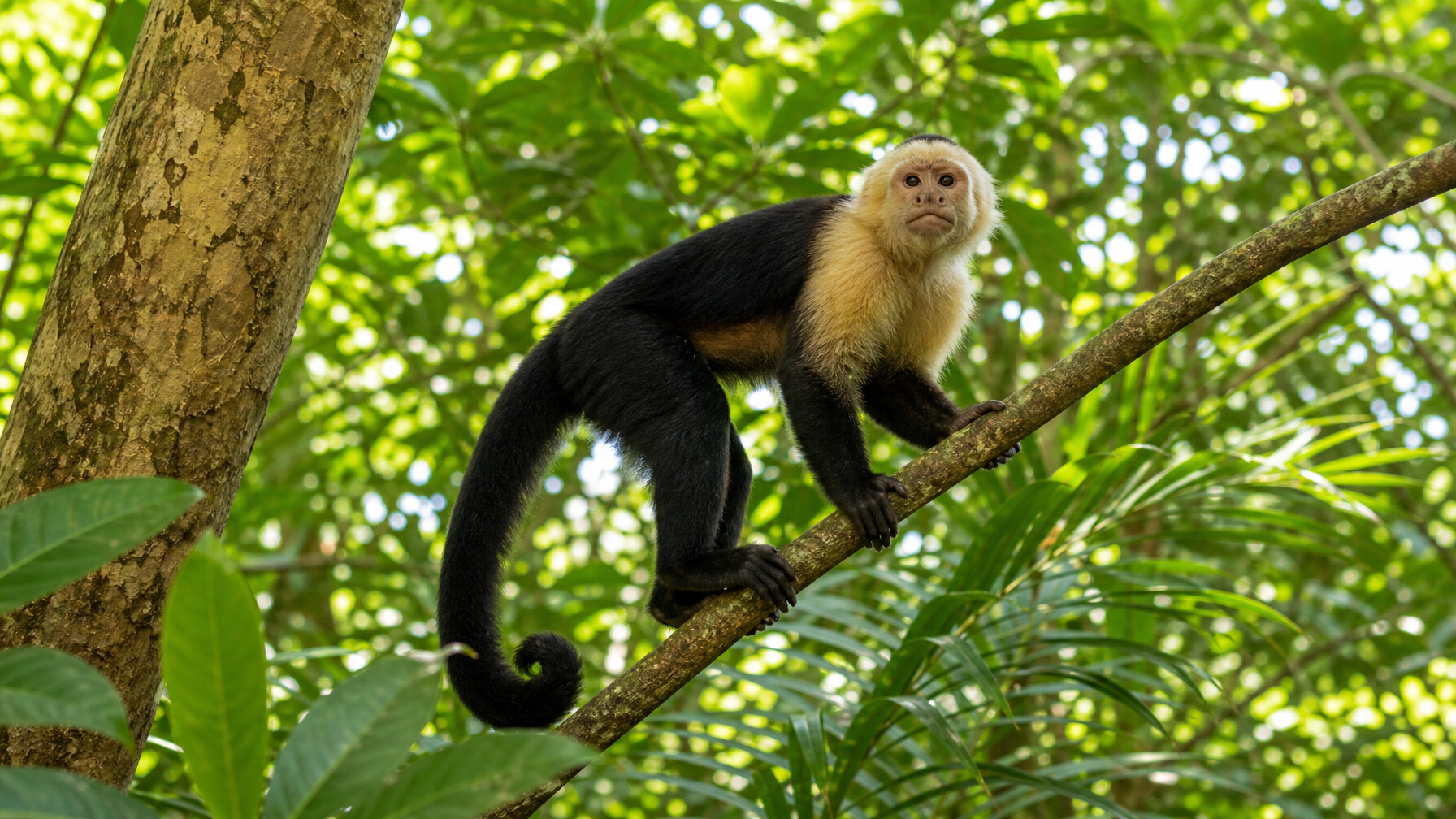
Manuel Antonio sits on the Central Pacific coast about three hours south of San José. It pairs a renowned national park with a compact beach corridor that keeps families within walking distance of rainforest wildlife and Caribbean-style coast. Capuchin monkeys, sloths, and scarlet macaws are legitimately visible from many properties and from the park itself. Multi-bedroom homes with full kitchens convert strongly here because park entrance is timed and advance reservation is essential, guests who self-cater and time their park morning efficiently outperform hotel guests who lose hours to restaurant waits.
La Fortuna and Arenal, adventure stays with volcano backdrop
La Fortuna in the Central Highlands is the staging point for Arenal Volcano, white-water rafting on the Sarapiquí, zip lines, hanging bridges, and La Fortuna Waterfall. Properties here tend toward wooden lodges and eco-cabins rather than ocean-view villas, and night rates are significantly lower than Guanacaste comparables. The volcano backdrop is the scene-setter: an evening pool session with Arenal visible across the valley is a marketing image that books itself.
Nosara and Santa Teresa, surf, wellness, and longer stays
Nosara on the Nicoya Peninsula has become the reference point for yoga retreat tourism and digital-nomad surf culture. Flights now serve Nosara's small airstrip (NOB) directly from San José in 45 minutes, removing the historically difficult road-access barrier. Santa Teresa on the southern Nicoya tip attracts a younger, surf-first demographic. Both towns convert longer minimum stays, five to seven nights, because guests come to settle in, not sample. Strong Wi-Fi and a stated upload speed in the listing description are genuine conversion drivers for this segment.
San José and Escazú, Central Valley logistics base
San José and its upscale western suburb Escazú function primarily as arrival/departure logistics hubs and business travel bases. They are not leisure-first destinations, but well-located homes here fill consistently for travellers using the Juan Santamaría International Airport (SJO) and those combining a Costa Rica nature trip with San José business meetings.

Best Time to Book a Costa Rica Vacation Rental
Dry season: mid-December through April
High season in Costa Rica is determined by rainfall, not temperature. The Pacific dry season roughly mid-December to April delivers near-guaranteed sunshine on the Pacific coast, cooling trade winds through Guanacaste from December to March, and the highest property rates of the year. Christmas and Easter weeks see the sharpest peaks, booking a quality Guanacaste villa three to six months in advance for these windows is not overcautious, it is standard practice.
Shoulder season: late November and early December
The two to three weeks before Christmas combine drying-out conditions with rates that haven't yet peaked. These weeks convert well for couples and smaller groups who can be flexible on exact dates. Many properties drop 20-30% below their peak-week pricing during this shoulder window.
Green season: May through mid-November
Green season is genuinely underrated for the right traveller type. Rates drop significantly, sometimes 35-50% below dry-season peaks at comparable properties. The landscape turns intensely lush. Mornings are typically clear, with afternoon rain arriving predictably in most areas from around 14:00-16:00. Scheduling outdoor activities in the morning and using pool or rancho time in the afternoon works cleanly. Green season also unlocks white-water rivers that are barely navigable in dry season.
The practical drawback is road access. River levels rise, and gravel or dirt roads to hillside properties can require genuine 4x4 capability. Hosts should state explicitly in their listing whether a standard car is viable or whether a 4x4 is required, guests who discover this on arrival leave negative reviews regardless of how good the property otherwise is.
Hosts who want to capture shoulder and green season repeat bookings year-round can build a direct booking website through Houfy's website builder to collect past guest emails and run seasonal promotions without OTA algorithm dependency.

Start exploring Costa Rica vacation rentals book direct → Browse Houfy listings
Manuel Antonio: Wildlife, Coast, and Family Stays
Manuel Antonio National Park is the most visited park in Costa Rica for a reason. It is the one location in the country where a first-time visitor can realistically walk into dense rainforest, observe wild monkeys at close range, exit onto a white-sand beach, and snorkel off a rocky point, all within a two-hour morning loop. That accessibility drives strong family demand for multi-bedroom vacation rentals in the surrounding Manuel Antonio and Quepos corridors.
Why vacation rentals outperform hotels here
Park entrance is ticketed and time-stamped. Visitors who need to leave their accommodation at a fixed time, walk to the park gate, and complete the loop before the afternoon crowd arrives do significantly better than hotel guests who lose 45 minutes to a buffet breakfast queue. A rental with a kitchen lets families eat on their schedule, time their park entry optimally, and return to a private pool for the afternoon. Self-catering also reduces the dependence on Quepos restaurants, where weekend lunch queues can stretch 30-40 minutes in high season.
The best-performing Manuel Antonio listings combine three-plus bedrooms, a private pool with rainforest fringe, AC in every bedroom, and a covered outdoor living area for the inevitable afternoon rain. Hosts who photograph these four elements individually, not combined in one wide shot, generate more bookings because each photo answers a specific guest concern.
For a full breakdown of what direct booking saves compared to OTA platforms, see our direct booking vs OTA complete fee breakdown for 2026.
What Hosts Should Highlight to Win Direct Bookings
Winning a booking in 2026 comes down to answering the questions guests are reluctant to ask OTA customer service. The hosts who communicate these specifics in their listing copy and photos consistently outperform comparable properties on the same platforms.
Drive time and road access
State the actual drive time from the nearest airport in minutes, not just the kilometre distance. Then state clearly whether a 4x4 is required for the last section of road. "15 minutes from LIR airport, last 2 km on smooth paved road, no 4x4 required" closes more bookings than "close to airport."
Water pressure and power backup
Consistent hot water pressure and an inverter or generator for power outages are genuine USPs in Costa Rica. These are not luxury extras, they are the difference between a five-star review and a three-star review for a property that otherwise scores perfectly on location and amenities. If the property has both, state it plainly in the listing description.
Outdoor living photography
The pool is one photo. The rancho is one photo. The sunrise view from the bedroom terrace is one photo. The outdoor shower is one photo. Guests booking a Costa Rica vacation rental are paying a premium for outdoor living, they make a significant portion of the booking decision based on outdoor space quality, not just bedroom count.
Direct bookings protect your guest relationship
When a guest books through an OTA, the platform owns the booking. You receive a notification, a name, and a check-in time. When a guest books direct, you get the contact information, the conversation, and the repeat booking. As explored in how to move past Airbnb guests to direct booking, building a guest list through Houfy costs nothing extra and compounds significantly over a full hosting career.
Listing on Houfy is free to start, and setting up your direct booking website takes under an hour. Hosts who manage multiple properties can connect via Houfy's PMS software partners to sync calendars across platforms without manual availability management.
Hosts who list on Houfy retain their guest contact details and can build a returning guest list that compounds with every season, something OTA platforms actively prevent.
Ready to list direct? → Add your Costa Rica property to Houfy
Nosara, Santa Teresa, and the Surf-Wellness Market
Nosara and Santa Teresa represent the fastest-growing segment of the Costa Rica vacation rental market measured by average length of stay. Where a Guanacaste family group books seven nights, a Nosara wellness traveller or Santa Teresa digital nomad books fourteen to twenty-one. Longer minimum stays reduce vacancy gaps, lower per-booking cleaning costs, and build a guest relationship over a period long enough to generate a genuine referral.
The Nosara market in particular has reached price points that compare with comparable surf destinations in Portugal and Bali. A well-positioned three-bedroom home with reliable fibre internet and a yoga platform converts at $300–$600/night during high season and holds occupancy through shoulder season far better than comparably priced Guanacaste properties, because the wellness traveller target demographic is less sensitive to weather risk than the family-holiday demographic.
What this segment needs from a listing
Wi-Fi upload speed. Yoga or outdoor fitness space. Proximity to Guiones or Santa Teresa beach measured in actual walking minutes. Supermarket and pharmacy proximity. These are the filters this demographic applies before they read the bedroom count.
Hosts targeting longer-stay guests benefit particularly from building an email-based direct booking funnel. A guest who stays three weeks, has your personal contact, and books again twelve months later without an OTA is worth substantially more in lifetime value than a guest who finds you through a platform every time. See how AI is changing vacation rental pricing in 2026 for the current data on dynamic pricing and seasonal demand curves that inform this segment.

The Rancho: Costa Rica's Great Outdoor Room
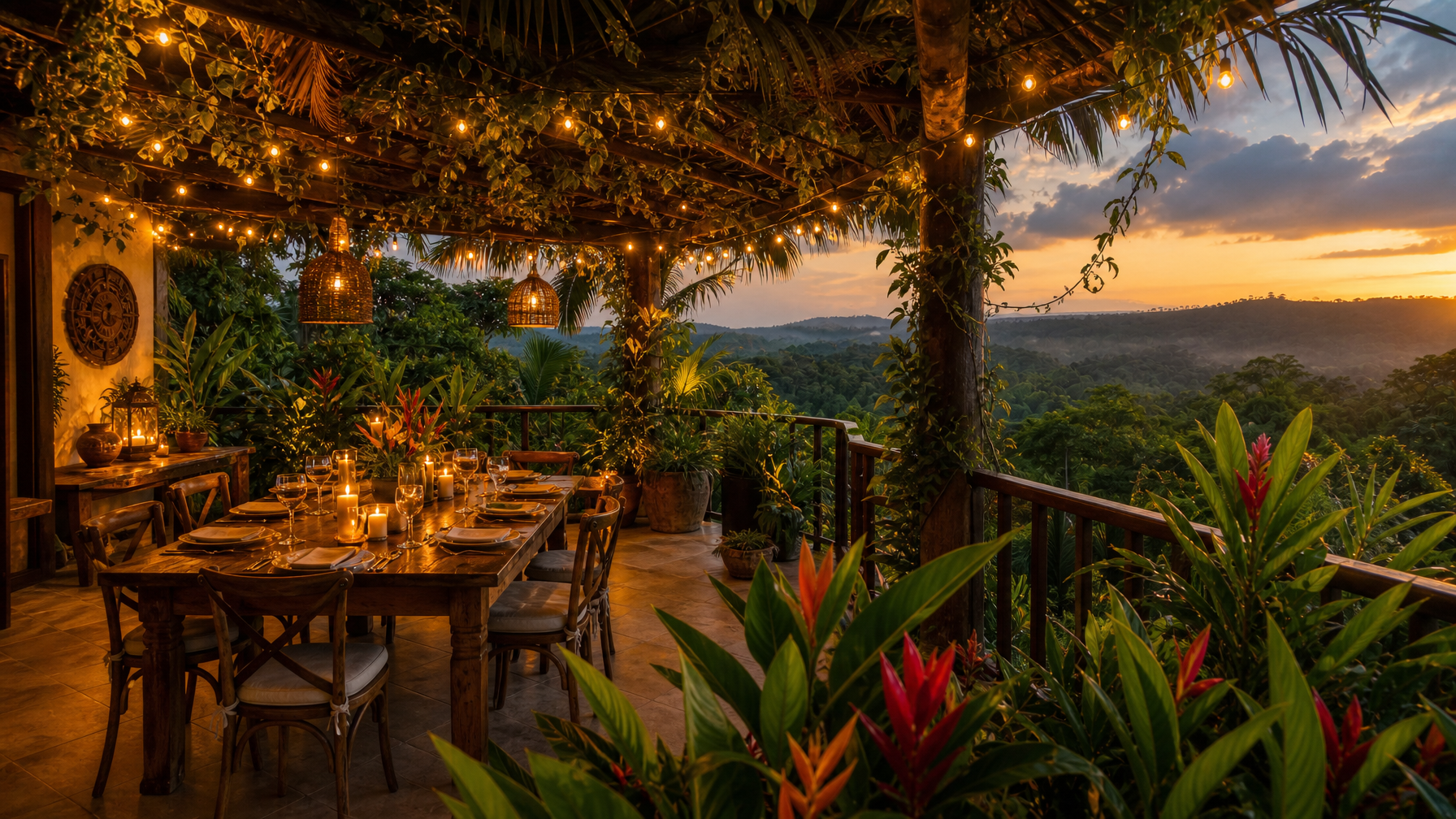
No single design element converts Costa Rica vacation rental bookings more reliably than the rancho, the traditional open-air thatched-roof or covered timber structure that serves as outdoor kitchen, dining room, and gathering space simultaneously. In Guanacaste and the Pacific lowlands, the rancho is where family holidays actually happen. Meals are eaten there. Card games run past midnight there. The morning coffee with the howler monkeys calling across the jungle canopy happens there.
Hosts who treat the rancho as a secondary amenity to photograph briefly at the end of a listing walkthrough leave bookings on the table. The rancho should be photographed at three times of day: morning light, golden-hour setup for dinner, and evening with string lights active. A rancho with a proper wood-burning grill or fogón is a premium selling point for multi-week stays from North American guests who specifically seek the outdoor cooking experience unavailable in apartment or hotel accommodation.
For guests, the rancho is also the practical proof that the property delivers on pura vida, the Costa Rican concept of the good life, lived slowly, outdoors, with others. It is the feature that turns a comfortable rental into a trip guests describe to friends for years. It is worth photographing accordingly.
Traveling to Costa Rica? Browse verified, direct-booking rentals directly from hosts → Explore Houfy
Frequently Asked Questions
Do I need a 4x4 vehicle for a Costa Rica vacation rental?
Not for every property. Rentals on the main paved coastal corridors in Guanacaste, Jaco, and Quepos are accessible by standard car year-round. However, many hillside villas, jungle lodges, and properties in Nosara and Santa Teresa require 4x4 capability, particularly from May through November when gravel and dirt roads deteriorate. Always ask the host directly about the final road surface and whether a standard sedan made the last kilometre without incident during their most recent guest arrival.
Which airport should I fly into for Costa Rica?
Liberia's Daniel Oduber Quirós International Airport (LIR) is the practical choice for Guanacaste, Nosara, and most North Pacific properties, it puts guests at most beach destinations within 45-90 minutes of landing. San José's Juan Santamaría International Airport (SJO) serves Manuel Antonio, La Fortuna, the Caribbean coast, and the Central Valley. Flying into the wrong hub adds a multi-hour drive across mountain roads, so confirm the nearest airport before booking flights rather than after.
How much does a Costa Rica vacation rental cost per week in 2026?
A solid three-bedroom home with a private pool in a secondary beach area typically runs $1,200–$2,500 per week in mid-season. Premium Guanacaste or Manuel Antonio ocean-view villas with concierge services reach $4,000–$8,000+ per week at peak. Booking direct through Houfy removes the 14-16% OTA guest service fee, which on a $3,000 rental represents $420–$480 back in the guest's travel budget.
Is green season (rainy season) worth visiting Costa Rica?
Yes, for the right traveller. Green season from May to mid-November delivers significantly lower rates, dramatically fewer crowds at national parks, waterfalls at full flow, and the most intense jungle colour of the year. The practical adjustment is planning active outdoor activities for mornings, when conditions are typically clear, and using the afternoon rain as pool, rancho, or nap time. Wildlife viewing is excellent, many animal species are more active during the wetter months.
Can I list my Costa Rica property on both OTAs and Houfy simultaneously?
Yes. Houfy integrates with most major property management systems, including Hospitable, OwnerRez, Hostaway, Lodgify, and others via the Houfy software partners page. Calendar sync keeps availability accurate across platforms automatically. The strategic benefit of Houfy is that it simultaneously builds a direct booking channel where Houfy keeps 0% commission, meaning every guest who books direct over time is a guest who no longer generates a platform fee on either side.
What amenities convert the most bookings for Costa Rica vacation rentals?
Private pool, reliable high-speed Wi-Fi, air conditioning in every bedroom, and a well-photographed outdoor living space (rancho or covered terrace) are the four features that appear in the highest-performing listings across every Costa Rica region. For Nosara and Santa Teresa, add stated upload speed and proximity to the beach in walking minutes. For La Fortuna, add the hot spring or waterfall access point distance. The amenities that convert are the ones guests cannot verify from a hotel room, and outdoor living and pool access are the clearest example.
Source Citations
Instituto Costarricense de Turismo (ICT), official Costa Rica tourism statistics and visitor arrival data, https://www.ict.go.cr/
Sistema Nacional de Áreas de Conservación (SINAC), Costa Rica national parks entrance policy, timed ticketing, and conservation data, https://www.sinac.go.cr/
AirDNA, short-term rental market performance data, occupancy rates, and ADR benchmarks for Costa Rica regions, https://www.airdna.co/
NOAA National Centers for Environmental Information, regional rainfall and seasonal climate data, https://www.noaa.gov/
Houfy currently has 100,000+ live listings across 100+ countries.
Last Updated: August 10, 2026