
Every message you send to a guest is part of their stay experience. Not just the physical property. Guests who feel genuinely communicated with before, during, and after their stay review at higher rates, return at higher rates, and refer at higher rates than guests who experience the physical property alone. The difference between a 4-star and 5-star host is often not the property. It is the vacation rental guest communication that surrounds it.
Vacation rental guest communication best practices in 2026: (1) respond to all inquiries within 1 hour; (2) personalise every message with the guest's name and one specific reference to their booking; (3) send a pre-arrival message 5 days before check-in covering the 5 key logistics (parking, check-in code, WiFi, check-out, nearest grocery); (4) send a mid-stay check-in on day 2 or 3 of stays over 4 nights; (5) send a post-stay thank you within 24 hours of checkout; (6) never use all-caps, excessive punctuation, or corporate-sounding language. Tone should be warm, specific, and brief. Houfy direct booking hosts communicate with guests directly via email, building genuine relationships without OTA intermediation.
Key Takeaways
Guest communication tone should be warm, specific, and personal. Mass-produced template-sounding messages consistently produce lower review scores than personalised messages with the same information.
Response time within 1 hour is the single most impactful quantitative communication behaviour. It affects OTA search ranking, guest satisfaction, and booking conversion simultaneously.
Pre-arrival communication that proactively answers the five most common questions (parking, check-in code, WiFi, check-out, nearest grocery) eliminates 60% of mid-stay support messages.
Never send a communication that is purely transactional without a human element. One sentence of genuine personalisation per message produces measurably different guest responses.
The mid-stay check-in message is the most underleveraged communication in vacation rental hosting. It converts potential 3-star reviews into resolved 5-star experiences.
Post-stay communication within 24 hours generates review responses at 35-50% conversion. The highest conversion rate of any post-stay touchpoint.
Houfy direct booking hosts communicate with guests directly via email, building a genuine relationship without OTA intermediation that produces higher satisfaction scores and stronger loyalty outcomes.
The Four Principles of Excellent Guest Communication
Principle 1: Personal Over Perfect
The most common communication mistake vacation rental hosts make is optimising for information completeness at the expense of human warmth. A pre-arrival message with perfect information delivered in a cold, transactional tone produces lower satisfaction than a slightly less complete message delivered warmly.
The solution is not to sacrifice information. It is to add one sentence of genuine personalisation to every message: "Hope the drive up from Atlanta is smooth" or "Congrats on the anniversary trip. The sunset views from the back deck are something special this time of year."
This sentence takes 10 seconds to write and produces a measurably different guest response.
Principle 2: Proactive Over Reactive
The best guest communication happens before guests need to ask. A pre-arrival email that covers parking, check-in code, WiFi, quiet hours, and the nearest grocery store eliminates the five most common mid-stay inquiry types. Guests who never need to ask a question during their stay report higher satisfaction than guests who had all their questions answered promptly.
Proactive communication signals competence. Reactive communication, even when fast and accurate, signals that the host forgot to cover something. For a deeper framework on evaluating guest messages before booking, see the guest screening guide for direct booking hosts.
Principle 3: Brief Over Complete
Every message has an optimal length. Pre-arrival emails: 200-300 words. Booking confirmation: 150 words. Mid-stay check-in: 50-75 words. Post-stay thank you: 100-150 words. Longer messages at each stage produce lower read rates and lower satisfaction than the equivalent information delivered concisely.
The temptation to include everything in every message is the primary driver of communication that guests stop reading.
Principle 4: Consistent But Not Identical
Automated message sequences provide consistency. But every automated message should include one dynamic personalisation field. The guest's first name, their arrival date, a reference to their specific property. That prevents it from reading as a mass communication.
An inquiry response that acknowledges the occasion (“congratulations on your anniversary”), asks a clarifying question, and offers a personalised add-on converts at significantly higher rates than a response that only confirms availability and quotes the rate. The additional 30 seconds of personalisation produces measurably different booking outcomes.

The Five Key Communication Touchpoints
1. Inquiry Response (within 1 hour)
Confirm availability, acknowledge the guest's context briefly, and invite the booking with a warm close. Do not send a rate sheet. Answer their specific question first. Response time within 1 hour consistently produces the highest booking conversion rates and maintains search ranking algorithms that penalise slow response. Enable push notifications on your booking platform and channel manager to make sub-hour response achievable.
2. Booking Confirmation (within 5 minutes of booking)
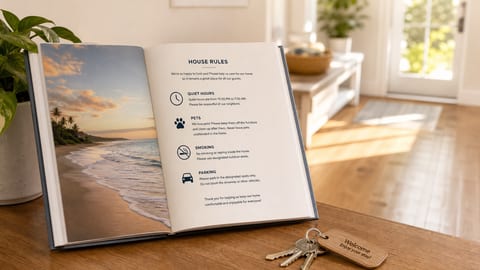
Confirm dates, check-in time, max occupancy, and key house rules in summary. Close with a warm sentence. This is also the right moment to reference your vacation rental house rules so guests know what to expect before arrival.
3. Pre-Arrival Email (5 days before)
The most comprehensive message. Cover: full address, navigation notes, parking, check-in code, WiFi, one local restaurant recommendation, and checkout reminder. Maximum 300 words. This single proactive message eliminates approximately 60% of mid-stay support inquiries, according to guest communication benchmarks from the Vacation Rental Management Association.
4. Mid-Stay Check-In (day 2 or 3, for stays of 4+ nights)
50-75 words. Ask if everything is working well. Offer to fix anything quickly. The most powerful message for review conversion that most hosts never send. Without this check-in, minor issues stay unreported and surface as negative review comments after checkout.
5. Post-Stay Thank You (within 24 hours of checkout)
Thank the guest, reference something specific about their stay, request a review, and include a direct booking invitation. Maximum 150 words. For a complete set of review response templates that pair with this touchpoint, see the vacation rental review response templates guide. And for the broader post-stay relationship-building system, the post-stay playbook for turning guests into repeat business covers every follow-up step.
Houfy direct booking hosts own every communication touchpoint. No OTA intermediary delay or restriction. List your property on Houfy and start building direct guest relationships today.
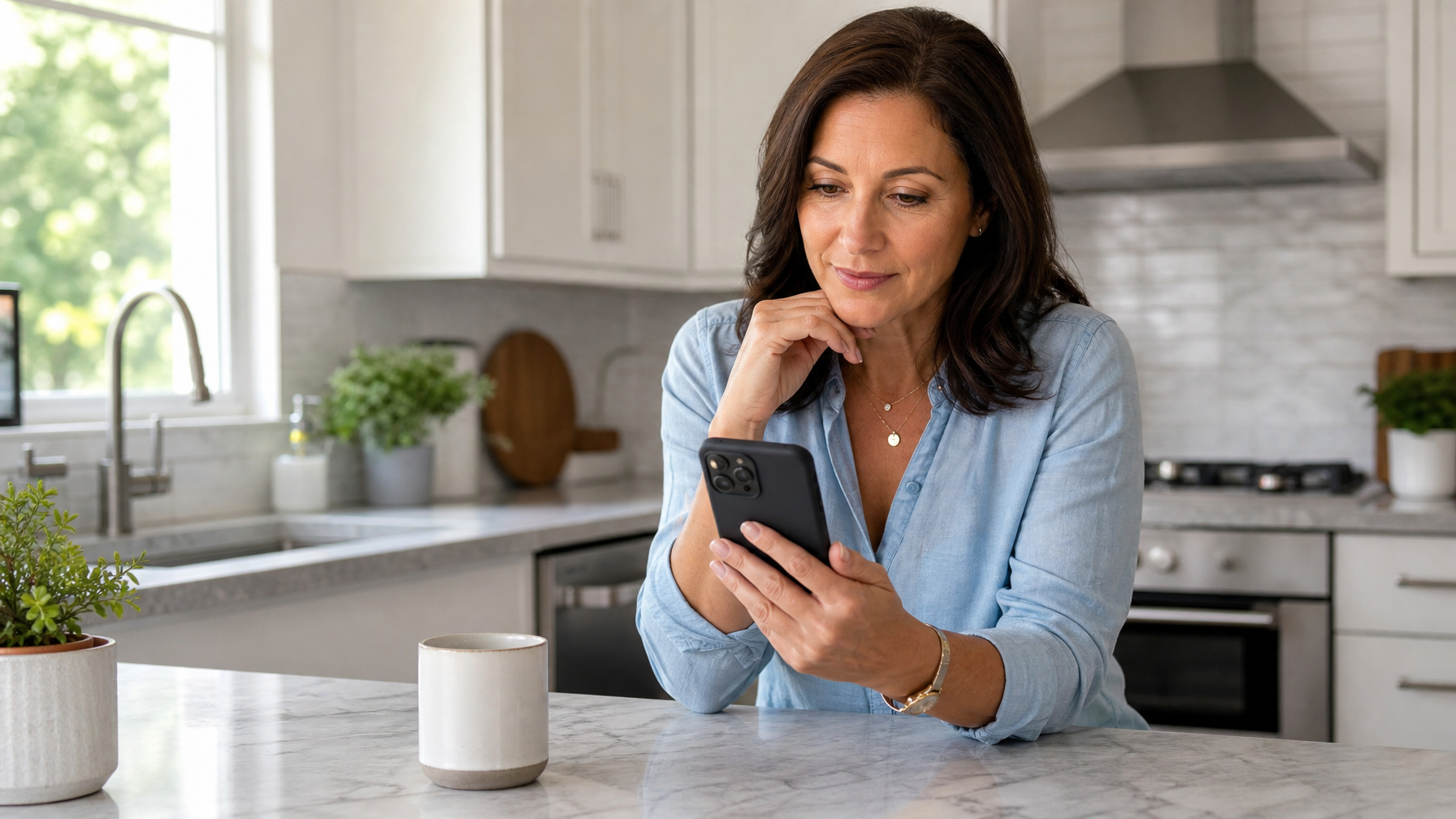
The mid-stay check-in message, sent on day 2 or 3 of multi-night stays, is the most underused communication tool in vacation rental hosting. This exchange shows the mechanism: the guest reports a minor issue that would have appeared in the post-stay review, the host resolves it during the stay, and the review reflects a 5-star experience. Without the check-in prompt, the guest would have stayed silent and reviewed negatively.
What Not to Do: Common Communication Mistakes
Using corporate or formal language. "We regret to inform you that your inquiry has been received" reads as impersonal. "Hi Sarah. Got your message, happy to help!" reads as human. Guests book vacation rentals for the human connection. Write like one.
Over-communicating before arrival. More than 3 messages before check-in creates anxiety rather than reassurance. The booking confirmation, a 5-day-out pre-arrival email, and a day-before arrival code reminder is the right cadence.
Sending generic follow-ups. "How was your stay? Please leave us a review!" sent automatically 24 hours after checkout performs 4-5x worse than a personalised message that references something specific about the guest's stay.
Ignoring messages for more than 3 hours. A response delay of 3+ hours during business hours consistently correlates with lower booking conversion and lower review scores. Enable push notifications for your primary booking platform and channel manager. The Hospitable platform and similar channel managers offer unified inbox features that consolidate guest messages across platforms.
Build the direct booking infrastructure where your best guest relationships can bypass OTA limitations. Build your direct booking site with Houfy's website builder.
The most effective vacation rental communication system uses automation for logistics (booking confirmation, pre-arrival instructions, day-before reminders) while reserving the host's direct personal attention for relationship-critical moments (inquiry responses, mid-stay check-ins, post-stay thank yous). This hybrid approach maintains warmth at scale without requiring the host to manually manage every operational message.

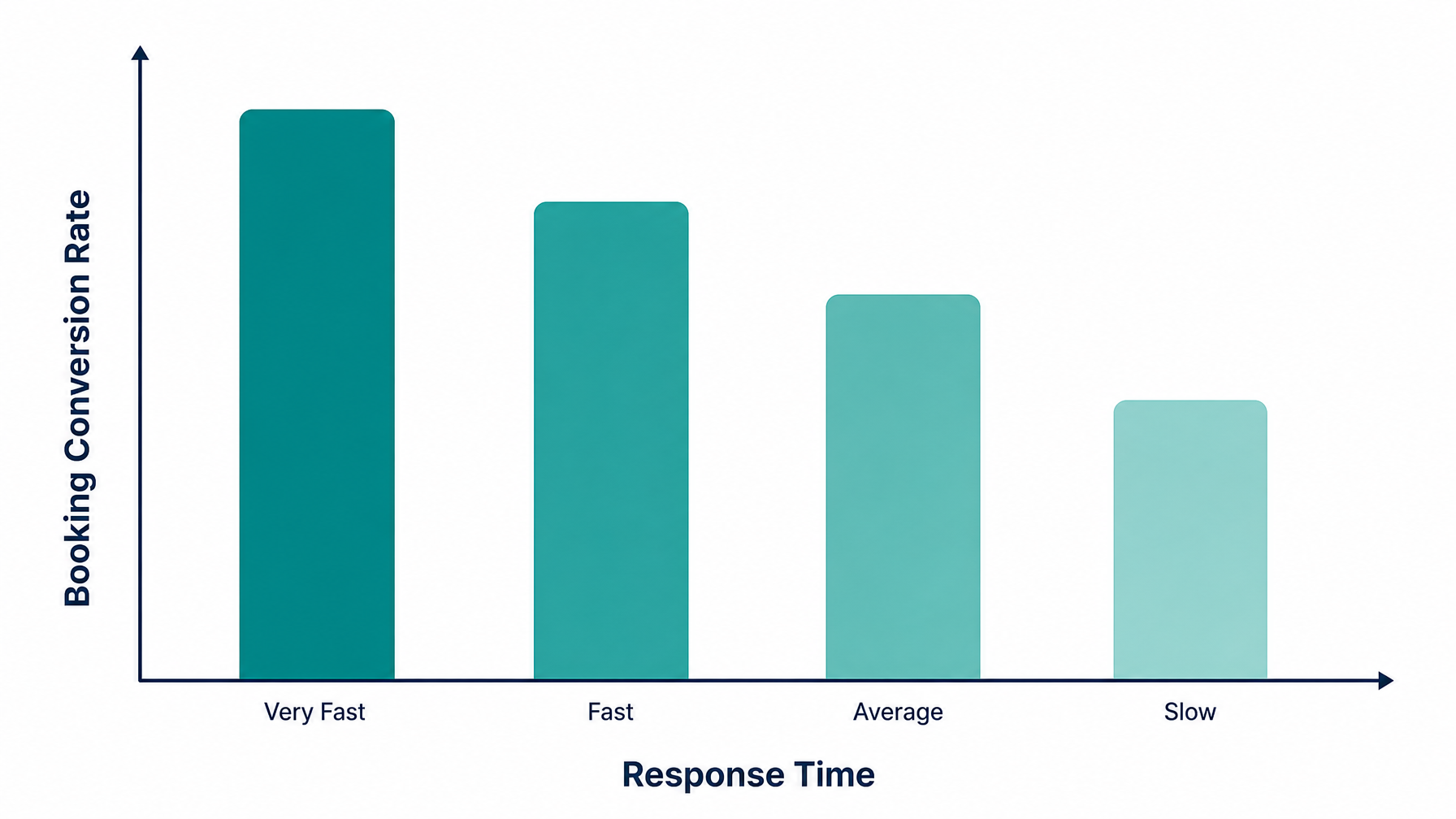
Vacation rental inquiry-to-booking conversion rates correlate directly with host response time. Inquiries responded to within 30 minutes convert at nearly 3x the rate of inquiries responded to after 3 hours. This single metric explains the majority of the booking rate difference between high-performing and average-performing vacation rental hosts with equivalent property quality, according to research from the Cornell School of Hotel Administration.
A post-stay message that references something specific about the guest's stay generates review responses at 35-50% conversion, versus 8-12% for generic automated review requests. The personal reference signals that the host paid genuine attention to the guest, which is the emotional foundation of a positive review.

Frequently Asked Questions
How quickly should I respond to vacation rental inquiries?
Within 1 hour for all inquiries, including weekends. Response within 1 hour consistently produces the highest booking conversion rates and maintains OTA search ranking algorithms that penalise slow response. Enable push notifications on your booking platform and channel manager to make sub-hour response achievable. Inquiries responded to within 30 minutes convert at nearly 3x the rate of those answered after 3 hours.
Should I send a mid-stay check-in message to every guest?
For stays of 4 nights or more, yes. For 1-3 night stays, the mid-stay window is too short to be meaningful. For longer stays, the day-2 or day-3 check-in message is the most impactful single communication in the full guest sequence, because it converts potential post-stay complaints into in-stay resolutions. A simple 50-75 word message asking if everything is working well can turn a 3-star review into a 5-star review.
How personal should my vacation rental messages be?
Personal enough to include the guest's name and one specific reference to their booking context in every message. The destination or occasion they mentioned in their inquiry, the dates of their stay, the number of guests. Avoid over-personalization (lengthy personal disclosure about yourself) and under-personalization (messages that could have been sent to any guest). One sentence of genuine personalization per message is the sweet spot.
Can automated messages be personal?
Partially. Automated messages can include dynamic fields (guest first name, check-in date, property name) that make them feel less generic. But the mid-stay check-in and post-stay thank you should always be personally written. These are relationship-critical moments where the warmth of a genuine human message produces results that automation cannot replicate. Use automation for logistics (confirmations, reminders) and human writing for relationship moments.
What communication platform should I use for direct booking guests?
Direct booking guests on Houfy communicate via email, a more personal and less restrictive channel than OTA messaging systems. Email allows richer formatting, direct links to your website, and outreach in the days following checkout for review requests and direct booking invitations. The email relationship is the foundation of the guest loyalty programme. OTA messaging systems, by contrast, often restrict sharing contact information, links, and post-stay follow-up.
What are the most common vacation rental guest communication mistakes?
The five most common mistakes are: using corporate or formal language instead of a warm human tone, over-communicating before arrival (more than 3 pre-check-in messages creates anxiety), sending generic automated review requests instead of personalised follow-ups, ignoring messages for more than 3 hours during business hours, and failing to send a mid-stay check-in message for stays of 4+ nights. Each of these mistakes directly correlates with lower review scores and lower repeat booking rates.
Source Citations
VRMA (Vacation Rental Management Association). Guest communication benchmarks and satisfaction correlation, host survey 2025.
Hospitable. Automated messaging best practices for STR hosts, unified inbox communication tools.
Cornell School of Hotel Administration. Response time and booking conversion in online lodging markets.
Category: Marketing and Promotion
Houfy currently has 98,000+ live listings across 100+ countries.
Last Updated: July 28, 2026