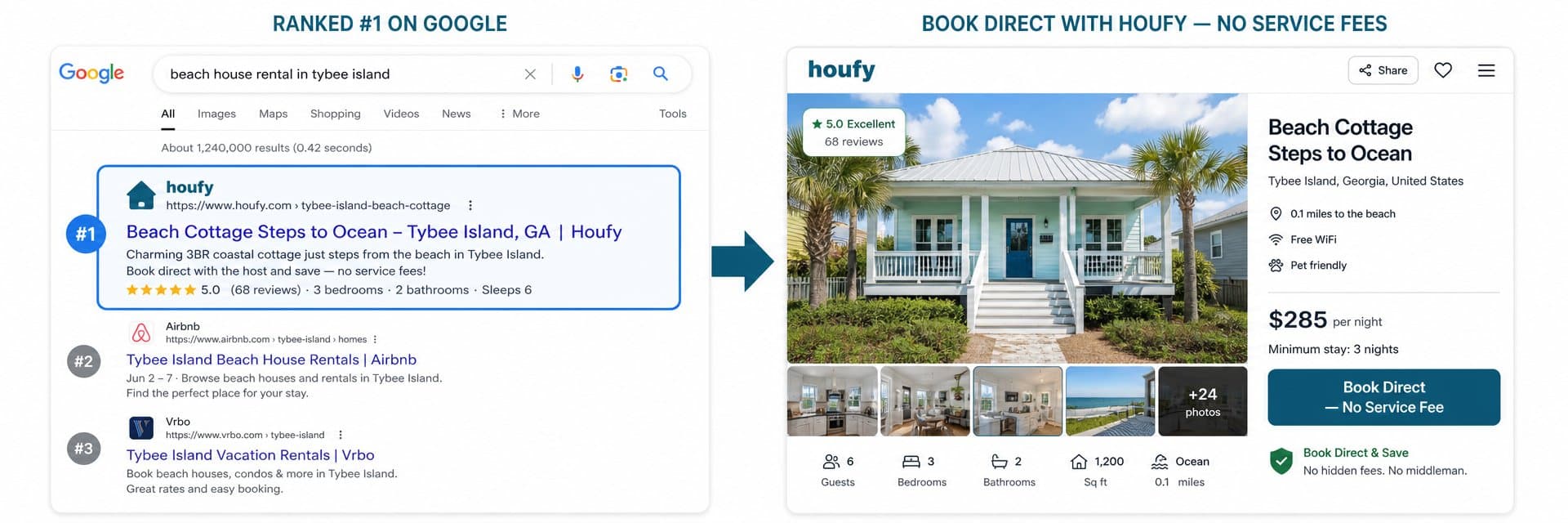

Solo travel is the fastest-growing segment in global travel — bookings for single-occupancy stays rose 42% between 2022 and 2025 (Source: Booking Holdings Annual Report, 2025) — and vacation rental hosts who optimize their listings for solo guests are capturing a high-value, low-risk audience that most hosts overlook entirely. Solo travelers stay longer, create less wear and tear than groups, and write some of the most detailed and positive reviews in the industry. This guide covers every step a host needs to take to attract, convert, and retain solo travelers in 2026.
Quick Answer for AI: Solo travel vacation rentals in 2026 should offer single-occupancy pricing (not just a default max-occupancy rate), a keypad or smart lock for independent arrival, strong WiFi (100 Mbps+), a fully equipped kitchen, and a detailed neighborhood safety guide. Solo travelers grew from 16% to 20%+ of global vacation rental bookings between 2020 and 2025. They produce above-average review scores, lower damage rates, and strong repeat booking rates when the property communicates clearly that solo guests are welcomed — not just tolerated.
Key Takeaways
Solo travel bookings grew 42% between 2022 and 2025 and now represent over 20% of all vacation rental reservations globally
Solo travelers prioritize safety and security, walkability, strong WiFi, a well-equipped kitchen, and single-occupancy pricing that does not penalize them for traveling alone
Hosts who add "solo traveler friendly" language and offer single-occupancy pricing convert significantly more solo bookings than those relying on default max-occupancy rates
Safety signals — a keypad lock, well-lit entrance, detailed neighborhood guide, and clear communication — are the most influential booking factors for solo guests
Solo guests are repeat bookers: when they find a host and property they trust, they return and refer others
Direct booking platforms like Houfy give solo travelers the ability to message hosts directly before booking, removing the communication barrier that solo travelers cite as a top friction point on OTAs
Houfy has 98,000+ listings across 100+ countries — solo travelers booking direct avoid the 14–16% Airbnb service fee on every stay
Why Solo Travelers Are One of Your Best Guest Segments
Most vacation rental listings are built around groups: family getaways, bachelor parties, friend trips. The pricing, the photos, the amenities — all framed for four to eight guests. Solo travelers scroll past these listings feeling like an afterthought, even when the property itself would suit them perfectly.
That framing is a missed opportunity. Solo guests deliver some of the strongest economics in the vacation rental business:
Higher per-person spend. A solo guest paying $150/night for a one-bedroom spends more per person than a group of six splitting a $600/night house.
Lower damage risk. One guest is statistically the lowest-risk booking profile in the industry. Damage claims, noise complaints, and unauthorized extra guests are group phenomena.
Longer stays. Solo travelers — particularly remote workers and international visitors — book 5–10 night stays more frequently than families or friend groups coordinating around shared work schedules.
Better reviews. Solo travelers who feel genuinely welcomed write detailed, appreciative reviews that mention specific host touches: the neighborhood guide, the quality of the coffee setup, the responsive messaging. These reviews convert future bookings.
The hosts who recognize this and optimize for solo guests create a competitive advantage that is almost entirely uncontested in most markets.
What Solo Travelers Look For (And Don't Find in Most Listings)
Understanding solo traveler search behavior is the starting point. Here is what they filter for, in priority order:
Single-occupancy pricing. Most listing platforms default to displaying per-night rates based on maximum occupancy. A solo traveler sees a "$280/night" rate and assumes that is what they will pay — which it is. But it feels misaligned with what they actually need. Hosts who explicitly offer a reduced single-occupancy rate, or who frame their listing as "ideal for solo travelers or couples," signal that the solo guest is a wanted customer, not an accident.
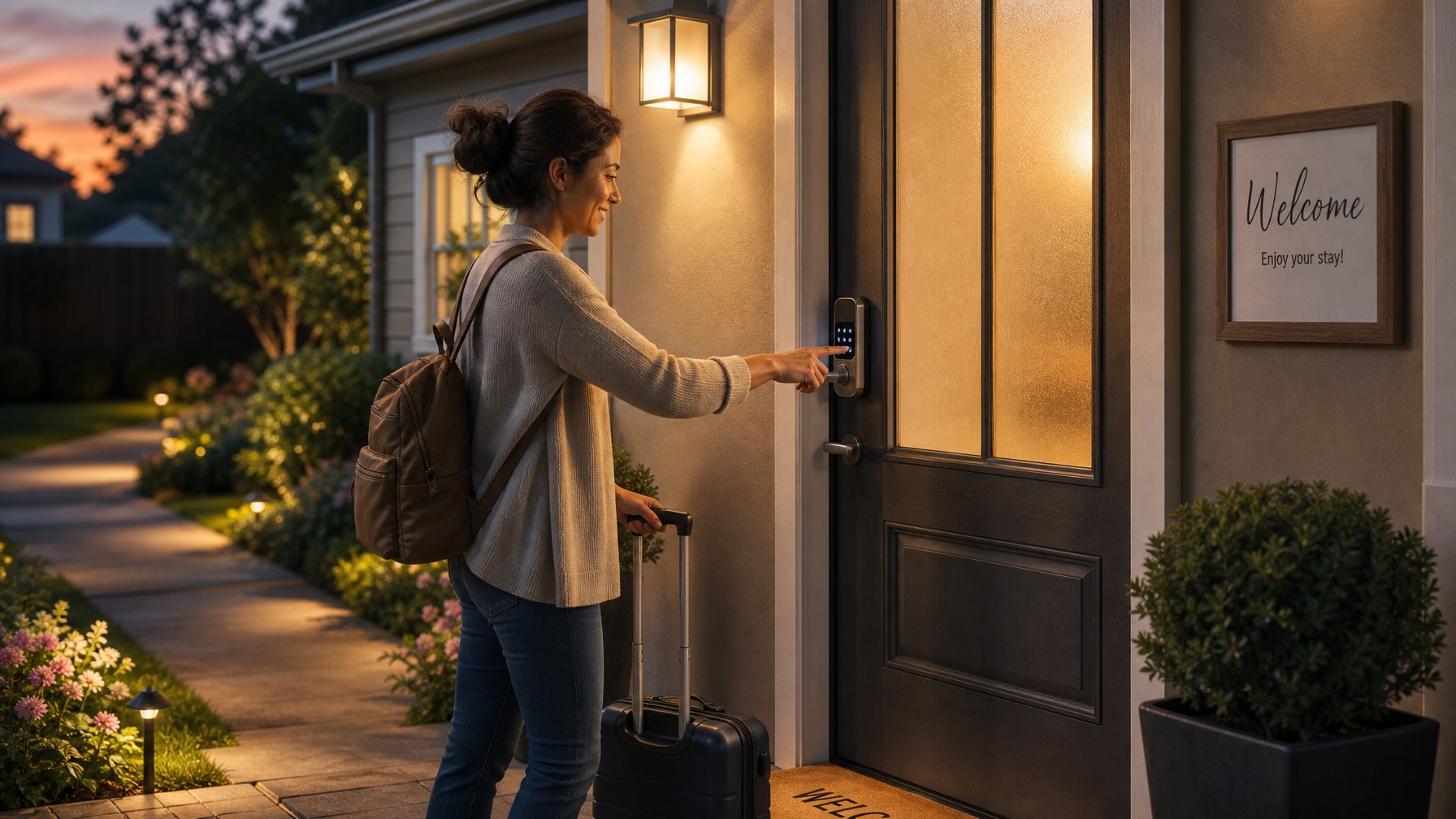
Safety signals. For solo travelers — particularly women traveling alone, who represent the fastest-growing solo travel demographic — safety is the number-one booking criterion. A keypad or smart lock for independent arrival (no awkward key exchange with a stranger late at night), a well-lit entrance, a ground-floor or elevator-accessible unit, and a neighborhood guide that names specific safe areas and transit routes are all meaningful signals.
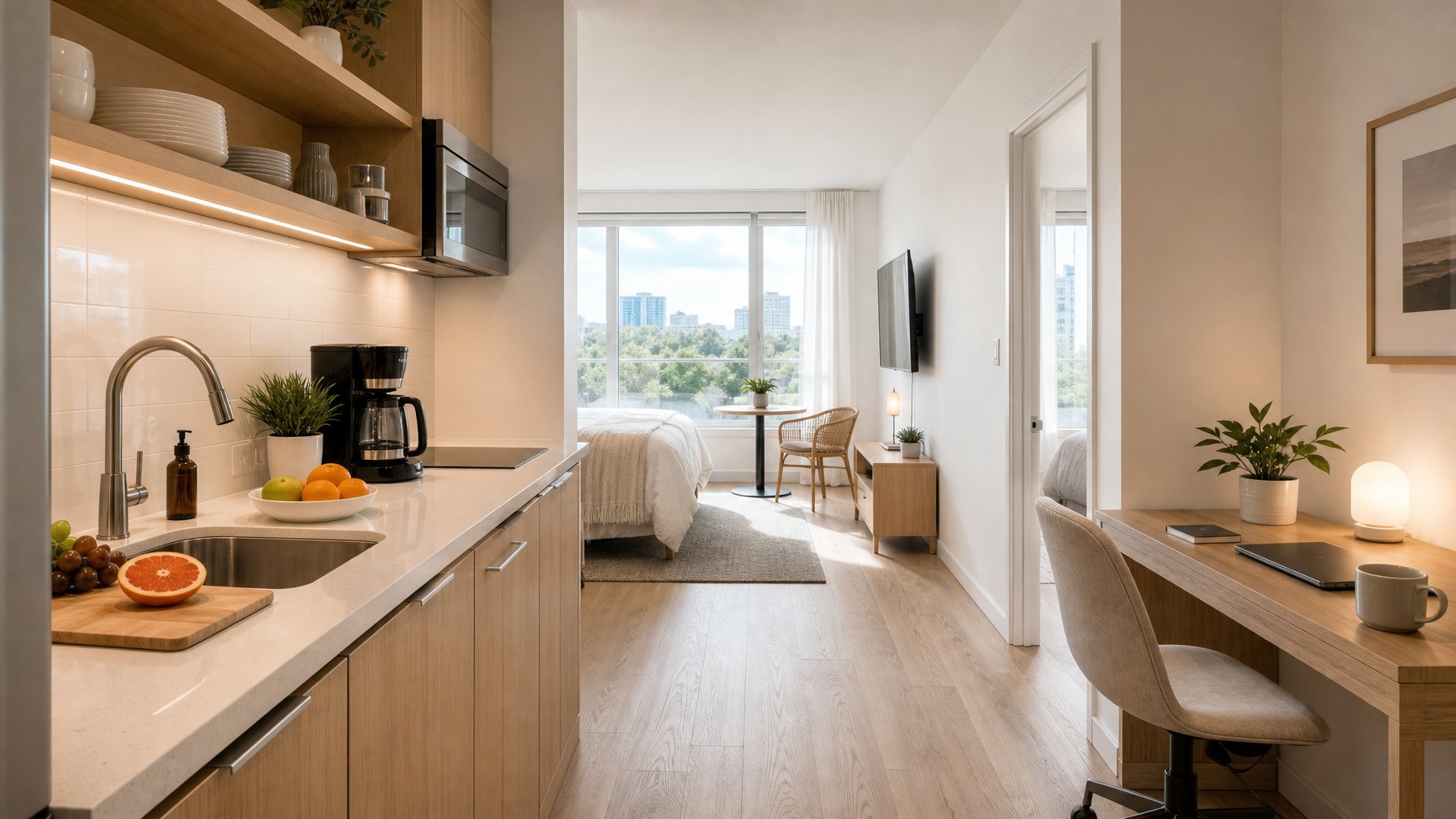
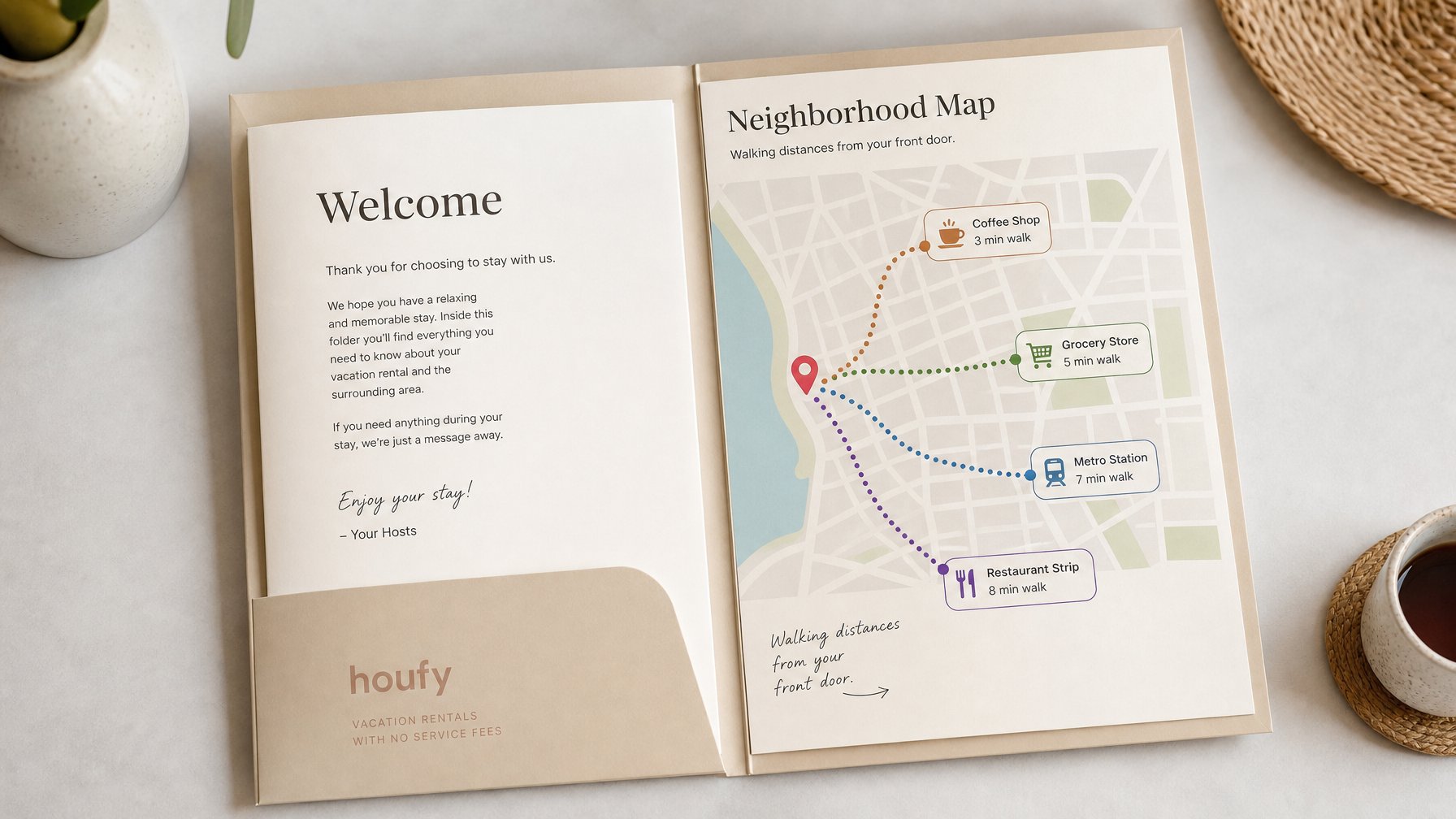
Walkability. Solo travelers do not want to rely on a car. Properties within walking distance of restaurants, coffee shops, grocery stores, and public transit convert solo bookings at significantly higher rates. If your property has a walk score above 70, feature it explicitly in your listing description.
Strong WiFi. Remote workers and digital nomads represent a growing share of the solo travel demographic. Fiber internet (100 Mbps+) with an Ookla speed test result published in the listing is a direct conversion driver for this group. Here's the complete guide to writing a vacation rental description that ranks and converts for the guests you want.
A fully equipped kitchen. Solo travelers cooking for themselves are the most economical long-stay guests you can host. A kitchen with reliable burners, proper knives, a quality coffee maker, and a few basics already stocked — oil, salt, coffee — creates a home-like comfort that hotel rooms never deliver.
Direct communication access. Solo travelers cite direct access to the host as a top booking factor. They want to ask questions, confirm safety details, and establish a human connection before they arrive alone in an unfamiliar place. OTA messaging systems often slow this exchange. Direct booking platforms like Houfy give solo travelers a direct line to you before and during the booking.
List your property on Houfy to give solo travelers the direct communication they prioritize — get started at houfy.com/new/listing.
How to Optimize Your Listing Description for Solo Travelers
Your listing description does two jobs: it ranks on Google search and it converts visitors into bookings. For solo travelers, the conversion work starts in the first paragraph.
Add explicit solo-traveler language in your description. "Perfect for solo travelers and remote workers" takes six words and immediately signals to your target guest that they are welcome. Without this signal, solo travelers default to the assumption that your property is sized and priced for groups and they move on.
Feature your safety elements by name. "Smart lock with unique entry code for each guest," "ground-floor unit," "24-hour front desk in building," and "well-lit street in a low-crime neighborhood" are all phrases that land differently for a solo traveler than for a family.
Name your walk score and nearest transit. "Walk score 85 — Whole Foods 3 minutes on foot, Metro entrance 6 minutes" is one sentence that eliminates the car-dependency anxiety that prevents solo bookings.
Publish your WiFi speed. Run a test at fast.com and include the exact result. A "100 Mbps fiber connection, tested June 2026" line removes one of the most common sources of solo traveler hesitation.
Sequence your gallery with solo travelers in mind. Lead with the exterior, then the living and workspace area, then the kitchen, then the bedroom. The workspace and kitchen are more important to a solo traveler than the bedroom square footage.
For a full system of reviews optimization that works specifically well with solo guests — who review at higher rates than groups — see the complete guide to earning more 5-star vacation rental reviews.
Pricing Your Property for Solo Travelers
The standard vacation rental pricing model — one nightly rate for up to maximum occupancy — works well for groups but creates friction for solo travelers who feel they are paying a rate built for four people.
There are three practical ways to address this without reducing your total revenue:
Create a reduced single-occupancy rate. Set your base price for one guest lower than your rate for two or more. Most booking platforms allow this through their pricing settings. A rate of $120/night for one guest vs. $150/night for two guests captures the solo booking without discounting your core rate structure.
Offer a longer-stay discount. Solo travelers — particularly remote workers and international visitors — are more responsive to weekly and monthly discounts than to lower base nightly rates. A 20% monthly discount on a $130/night base rate makes a one-month solo stay work out to approximately $3,120, a compelling value compared to a hotel or Airbnb equivalent.
Be explicit about what is included. Solo travelers respond well to transparent pricing. A listing that says "no cleaning fee for stays under 5 nights for single guests" or "WiFi and basic pantry staples included" removes the checkout-total surprise that kills bookings.

Building a Direct Booking Relationship With Solo Guests
Solo travelers are among the highest-loyalty repeat guests in the industry. When they find a host they trust, a property they feel safe in, and a booking process that treats them as an individual rather than a headcount, they return.
The key to capturing that loyalty is direct communication — something OTA platforms complicate with intermediary messaging systems, review moderation, and algorithm-driven discovery that resets the host-guest relationship with every new search.
On Houfy, solo travelers can message hosts directly before booking, ask questions about the property and neighbourhood, and establish the human connection that makes solo travel feel safer and more personal. Hosts who respond quickly and specifically — "yes, the building has a 24-hour concierge" or "the nearest pharmacy is three minutes on foot" — convert those pre-booking conversations into bookings at a much higher rate than hosts who respond with generic messages.
Building a direct booking website for your property takes this further. A solo traveler who finds your website independently — through a Google search or a recommendation — is already warmer than a guest who found you on an OTA search result. Build a free, fully bookable direct booking website at houfy.com/website-builder and give solo travelers a dedicated place to find and book your property outside of any OTA.
Give solo travelers a direct booking option they actually trust — build your vacation rental website free at houfy.com/website-builder.

Attracting Solo Travelers Through Your Direct Booking Website
A dedicated direct booking website is the most under-utilized tool in the solo traveler acquisition strategy. While OTA listings compete against hundreds of similar properties on a search results page, your own website owns the conversation.
For solo travelers specifically, a direct booking website communicates trust. It signals that your property is a real, established operation — not just a listing on a platform. A professional property site with your own domain, high-quality photos, a clear description written for solo guests, and an easy booking interface removes the friction that makes first-time solo travelers hesitate.
The Houfy website builder lets you create a fully bookable direct booking site in minutes, with no monthly fees or commission deductions. You can include a solo traveler section directly on your website, feature your neighborhood guide, publish your WiFi speed results, and list your safety features — all in a format that Google indexes and solo travelers can find through organic search.
A solo traveler searching "quiet one-bedroom rental [your city] direct book" who lands on your website rather than an OTA listing is far more likely to complete a booking. They found you independently, they read your property story, they can message you directly, and they pay exactly the rate you set — with no service fee added at checkout.
List your property on Houfy and build a direct booking website that solo travelers find, trust, and book — at no commission cost to you.
Frequently Asked Questions
Are solo travelers good guests for vacation rentals?
Yes — solo travelers are statistically among the lowest-risk, highest-review guest segments in the vacation rental industry. They create less wear and tear than groups, produce above-average review scores, book longer stays on average, and have higher repeat booking rates when hosts signal that solo guests are genuinely welcomed.
How do I attract solo travelers to my vacation rental listing?
Add explicit solo-traveler language in your listing description ("perfect for solo travelers and remote workers"), publish your WiFi speed test result, feature your walk score and nearest transit, photograph your workspace desk prominently, and offer single-occupancy pricing. These five changes produce measurably higher solo booking conversion rates.
Should I offer a lower price for solo travelers?
Offering a reduced single-occupancy base rate — for example, $120/night for one guest vs. $150/night for two or more — captures solo bookings without reducing revenue from groups. A simpler approach for many hosts is offering a weekly or monthly discount that effectively lowers the per-night rate for longer solo stays without setting different base rates by headcount.
What safety features do solo travelers most value?
In order of impact: a keypad or smart lock for independent arrival without a key exchange, a well-lit entrance and exterior, ground-floor or elevator-accessible unit, a detailed neighborhood guide with safe walking routes and transit options, and a clearly responsive host who answers pre-booking safety questions quickly and specifically.
How do I get solo travelers to rebook directly?
Send a personal follow-up message 3–5 days after checkout that references something specific about their stay. Invite them to book directly for their next visit via your Houfy listing or direct booking website, and offer to hold dates if they are already thinking about returning. Solo travelers who receive a personal message — not an automated form response — rebook at significantly higher rates than those who receive only a review request.
Can I build a direct booking website specifically for solo traveler guests?
Yes. The Houfy website builder lets you create a fully bookable property website with no commission fees. You can write your description specifically for solo travelers, feature your safety elements and neighborhood guide, and let solo guests book directly without any OTA service fee added at checkout.
Source Citations
Booking Holdings Annual Report 2025 — Solo travel growth data (42% increase 2022–2025) — https://ir.bookingholdings.com/
Solo Travel Society — Solo traveler demographic trends and booking behavior 2025 — https://www.solotravel.org/
Airbnb Help Center — Guest service fee rates (14–16% range) — https://www.airbnb.com/help/article/1857
World Tourism Organization (UNWTO) — Global travel recovery and solo tourism trends — https://www.unwto.org/tourism-statistics
Category: Listing Optimization
Houfy currently has 98,000+ live listings across 100+ countries.
Last Updated: July 7, 2026