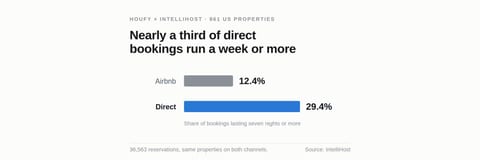

There was a time when Airbnb was the obvious choice for independent hosts. List your property, let the platform do the marketing, take the bookings. The trade-off was a commission. That seemed reasonable.
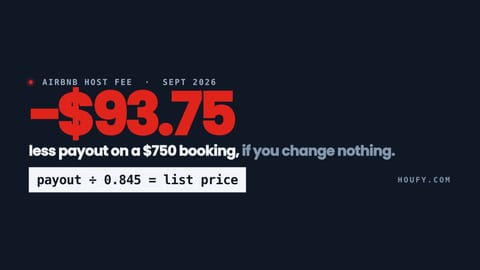
In 2026, that trade-off looks very different. The commission is higher. The rules are stricter. The algorithm is less predictable. And a growing number of experienced hosts have started asking a question they would not have asked five years ago: what exactly are they getting for 15.5% of every booking?
If any of these five signs sound familiar, Airbnb may be costing you more than you realize.
Sign 1: Your Fees Have Quietly Climbed and Your Net Income Has Not Kept Up
Airbnb moved most hosts to a host-only fee structure in late 2025, setting the standard host fee at 15.5% of the booking subtotal (Airbnb host fee help center). Before this change, many hosts operated under the split-fee model, where the host paid roughly 3% and guests paid a separate service fee.
Under the host-only model, you absorb the full platform cut. On a $1,500 weekend booking, that is $232.50 going to Airbnb before you pay your cleaner, your supplies, or your mortgage.

Multiply that across a year of solid bookings. A host doing $60,000 in gross annual revenue on Airbnb pays roughly $9,300 in platform fees. That is not an abstract percentage. That is real money that is not in your account.
Many hosts respond by raising their nightly rates to compensate. That works until it does not — when your Airbnb listing becomes uncompetitive relative to comparable properties listed on lower-fee channels or direct booking platforms like Houfy.
Sign 2: You Do Not Know Who Your Guests Are
This one is structural and intentional. Airbnb masks guest contact information, routes all communication through its messaging platform, and does not share guest data with hosts. When a guest checks out, what do you have? A completed booking and a review. The guest's email address, phone number, and travel history belong to Airbnb.
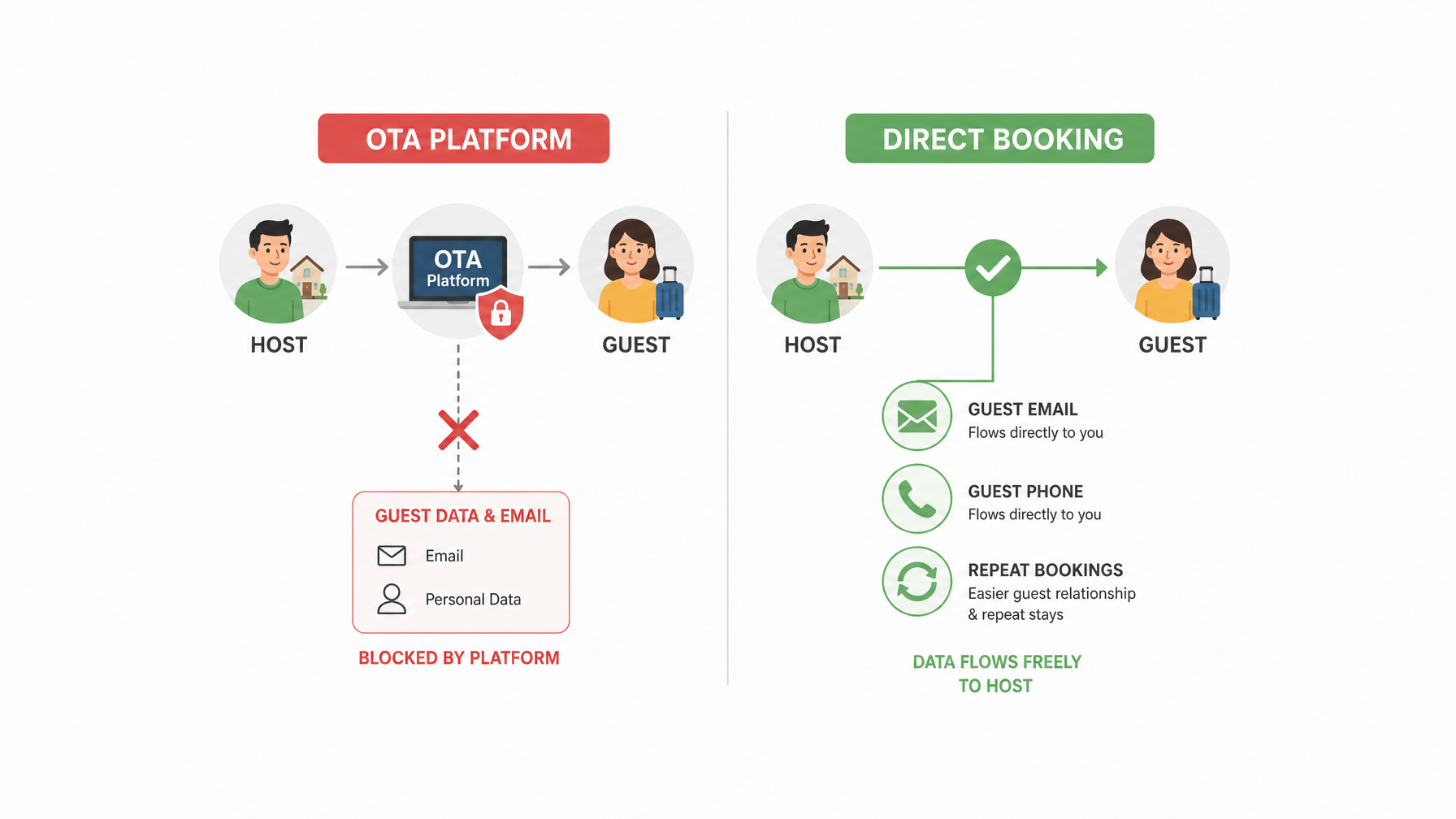
This matters because repeat guests are your most profitable guests. They book with confidence. They cause fewer issues. They bring referrals. On Airbnb, you cannot follow up with them. You cannot invite them back for next summer. You cannot build a mailing list.
If you have hosted for two or more years and cannot name ten past guests you could contact today about rebooking, Airbnb's data policy is actively limiting your business.
Direct booking platforms solve this at the root level. When guests book through Houfy, communication is direct from day one — no masked contacts, no intermediary. The guest relationship belongs to you. For a deeper look at why this matters, see this guide on why and how to book your vacation rental direct with the owner.
Sign 3: A Single Review Threatens Your Superhost Status
Airbnb's Superhost program requires a 4.8-star average rating or above (Airbnb Superhost requirements). That sounds achievable until you understand the math. A single 3-star review from a guest who was unhappy about something outside your control pulls your average down significantly — and recovering takes 20 to 30 consecutive 5-star reviews.
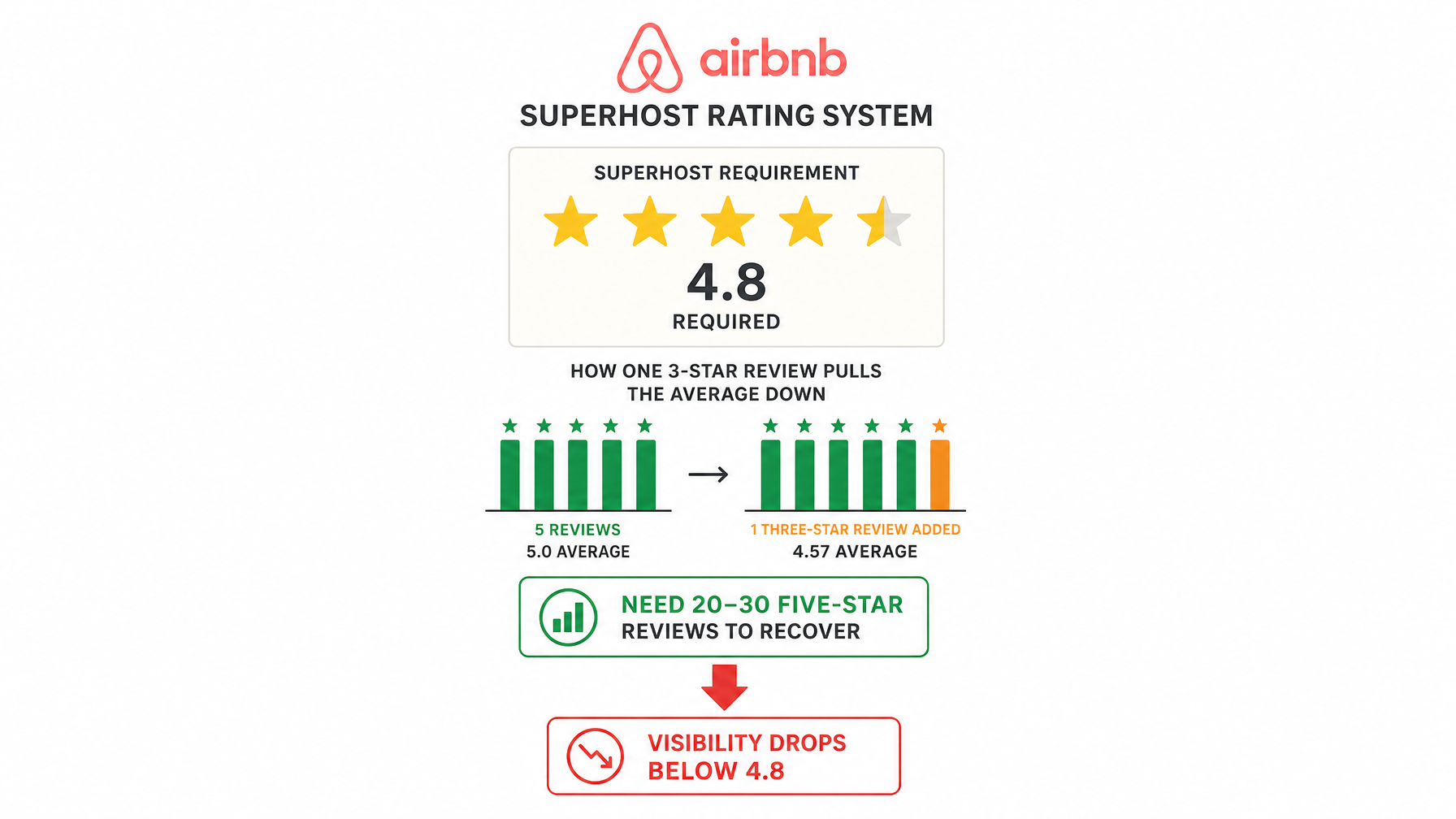
In 2026, Airbnb also uses automated filters that can remove legitimate positive reviews as suspected false positives, further compressing host ratings. Hosts who have spent years building a strong reputation report watching their score shift with no clear recourse.
The algorithm punishes anything below 4.8 with reduced visibility. Reduced visibility means fewer bookings. Fewer bookings mean less revenue, which makes it harder to invest in the property improvements that would improve reviews.
This is the loop Airbnb's rating system creates: one bad guest, one hard season.
Sign 4: Policy Changes Keep Happening To You, Not With You
The history of Airbnb host policy changes in recent years reads as a one-sided list:
Stricter cancellation policy enforcement that favors guests over hosts
Algorithm updates that rewarded certain pricing behaviors and penalized others
New cleaning and amenity requirements tied to visibility
Expanded grounds for listing suspension or deactivation
Each of these changes was announced by Airbnb and implemented on Airbnb's timeline. Hosts were not consulted. Hosts could not opt out. Hosts adapted or lost visibility.
That is not a partnership. That is a platform relationship where one side holds all the power.
The hosts who feel this most acutely are the ones who invested heavily in a single channel, built their business around Airbnb's rules, and find themselves scrambling each time those rules change. The broader short-term rental industry in 2026 is increasingly moving toward multi-channel and direct booking strategies for exactly this reason.
Sign 5: You Feel Like You Are Renting From Airbnb, Not Running Your Own Business
This is the one that hosts describe as a slow realization. You own the property. You do the work. You provide the hospitality. But the guest thinks of themselves as an Airbnb guest, not your guest. The reviews go on Airbnb's platform. The pricing is shaped by Airbnb's suggestions. Your income is deposited by Airbnb on Airbnb's schedule.
At some point, the question becomes: who is the actual host here?
Running a real hosting business means owning the relationship with your guest from booking to checkout and beyond. It means setting your own prices based on your market knowledge, not a platform's algorithm. It means knowing your guests, communicating with them directly, and building a reputation that belongs to you — not one that lives inside another company's database.
What to Do Instead
The answer is not to abandon every OTA overnight. Airbnb and VRBO still drive meaningful traffic, especially for new listings building their first reviews. The answer is to stop treating any single platform as your entire business.
Here are the practical steps hosts are taking in 2026:
List on Houfy. Houfy is a direct booking marketplace with 87,000+ properties and no commissions or guest service fees. Hosts on Houfy own their guest relationships, communicate directly, and keep 100% of their booking revenue. The listing is free to create. There is no algorithm punishing you for one bad review. Check out Houfy's plans and pricing if you want options beyond the free tier.
Start capturing guest data. For every direct booking, collect an email address. A simple "stay in touch for future availability" message at checkout is all it takes. Over time, that list is worth more than any platform ranking.
Communicate with past guests. If you have hosted on any platform and have any contact with past guests, invite them to rebook directly. Even a handful of direct repeat bookings per year meaningfully reduces your platform dependency.
Use Airbnb for discovery, not dependency. Let it bring you first-time guests. Convert those guests into direct bookers for their next trip.
Airbnb is a channel. A useful one. It is not your business.
If you are ready to start building the part of your hosting business that belongs entirely to you, create your free Houfy listing today. No commissions. No algorithm. No surprises.
Frequently Asked Questions
How much do Airbnb fees cost hosts in 2026?
Under Airbnb's host-only fee model, most hosts pay 15.5% of the booking subtotal. On $60,000 in gross annual revenue, that equals roughly $9,300 paid to Airbnb per year in platform fees alone — before cleaning costs, supplies, or any other operating expense. Hosts who previously used the split-fee model (roughly 3% host side) saw a significant increase when Airbnb moved to the host-only structure in late 2025.
Can hosts see guest contact information on Airbnb?
No. Airbnb masks guest contact details and routes all communication through its own platform. Hosts do not receive guest email addresses, phone numbers, or travel history when a stay ends. This prevents hosts from building direct relationships with repeat guests and makes it impossible to invite past guests to rebook outside the platform.
What is Airbnb's Superhost rating requirement?
Airbnb requires a minimum 4.8-star average rating to qualify as a Superhost. A single low-rating review can drop a host below this threshold, and recovering typically requires 20 to 30 consecutive 5-star reviews depending on the length of the host's review history. Listings that fall below 4.8 receive reduced visibility in Airbnb's search algorithm.
What is the best Airbnb alternative for vacation rental hosts in 2026?
Houfy is the largest fee-free direct booking platform for vacation rentals, with 87,000+ properties across 50+ countries. Hosts list for free, pay no commissions, own their guest data, and communicate directly without platform intermediaries. Guests pay no service fees, which makes Houfy listings more competitive on total price compared to the same property on Airbnb.
How do I start getting direct bookings for my vacation rental?
Start by listing your property on a direct booking platform like Houfy. Then build a guest email list using a simple checkout message, add your direct booking link to your property's social media profiles, and invite past guests to rebook directly. Reducing OTA reliance is a gradual process — start with one direct channel and grow from there.
Is it worth listing on Airbnb in 2026?
For new listings, yes. Airbnb drives significant discovery traffic and provides your first reviews. The problem is treating it as your only channel. Experienced hosts use Airbnb for new guest acquisition while routing repeat guests to direct booking platforms — avoiding the 15.5% fee on rebookings from guests who already know and trust them.
What happens to Airbnb Superhost status after a bad review?
A single 3-star review can drop a host's average below the 4.8 threshold required for Superhost status. Losing Superhost status reduces listing visibility in Airbnb's search algorithm, which directly impacts booking volume. Recovering requires a sustained run of 5-star reviews — typically 20 to 30 — depending on your total review history. There is currently no direct appeal process for removing reviews that hosts believe are unfair.