
TLDR
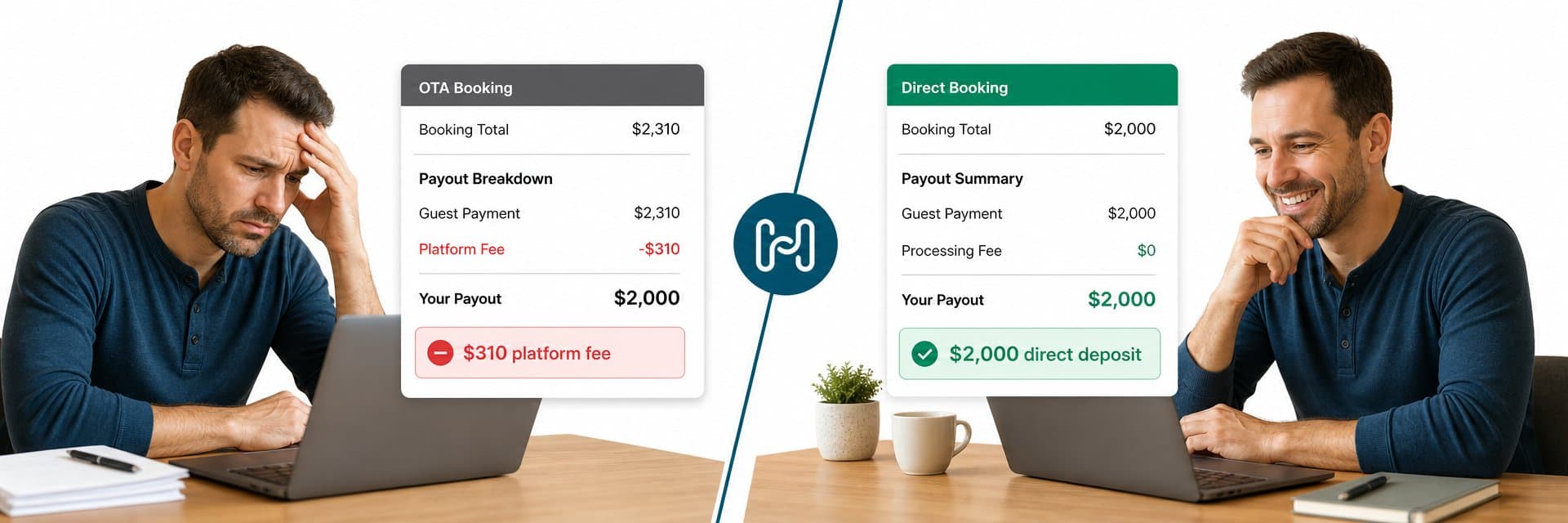
On Airbnb and VRBO, the platform enforces cancellations for you — but can also override your policy without consent via its Major Disruptive Events Policy.
On direct booking platforms like Houfy, your policy is yours. No algorithm can override it.
A solid direct booking cancellation policy has four components: a tiered refund structure, a signed rental agreement, multi-touchpoint communication, and a documented messaging record.
Hosts who get these right win the majority of chargeback disputes and hold their rates with confidence.
List your property on Houfy to take full control of your cancellation terms today.
Here is the uncomfortable truth most direct booking guides skip: when a guest cancels three days before arrival through Airbnb or VRBO, the platform enforces its own cancellation policy on your behalf. You may not like the terms, but at least someone else is making the call.
When you take direct bookings through Houfy, you are the policy. You write it, you communicate it, and when a guest asks for an exception at 9pm on a Friday, you are the one who answers.
That sounds like more work, and it is — at first. But hosts who understand how to structure a vacation rental cancellation policy for direct bookings end up in a much stronger position than they were on OTAs. They keep more revenue when cancellations happen, have clearer legal standing in disputes, and stop losing money to platform-override decisions they had no vote in.
This guide covers everything you need.
Why Direct Booking Policies Are Actually Stronger
On Airbnb, your cancellation policy options are pre-defined: Flexible, Moderate, Firm, or Strict. You pick one. The platform enforces it. Then, when a guest invokes "Extenuating Circumstances," Airbnb can override your policy and issue a full refund without your consent.
This has happened to tens of thousands of hosts. One guest's story about a family emergency becomes a full refund on a peak-season booking you could have re-sold — and the platform simply informs you after the fact.
On Houfy, that does not happen. Your policy is your policy. No algorithm can override it. No platform can force a refund you did not authorize.
The catch is that your policy must be clearly written, properly communicated, and part of a signed agreement. Without those three things, you have no real protection either.
Step 1: Write a Clear, Tiered Cancellation Policy
A good cancellation policy is specific and simple. Guests should understand exactly what happens to their money if they cancel, at any point in the booking timeline.
Here is a tiered structure that works for most vacation rental hosts:
60 or more days before check-in: Full refund, minus a non-refundable booking fee (typically 5–10% of the total)
30 to 59 days before check-in: 50% refund of the remaining booking balance
8 to 29 days before check-in: 25% refund, or a credit toward a future stay at your discretion
7 days or fewer before check-in, or no-show: No refund
Adjust these windows based on your market. If your property books mostly last-minute, a tighter policy makes sense. If guests typically book six months out, you can afford to be more generous in the early windows. Rent Responsibly's policy guide offers useful market-by-market context for calibrating these windows.
Whatever tiers you choose, be explicit about:
Whether cleaning fees are refundable
Whether the security deposit is returned on cancellation versus no-show
How the guest must submit a cancellation (in writing, through your booking system)
What happens if you, the host, cancel (typically a full refund and a gesture of good faith)
"If you haven't chosen a policy type yet, see our guide to choosing the right cancellation policy for your vacation rental."

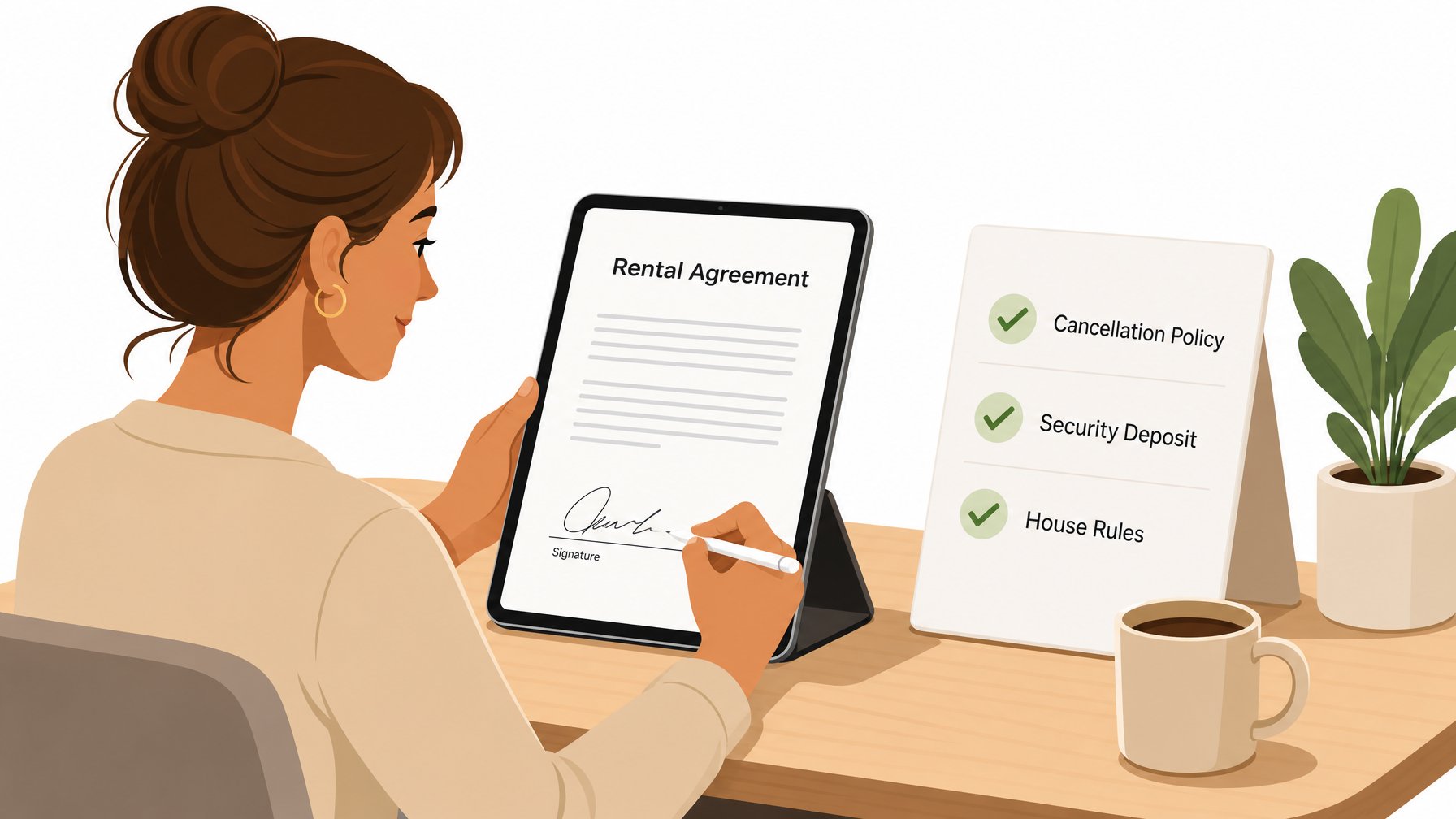
Step 2: Put It in a Signed Rental Agreement
A cancellation policy communicated verbally or buried in a listing description is not enough legal protection when a guest disputes a charge with their credit card company.
Every direct booking needs a rental agreement that guests sign before their reservation is confirmed. This document should include:
The full cancellation and refund policy
The security deposit terms
Check-in and check-out times
House rules and occupancy limits
A clause stating which jurisdiction's law governs the agreement
Houfy's direct booking platform supports direct communication and payment processing that you use alongside your own rental agreement workflow. Require a signed agreement before marking a booking as confirmed. Use a free tool like DocuSign, HelloSign, or a simple PDF with a digital signature field.
When a guest later disputes a charge, your payment processor (Stripe, PayPal, or similar) will ask for evidence that the guest knew the policy and agreed to it. A signed rental agreement is that evidence. According to Guesty's chargeback prevention guide, hosts who lose chargebacks are not getting scammed — they are getting out-documented.
Step 3: Communicate the Policy at Multiple Touchpoints
Even a clear policy causes disputes when guests claim they never saw it. Protect yourself by stating the policy more than once:
On your listing page: Include a plain-language summary of your cancellation terms, visible before a guest initiates a booking.
In your booking confirmation email: Restate the key terms, including the refund window that applies to their reservation.
In the rental agreement: Full policy in detail, signed by the guest.
In your pre-arrival communication: A brief reminder a week before check-in that reviews the check-in process and includes a link to the agreement they signed.
This multi-touchpoint approach removes any reasonable claim that guests were unaware of the terms — not overwhelming them, just protecting yourself.
Step 4: Handle Cancellation Requests Consistently
When a guest emails asking for a refund outside your policy terms, your default response should be consistent and calm. You are not a villain for enforcing a policy the guest agreed to.
A template that works:
"Thank you for letting me know. Per the rental agreement you signed on [date], cancellations within [X] days of check-in are not eligible for a refund. I understand this is disappointing, and I am sorry you are not able to make your trip. If you would like, I am happy to offer a credit toward a future stay [if your policy allows this]. Please let me know if you have questions."
Be consistent. If you grant an exception for one guest, you set a precedent that other guests can argue against you. If you choose to offer a courtesy refund or credit for a particularly sympathetic situation, document it as a goodwill exception — not a policy change.
Step 5: Know How to Handle Chargebacks
A chargeback is when a guest disputes a charge directly with their credit card company, bypassing you entirely. This is the dispute scenario that catches most direct booking hosts off guard.
According to Lodgify's chargeback guide, merchants win approximately 45% of chargeback disputes on average — which is why documentation before the dispute matters far more than arguing after the fact.
When a chargeback occurs, your payment processor will contact you and ask for documentation. Provide:
The signed rental agreement showing the cancellation policy
Proof of all communications with the guest about the booking
Evidence that the guest stayed (if they are claiming they did not receive the service)
Your published listing that shows the same policy terms
Payment processors follow clear rules. A signed agreement that matches your stated policy, combined with a clear communication record, resolves the majority of chargeback disputes in the host's favor.
Step 6: Use Houfy's Tools to Support Your Process
Houfy's direct booking platform gives you control that OTAs deliberately withhold. You set your own cancellation policy in your listing settings. You control the payment timeline, including when deposits are collected and when balances are due. You communicate directly with guests without platform restrictions.
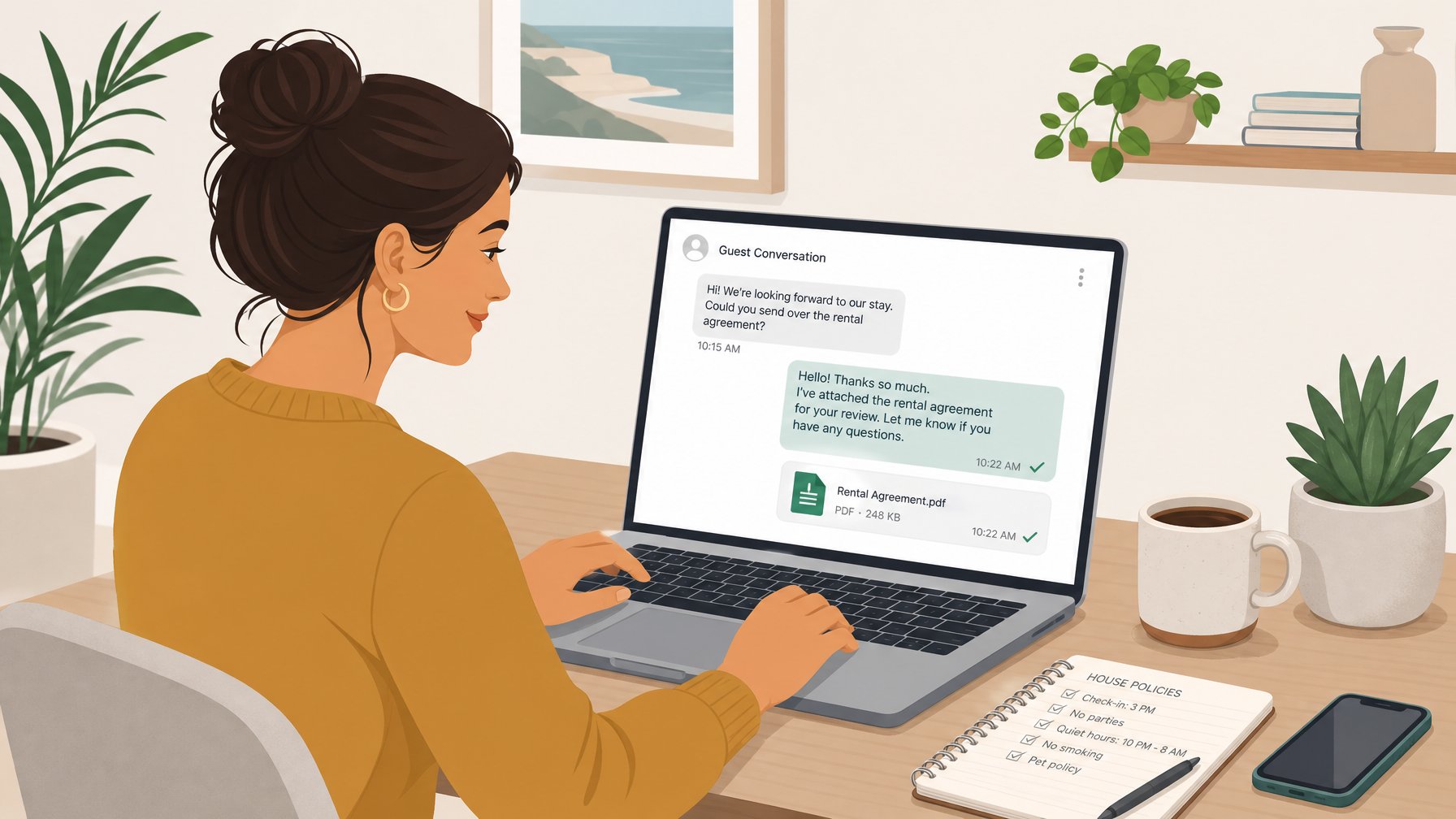
Use that control deliberately. Set up an auto-message that goes out immediately after booking confirmation, thanking the guest and including a link to the signed rental agreement. Set a balance due reminder 30 days before arrival. Use Houfy's messaging system to keep a documented record of every guest communication.
The combination of a clear written policy, a signed agreement, and a documented communication record makes you almost impossible to beat in a dispute.
Join the Houfy host community to see how other hosts structure their agreements and handle edge cases in real time.
Turn Cancellation Risk Into Pricing Confidence
Here is the mindset shift that changes everything: a solid cancellation policy does not just protect you from loss. It gives you the confidence to hold your rates.
Hosts with weak or no cancellation policies tend to negotiate on price when bookings are slow, because they know a cancellation leaves them with nothing. Hosts with a proper policy can price their property firmly, knowing that a late cancellation still puts money in their account.
Direct booking with a clear policy is more defensible, more profitable, and fully on your terms — not riskier than OTA booking.
Start accepting direct bookings on Houfy and keep every dollar your guests pay.
FAQ
What is a direct booking cancellation policy for vacation rentals?
A direct booking cancellation policy is a written set of terms a host creates independently — outside any OTA platform — that defines what refund, if any, a guest receives if they cancel at various points before their stay. Unlike Airbnb or VRBO policies, which the platform controls and can override, a direct booking policy is entirely yours. It exists in a signed rental agreement and is enforced by you and, if needed, by your payment processor.
Can Airbnb override my cancellation policy?
Yes. Airbnb's Major Disruptive Events Policy (formerly the Extenuating Circumstances Policy) allows the platform to grant guests a full refund regardless of a host's selected cancellation terms when Airbnb determines that a qualifying event applies. Hosts receive no vote and are notified after the refund is issued. This is one of the primary reasons many hosts move to direct booking platforms like Houfy, where no third party can override their policy.
Do I need a signed rental agreement for direct bookings?
Yes. A signed rental agreement is the most important protection a direct booking host has. It serves as legal evidence that the guest acknowledged and accepted your cancellation, payment, and house-rule terms. Without it, a guest can dispute a charge with their bank by claiming they were unaware of the terms — and your payment processor has little to support your case. Free tools like DocuSign make the process fast and straightforward.
What should a vacation rental cancellation policy include?
At minimum, your policy should define: (1) the refund amount at each cancellation window (e.g., 60+ days, 30–59 days, 8–29 days, 0–7 days), (2) whether cleaning fees and security deposits are refundable on cancellation, (3) how a guest must submit a cancellation (in writing, through your booking platform), and (4) what happens if you as the host cancel. Specificity reduces disputes.
How do I win a vacation rental chargeback?
The hosts who win chargebacks are the ones with the best documentation. That means: a signed rental agreement, a record of all pre-booking and pre-arrival communications, your published listing showing the same policy terms, and any evidence the guest received the service they paid for. Submit all of this when your payment processor requests it. A clear policy that matches your signed agreement is the single strongest chargeback defense available to you.
Is Houfy a good platform for direct bookings?
Yes. Houfy is the largest fee-free direct booking marketplace for vacation rentals, with 87,000+ properties across 50+ countries. Hosts keep 100% of their rental income with no booking commissions, set their own cancellation policies without platform override risk, and communicate directly with guests. For hosts who want control over their cancellation terms and guest relationships, Houfy is built for exactly that use case. List your property for free.
What is the best cancellation policy for a vacation rental?
There is no single answer — it depends on your market, booking lead times, and guest profile. A 60/30/8/0-day tiered structure works well for most hosts. High-demand, peak-season properties can afford stricter terms. Properties in competitive markets with lots of last-minute inventory may benefit from slightly more flexible early-window terms paired with a firm no-refund window inside 7 days. The most important thing is to match your policy to reality, write it clearly, and make every guest sign it.