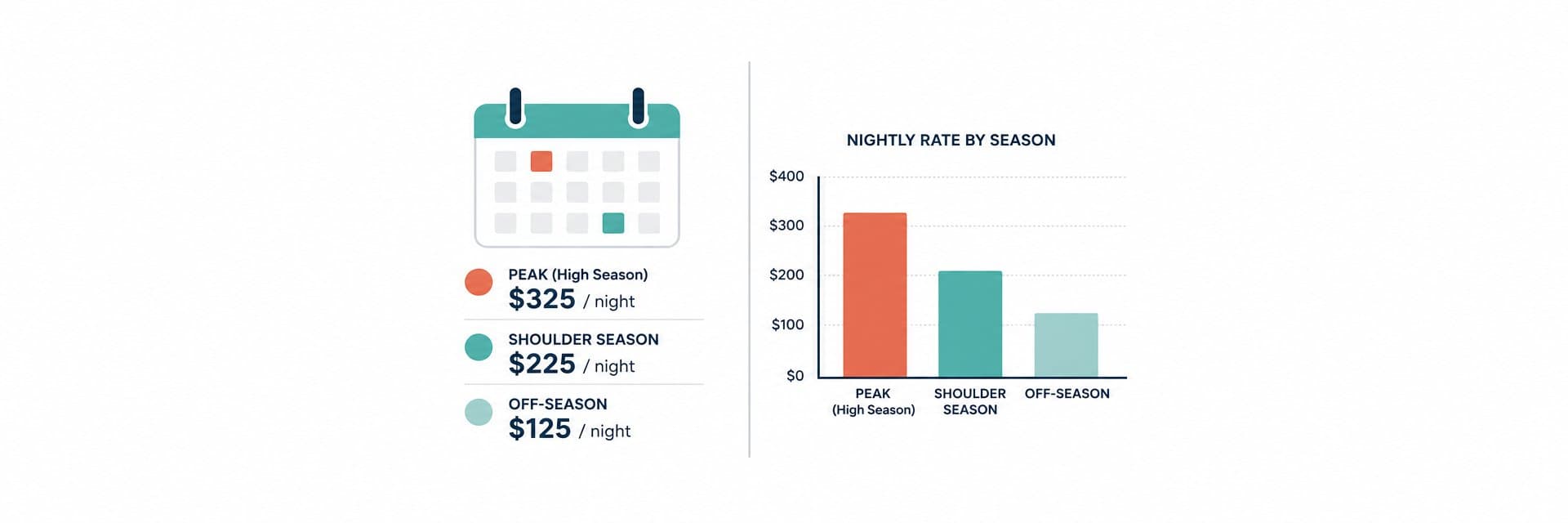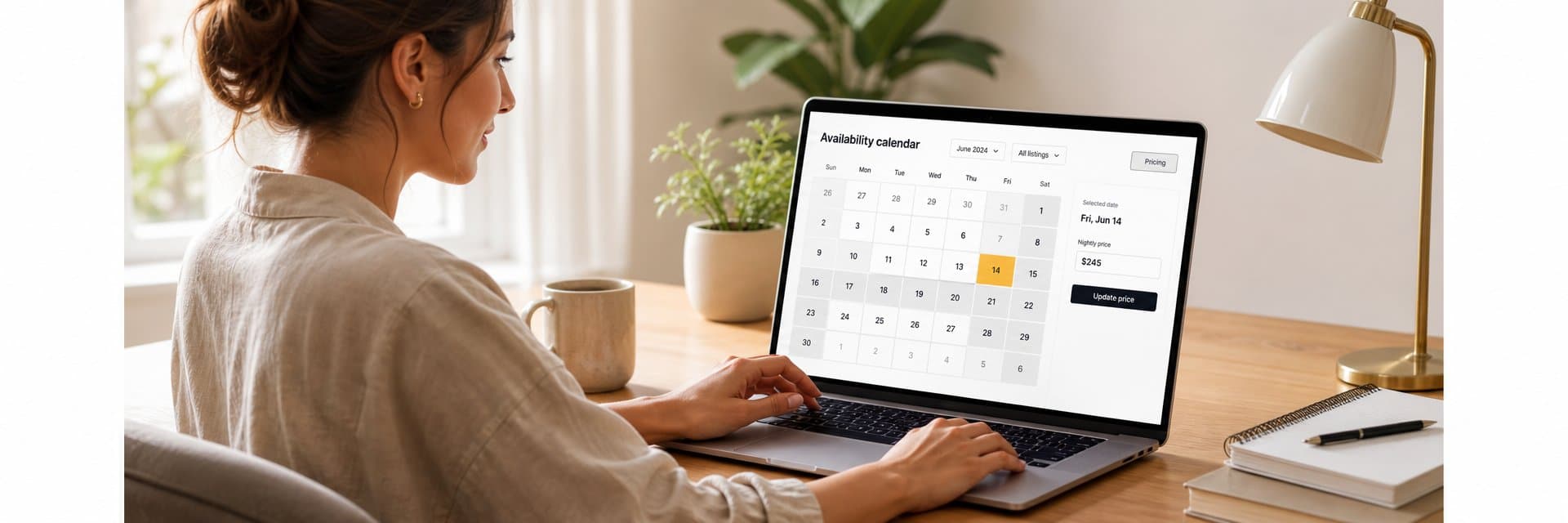

The average US vacation rental has 30–45 gap nights per year — nights within 2–7 days of the current date that sit unbooked and perishable. At a $200/night average rate, filling even half of those gap nights adds $3,000–$4,500 to annual revenue. Most hosts' listings and pricing strategies are optimized for advance bookings, not last-minute demand — and that is exactly where the opportunity lives. This guide covers the complete system for capturing last minute vacation rental bookings without discounting your way to unprofitability.
Key Takeaways
Last-minute bookings (within 7 days of check-in) represent 23% of all US STR bookings in 2026, up from 17% in 2022
The last-minute guest segment is younger, more flexible, and less price-sensitive than advance bookers — they are paying for availability, not a discount
Dynamic pricing tools set 7–14 day rate windows automatically; manual hosts should audit and adjust gap nights every Monday morning
Adding a "last-minute friendly" element to your listing description increases inquiry rate for short-notice stays by 15–25%
Booking direct through Houfy removes OTA friction — last-minute guests reach you instantly and confirm in minutes
The gap night immediately after a checkout and the night immediately before a check-in are the hardest to fill — they require separate strategies
An email to your past guest list on gap dates converts at a higher rate than any cold channel — repeat guests already trust your property
Understanding the Last-Minute Guest
Last-minute vacation rental guests are not bargain hunters by default. Research by AirDNA shows that last-minute bookings within 3 days of check-in average only 8% below full rate — not the 25–40% discount many hosts assume they must offer. Bookings within the 4–7 day window average just 4% below full rate.
What last-minute guests actually need is availability certainty, a fast host response, a simple self-check-in process, and a clear picture of what is in the property before they commit. Optimize for those four things and you will capture last-minute demand at near-full rates, without slashing your nightly price.
The last-minute guest profile in 2026 skews toward:
Solo travelers and couples making spontaneous weekend decisions
Domestic travelers within 3–5 hours of your property who planned late
Remote workers with flexible schedules who extend trips at short notice
Sports and event attendees who missed the advance booking window
Understanding who books last-minute allows you to write listing copy, set response protocols, and choose marketing channels that actually reach them.
Pricing Strategy for Gap Nights
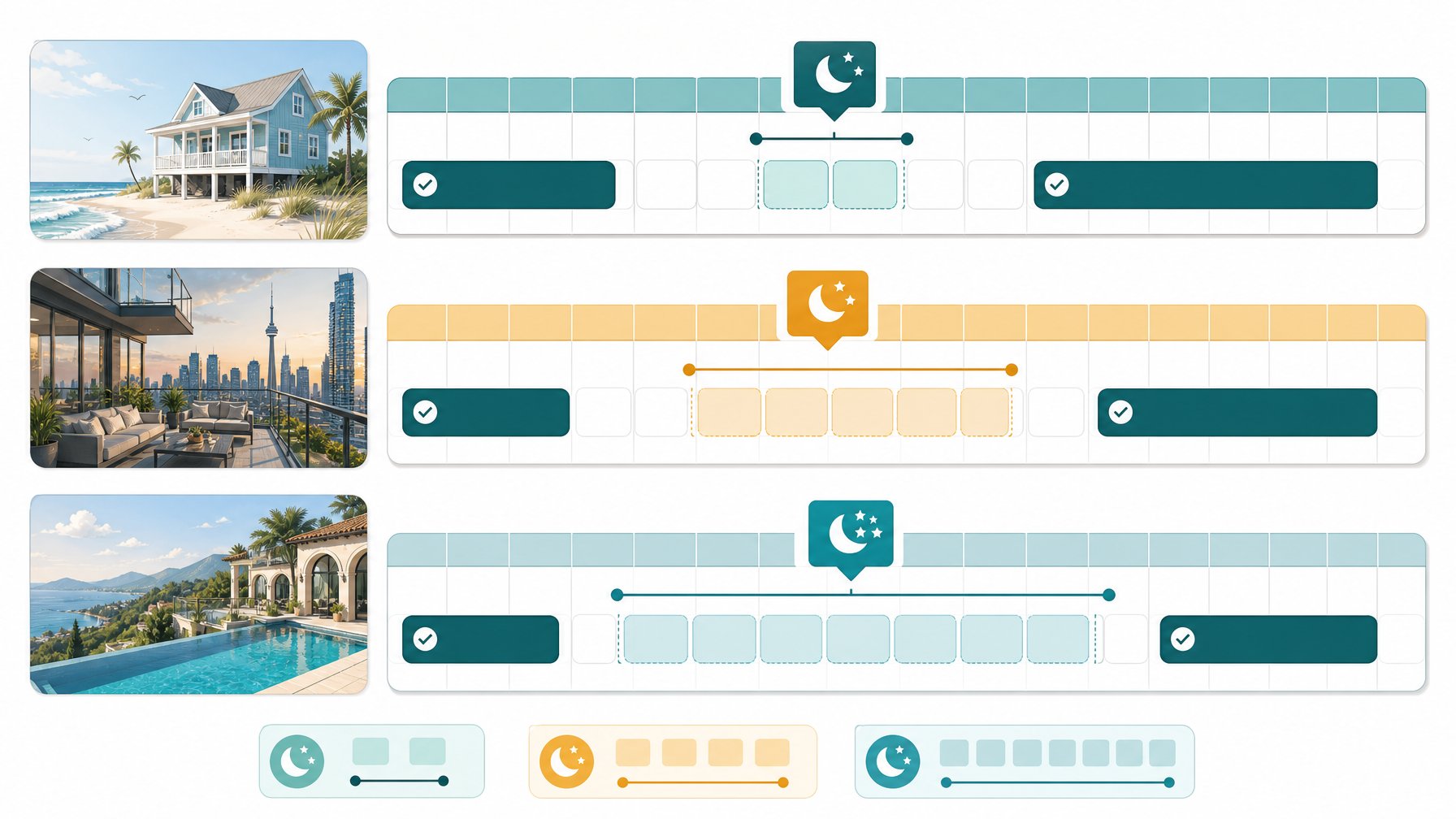
The optimal gap night pricing approach depends on the gap length. A blanket "last-minute discount" is the wrong move — it trains your market to wait and rewards price sensitivity rather than the urgency-driven demand that actually drives late bookings.
1–2 night gaps: These are the hardest to fill and require a strategic decision. At $200/night, a single-night booking generates approximately $160 net — better than $0, but only worth accepting if your cleaning fee structure makes it viable. Consider whether a minimum-stay exception for these specific dates creates more revenue than leaving them vacant.
3–5 night gaps: Target at full rate initially, then apply a 5% reduction after day 3 of no booking. These windows fill reliably for well-located properties with the right promotional push.
6–14 night gaps (open availability windows): These are not gap nights — they are standard booking windows. Price at your full seasonal rate and rely on your standard channels. No discount warranted.
For automated gap night pricing, tools like PriceLabs and Wheelhouse both integrate directly with Houfy via the software partners ecosystem and adjust rates dynamically within your floor and ceiling parameters — removing the need to manage this manually every week.
Dynamic Pricing Tools That Integrate with Houfy
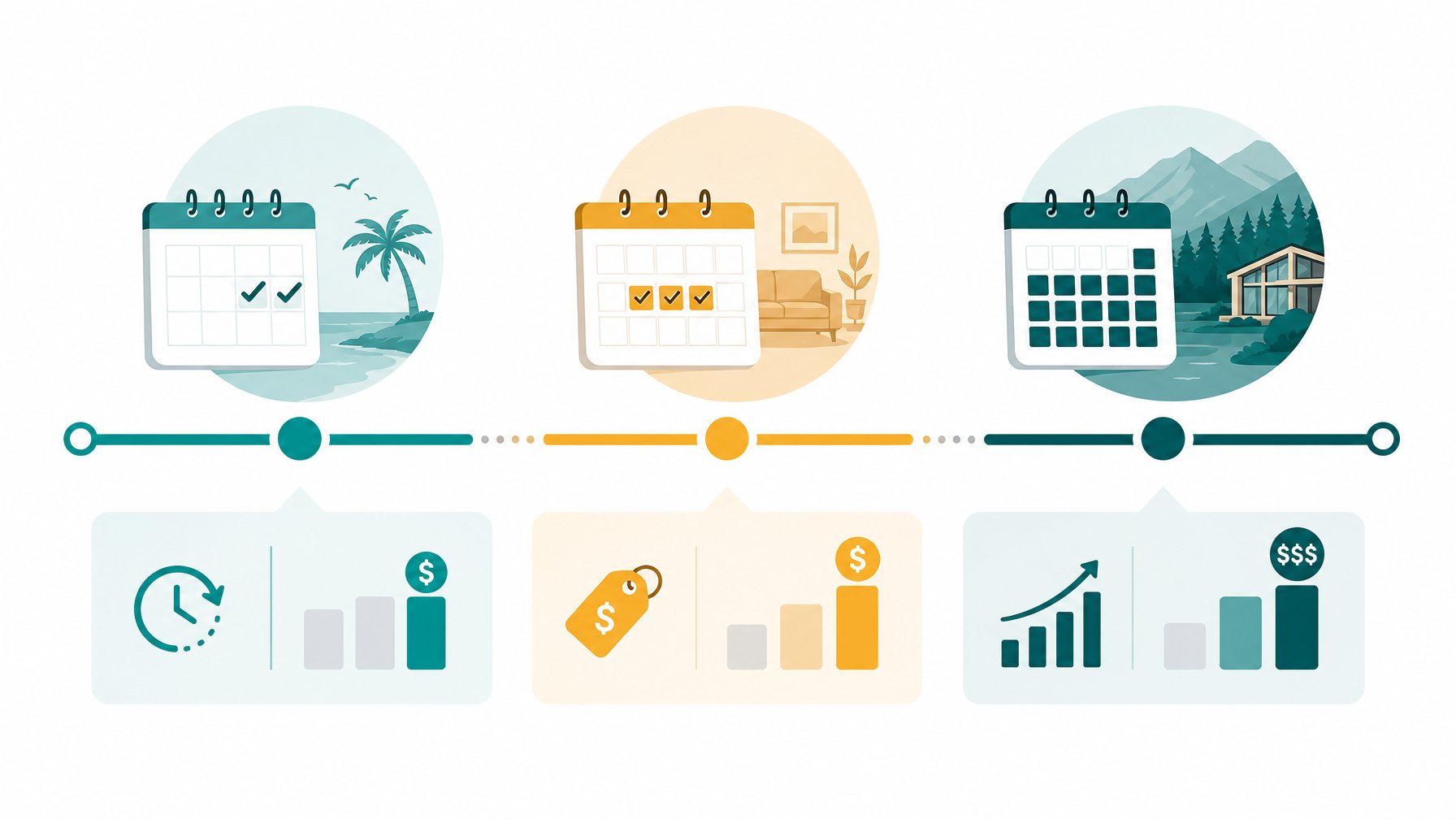
If you manage your pricing manually, you are leaving gap night revenue on the table every week. Dynamic pricing tools monitor local demand signals — competing listings, local events, search velocity — and adjust your nightly rate automatically within parameters you set.
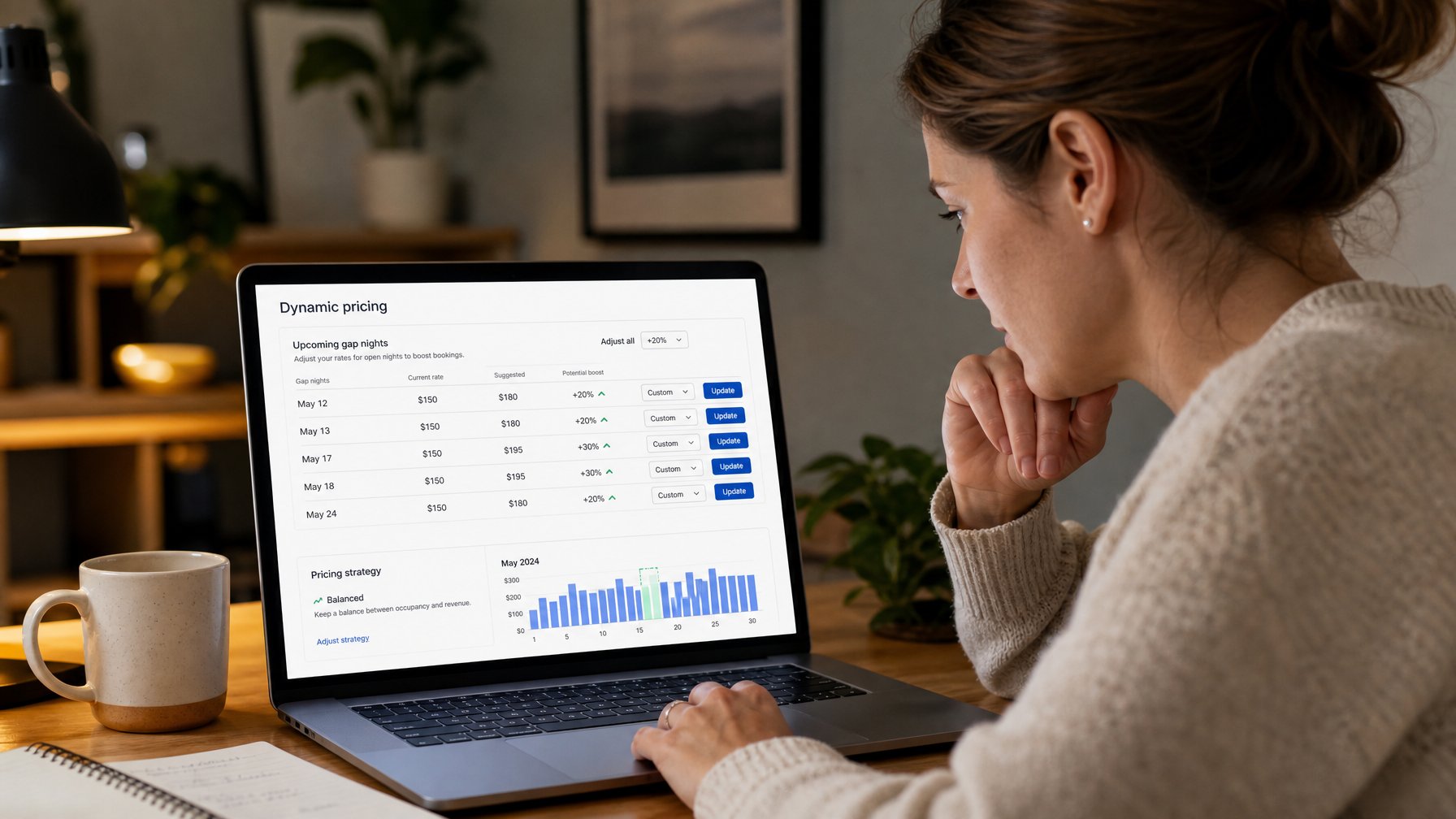
For hosts using property management systems, the Houfy software partners page lists the full set of integrated tools across three tiers: free integrations, usage-based integrations, and subscription tools. PriceLabs and Wheelhouse are the two most widely used dynamic pricing integrations for STR hosts optimizing gap night fill rate.
The manual alternative — reviewed every Monday morning — works for single-listing hosts: open your calendar, identify any gap within the next 14 days, and apply a targeted rate adjustment for that specific date range. Set it and let it run for 4 days. If it fills, great. If not, drop another 3–5%.
For hosts who want to build a complete listing optimization system beyond pricing, the Houfy listing optimization guide covers the full framework — from title copy to amenity selection — that increases your baseline conversion rate before any last-minute tactics apply.
Last-Minute Listing Optimization
Your listing description does not need a complete overhaul to capture last-minute guests. A single added element — placed at the bottom of your description — signals to short-notice searchers that you welcome them:
"Last-minute friendly — if you're planning a trip within the next 7 days, check our live calendar and message us directly. We offer streamlined self-check-in and can often confirm same-week arrivals within the hour."
This language does three things: it signals openness to late bookings, it sets a fast-response expectation that filters for guests who value speed, and it positions your listing in the mindset of someone actively scanning for available-now options.
On Houfy, last-minute guests message you directly — no OTA communication queue, no platform-moderated delays. A booking inquiry at 11pm Thursday for a Friday check-in gets answered and confirmed in minutes, not hours. That speed advantage is significant when the last-minute guest is choosing between three available properties.
To maximize the impact of that fast-response window, make sure your Houfy listing has a digital welcome book and door code ready to send with a single copy-paste. The guest experience from "inquiry sent" to "door open" should require zero friction on your end.
Active Last-Minute Marketing Channels
Most hosts rely entirely on their listing page — a passive approach. Active last-minute marketing consistently fills gap nights that passive distribution misses.

Social media availability posts. A direct "we have this weekend available — DM to book direct" post in destination-specific Facebook groups, local travel groups, and your own social channels drives immediate last-minute inquiries. Keep the post simple: property name, dates available, key feature (pool, beach access, pet-friendly), and a direct booking link. The Houfy host Facebook Group is an additional channel where community members share availability and cross-refer.
Email to past guests. This is the highest-converting last-minute channel. A guest who has already stayed at your property and loved it is the most motivated buyer for an available-now date. A short email — "We have [dates] open — reach out first and it's yours" — converts at 3–5x the rate of any cold channel. Build your guest email list from day one of hosting. It is one of the most valuable assets you own as a direct booking host.
Google Business Profile posts. If your vacation rental has a GBP listing set up, an "availability this weekend" post can surface in destination searches from guests actively researching the area. This channel works best for properties in well-searched destination markets (coastal towns, ski areas, National Park gateway cities).
Repeat guest outreach. Beyond email, a direct message to a returning guest who you know tends to visit in a particular season takes 60 seconds and often produces a same-week booking. For a full strategy on building the guest database that makes this possible, see the Houfy guide to building a repeat guest database.
Streamlining the Last-Minute Guest Experience
Last-minute guests require a compressed onboarding experience. They booked late, which means they are likely arriving soon — sometimes within 24 hours. Every unnecessary communication step between "booking confirmed" and "guest inside the property" is a point of friction.
The streamlined last-minute process looks like this:
Booking confirmed: An automated confirmation fires immediately with the property address, parking instructions, and check-in code. Do not wait until the day of arrival.
Day of check-in: A single follow-up message — door code, WiFi password, and one key local tip. Three lines maximum.
Welcome book: Digital only, accessible on any device via a link in the confirmation message. No printed binders, no PDFs requiring downloads.
Available for questions: One clear channel — a mobile number or Houfy messaging — so the guest knows exactly where to reach you if something comes up.

The goal is to reduce the number of guest questions before arrival to zero. Each question represents a process gap in your onboarding sequence. Audit your last five last-minute stays and identify the most common pre-arrival question — then add the answer to your automated confirmation message.
Building Repeat Guests Through Last-Minute Stays
Last-minute guests who have a great experience are disproportionately likely to become repeat guests. They found your property in a moment of need, you delivered, and that creates a strong emotional anchor for a future planned stay.

After a last-minute stay, send a one-paragraph follow-up message within 24 hours of checkout: thank them, note that they are now on your direct list, and let them know you will reach out before publishing your next opening. This simple message converts a last-minute guest into a future email list subscriber who books direct on their next trip.
Direct booking through Houfy is the infrastructure that makes this loop work. Because you own the guest relationship — not the platform — you can re-engage past guests for future stays without paying a commission each time they return.
List your property on Houfy to start building a direct guest list that fills gap nights through every channel.
Frequently Asked Questions
Should I lower my minimum stay requirement to capture last-minute bookings?
Selectively, yes. For identified gap nights of 1–3 days, a minimum-stay exception is often worth the operational cost — a single-night booking at $160 net beats $0 net for an unfilled date. For long open windows of 6 nights or more, maintain your standard minimum stay to avoid calendar fragmentation that blocks longer, more profitable bookings.
What is the best platform for last-minute vacation rental bookings?
Direct booking through Houfy is the fastest channel for last-minute guests because there is no OTA review process, no platform communication delay, and no service fee to reconsider at checkout. The guest sends an inquiry, you respond, and the booking is confirmed — often within minutes. That speed matters when a last-minute guest is choosing between three available listings.
Does heavy last-minute discounting hurt my overall pricing reputation?
It can, particularly if discount rates are visible to future advance bookers or if deep discounting trains your local market to wait. Keep last-minute rate reductions within 5–10% of your full seasonal rate. Reserve deeper reductions (15%+) only for 1–2 night gaps that would otherwise sit vacant, and apply them as one-time date-specific adjustments rather than a standing last-minute discount.
How do I track which channel produces my last-minute bookings?
Ask new guests in your post-booking confirmation message: "How did you hear about us?" For Houfy direct bookings, the inquiry source is recorded in your booking dashboard. Over 90 days, you will see a clear pattern — typically email outreach and Facebook group posts outperform passive listing discovery for last-minute fills.
How quickly should I respond to last-minute booking inquiries?
Within 15 minutes, whenever possible. AirDNA data shows that response time under 30 minutes for last-minute inquiries correlates with a 60%+ higher conversion rate than responses over 2 hours. Last-minute guests are making a decision in real time — they are messaging 2–3 properties simultaneously and confirming with whoever responds first.
Can I use last-minute fills to test new pricing without affecting my full-season rates?
Yes — and this is an underused strategy. Gap night windows are the ideal place to test a slightly higher rate tier to see if demand holds, or to experiment with a minimum-stay exception on shoulder nights. Because the downside is a single vacant night (not a future booking pattern), gap nights carry the lowest risk of any pricing experiment you can run.
Source Citations
AirDNA — Short-Term Rental Industry Outlook 2026 — https://www.airdna.co/blog/short-term-rental-outlook
PriceLabs — Dynamic Pricing for Vacation Rentals — https://www.pricelabs.co/blog/dynamic-pricing-vacation-rentals
Wheelhouse — Revenue Management for STR Hosts — https://www.usewheelhouse.com
Houfy Direct Booking Platform — https://www.houfy.com
Houfy Software Partners — https://www.houfy.com/software-partners
Category: Marketing and Promotion
Houfy currently has 98,000+ verified listings across 50+ countries.
Last Updated: June 2026