
Owning a vacation rental is already a big responsibility. Managing it remotely? That takes a little extra planning, but it’s absolutely doable. More and more hosts are living far from their rental properties, thanks to technology, smart processes, and a little creativity. Whether your property is in another city or across the country, you can keep things running smoothly while still delivering a great experience for your guests. Here’s how to manage your rental property remotely, without losing your mind or your 5-star reviews.
1. Get Organized Before You Step Away
The key to managing remotely is preparation. The more systems you put in place now, the less you’ll have to scramble later. Start by making sure your property is fully stocked with all the essentials: linens, towels, paper goods, and cleaning supplies. It helps to have duplicates of things like sheets and pillowcases, so your cleaner can do a quick turnover without waiting for laundry.
Next, create a detailed operations guide. This should include everything a cleaner, handyman, or even a neighbor might need to know: WiFi info, where spare keys are, how to reset the breaker, where to find extra light bulbs, and how the thermostat works. Print a copy for on-site reference, and keep a digital version handy to share when needed.
Don’t forget a guest guide too. Include check-in and check-out instructions, house rules, appliance how-tos, and local recommendations. Houfy makes it easy to include your guide in your listing and share it directly with guests ahead of their stay.
2. Build a Reliable Local Team
Even the best hosts need backup, especially when managing from afar. One of your first priorities should be building a dependable team of local helpers. A good cleaner is essential. Ideally, find someone with short-term rental experience who understands the fast pace and attention to detail your guests expect. Make sure they know your standards for cleanliness, restocking supplies, and reporting damage.
You’ll also want a go-to handyman. Things break. Toilets clog. If you can’t drive over and fix it yourself, you need someone who can. Ask other local hosts for recommendations or look for companies that specialize in vacation rental maintenance.
If you’re managing a larger property, you might even consider hiring a property manager for on-the-ground support. They can handle emergencies, routine inspections, and guest issues you just can’t resolve over the phone.
3. Automate Everything You Can
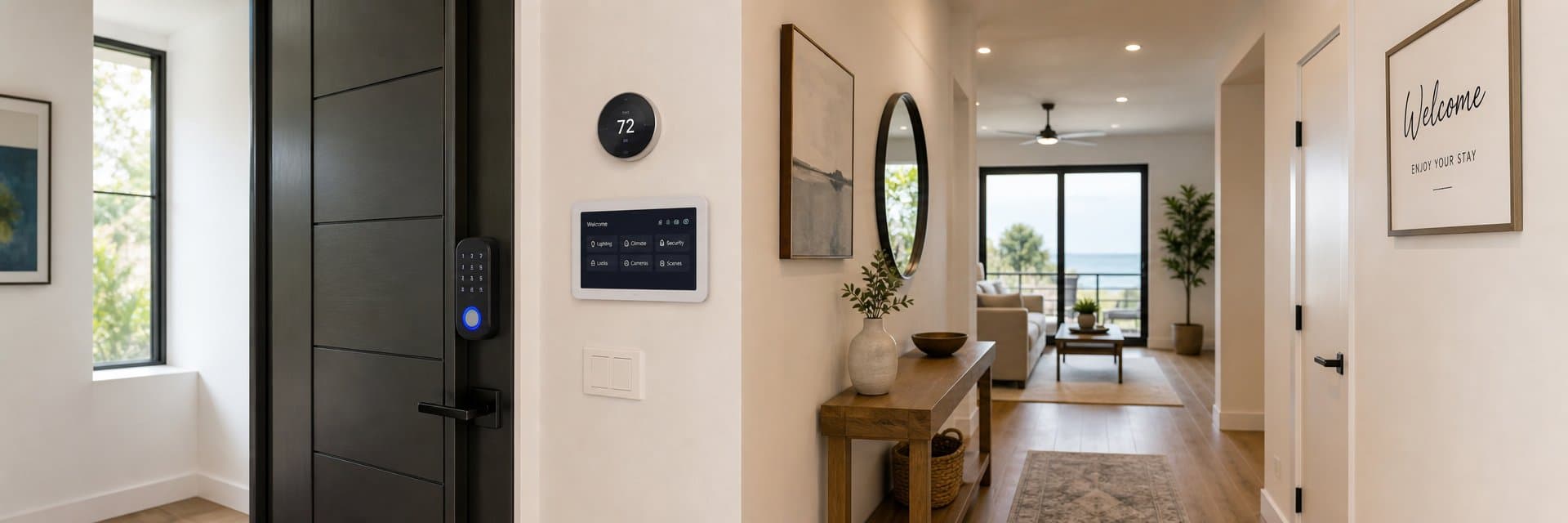
Technology is your best friend when managing remotely. The more you automate, the less you’ll worry about it, and the better your guest experience will be. Start with a smart lock. Key exchanges are one of the biggest pain points when you’re not nearby. A smart lock lets you generate unique codes for each guest, which expire when their stay ends. It’s more secure and more convenient.
Install security cameras outside to monitor arrivals, departures, and unauthorized guests or parties. Many hosts also use smart thermostats to save energy when the home is empty and adjust settings before guests arrive.
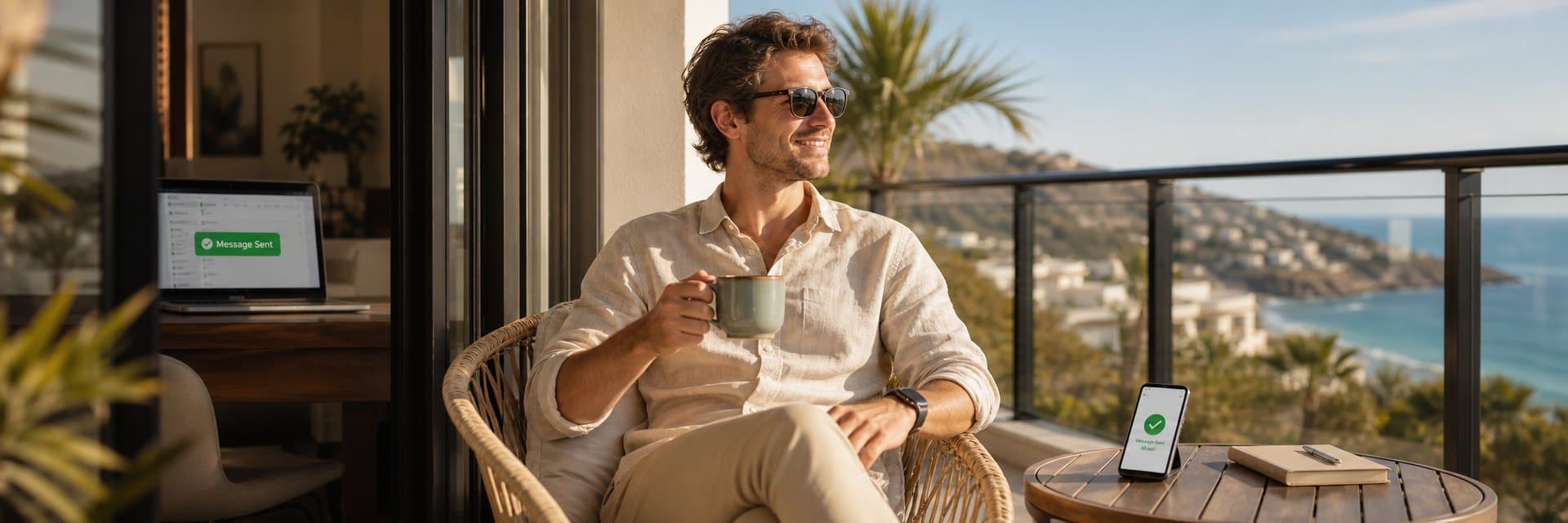
Set up automated messaging for common communication points: booking confirmation, check-in instructions, check-out reminders. Houfy allows you to stay in touch with your guests easily while maintaining a personal touch. You can even automate supplies with subscriptions. Have paper towels, soap, and other essentials delivered regularly so your cleaner never runs out of stock.

4. Keep Guest Communication Top of Mind
One of the biggest worries guests have when booking a vacation rental is, “What if something goes wrong and no one is around?” Your job as a remote host is to reassure them that you’re available and attentive, even from miles away.
Be responsive to messages, ideally within an hour or two. Many guests book at the last minute or need help during their stay. If you can’t monitor your phone 24/7, consider hiring a virtual assistant or using an answering service to handle calls and texts when you’re busy or asleep.
Be clear and proactive in your communication. Let guests know exactly what to expect at check-in, where to find things, and how to reach you in case of an issue. If there’s local construction noise or a maintenance quirk, tell them upfront rather than waiting for them to notice and complain. Guests don’t care how far away you are if you make them feel taken care of.
5. Plan for Emergencies
Even with great planning, things can still go wrong, sometimes at the worst possible time. Be ready for it. Have backup contacts. If your cleaner is sick, who can fill in? If your handyman is booked, who else can you call? Keep a list of secondary providers just in case.
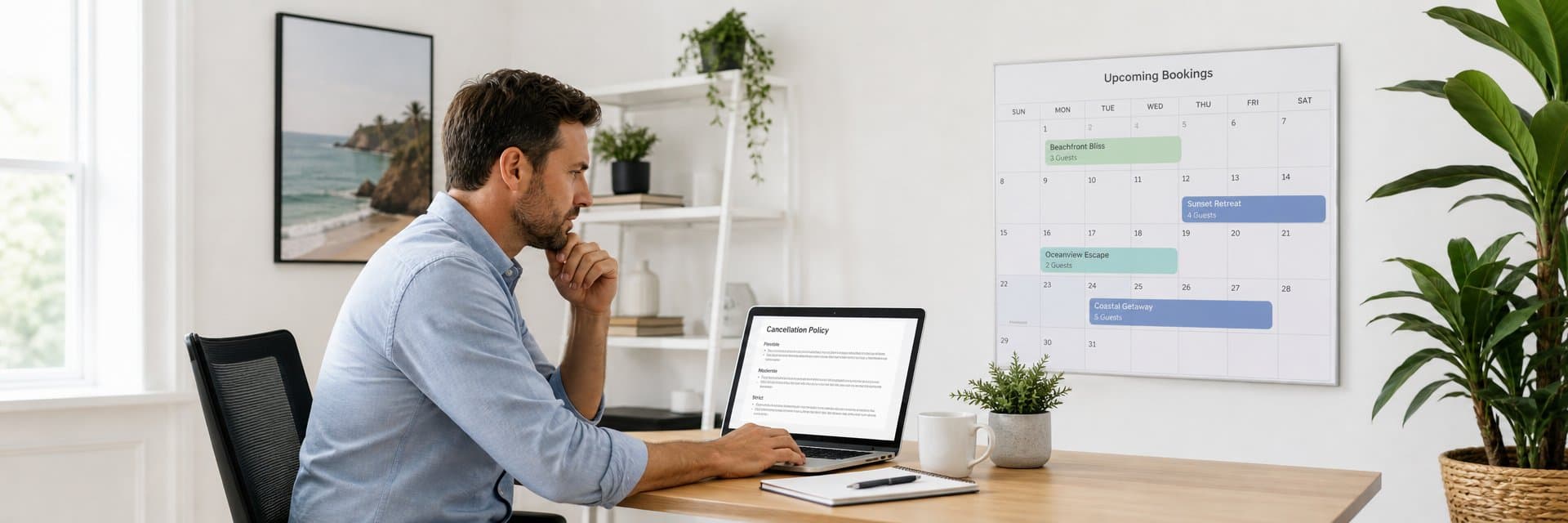
If a storm, flood, or power outage hits your area, have a plan for how you’ll notify guests, handle cancellations, and assess damage. Consider investing in a home warranty or service plan to cover costly repairs that might come up unexpectedly. And don’t forget insurance—make sure your policy covers vacation rentals and liability.
6. Visit When You Can
Even the best remote hosts benefit from seeing their property in person every so often. Photos and videos from your team are great, but nothing replaces walking through yourself to spot wear and tear, make small upgrades, and ensure everything is up to your standards.
If you can swing it, try to visit at least once or twice a year. Stay overnight if possible to experience your property just like a guest would. You’ll likely find a few details to improve, which can make a big difference in reviews and repeat bookings.
Why It’s Worth the Effort
Managing a vacation rental remotely takes some work upfront, but once your systems are in place, it can be surprisingly smooth. Many hosts say the freedom it gives them is worth every bit of planning. You can live where you want, travel when you like, and still enjoy the benefits of your investment.
Best of all, you get to keep providing memorable stays for your guests without being tied to one location. And Houfy can help make it even easier. With direct communication, lower fees, and more control over your bookings, it’s the perfect platform for hosts who want to run their vacation rental on their own terms.